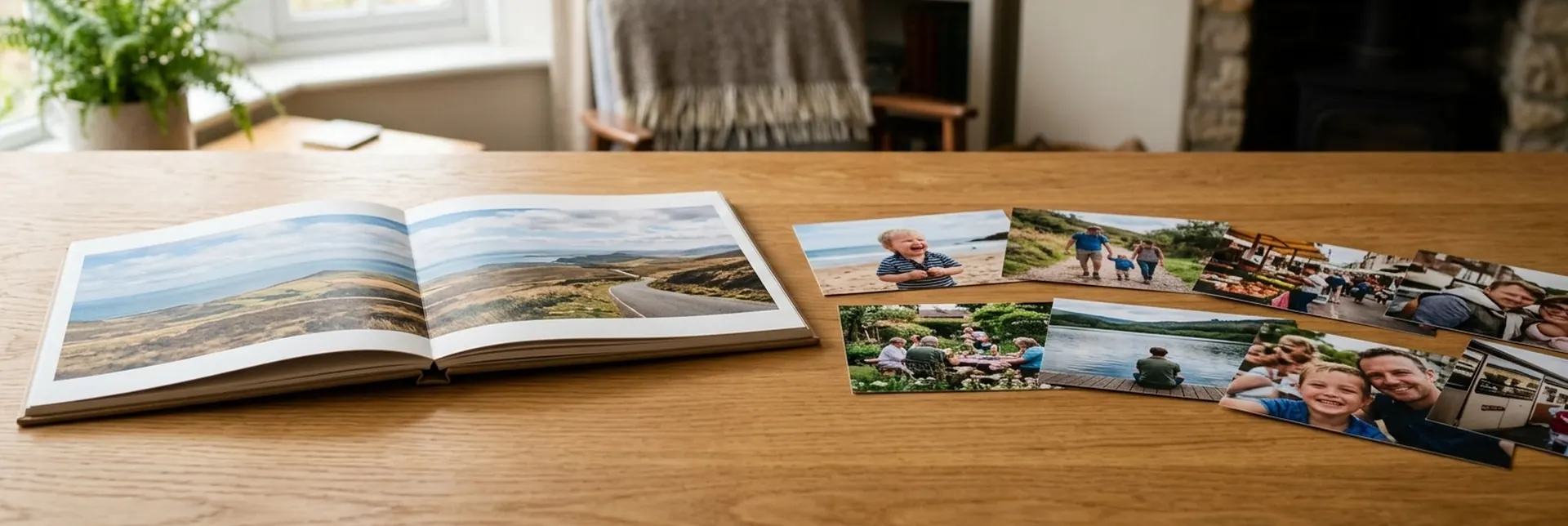
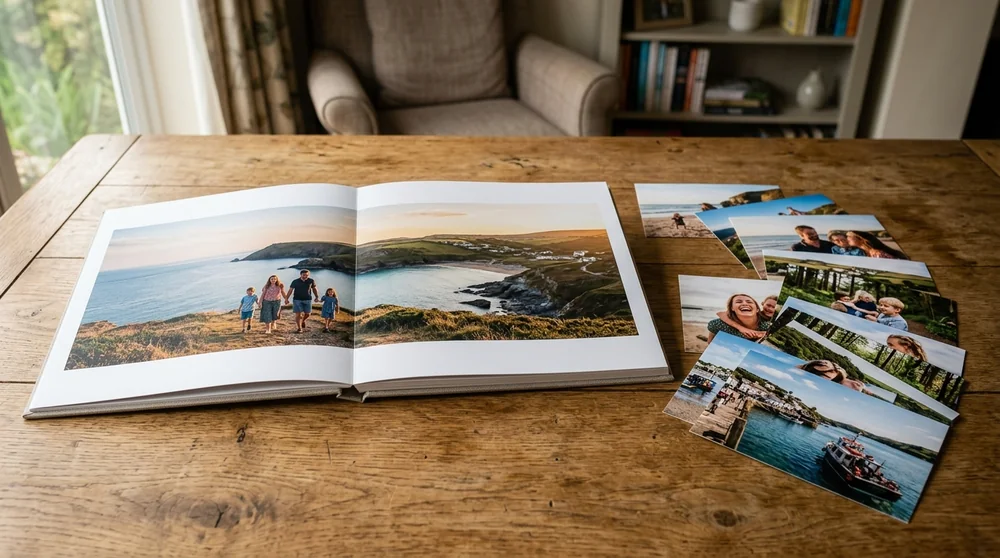
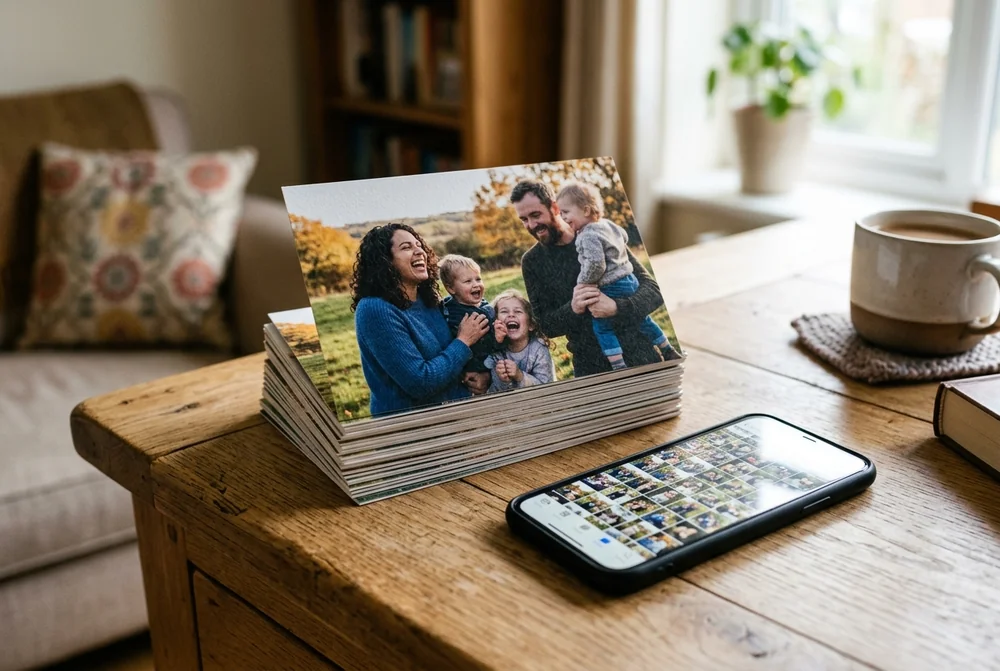
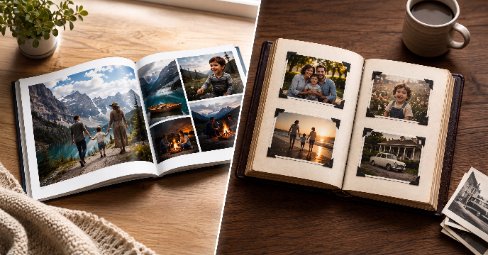
A photo book is the best way to keep photos that tell one story - a holiday, a wedding, a year of family life - because the pages are bound, ordered and protected. Photo prints are the best way to keep individual favourites you want to frame, gift or move around. Most collections deserve both.
Most of us now carry thousands of photos on a phone and own almost none on paper. That is a fragile arrangement: a lost handset, a failed hard drive or a lapsed cloud subscription can take decades of pictures with it. A printed photo needs no password, no charger and no monthly fee - which is why the question is rarely whether to print, but which format to print into.
The short version
Photo prints cost from £0.07 each in the UK and suit frames, albums, gifts and the fridge door. They need somewhere safe to live - ideally an acid-free box or album away from sunlight and damp.
A photo book starts from £8, holds 14 to 248 pages, and fixes your photos in order with captions, bound between covers that protect every page.
Prints stay flexible; a book is finished. You can reshuffle loose prints for ever. A book is designed once and printed as a complete story - which is exactly what makes it a better keepsake and a worse work-in-progress.
Cost per photo favours prints; cost per finished object favours the book. A hundred 10x15cm prints cost around £8. A bound book of the same photos costs more, but arrives designed, captioned and protected.
Whichever you choose, keep printed photos cool, dry and out of direct sunlight - and keep your digital files backed up as well.
Why printing your photos still matters
Digital storage fails quietly. Phones are lost or replaced, hard drives wear out, and cloud accounts depend on a subscription staying paid and a password staying remembered. Paper fails slowly and visibly instead: a neglected print fades over years, not overnight, and a well-stored one outlives the person who took it.
The sensible plan treats print as one layer of protection rather than the whole answer. Keep your digital files backed up in at least two places, then put the photos that actually matter onto paper. Institutions that preserve photographs for a living, such as The National Archives, store originals in stable, cool, dry conditions precisely because a physical copy, looked after properly, is a remarkably durable format.
Photo prints: what they do well, and where they struggle
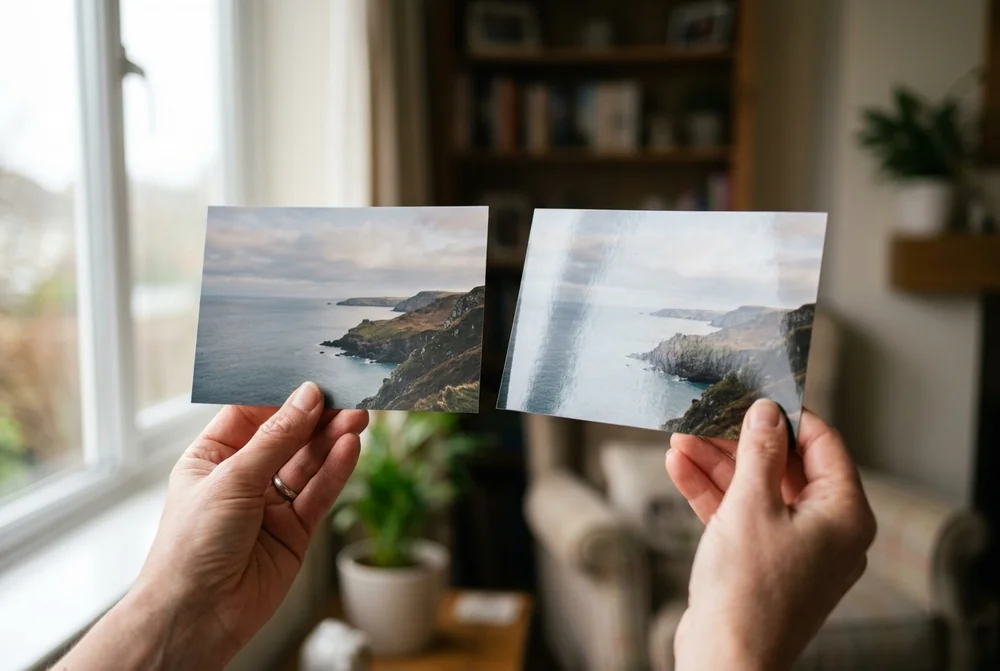
A photo print is the simplest product in photography: one image on one sheet of photo paper. At MYPICTURE, photo prints come in 11 fixed sizes from 9x12cm up to 20x30cm, plus variable widths that follow your image's own proportions, in a matte or gloss finish. Prices start at £0.07 per print, with a minimum order of 20.
Prints win on cost and flexibility. They are the cheapest way to get photos onto paper, they slot into any frame or album, and they are effortless to share - a grandparent can be handed a print in a way no cloud link matches. The 10x15cm size fits standard albums and frames; 13x18cm suits framing for shelves and walls.
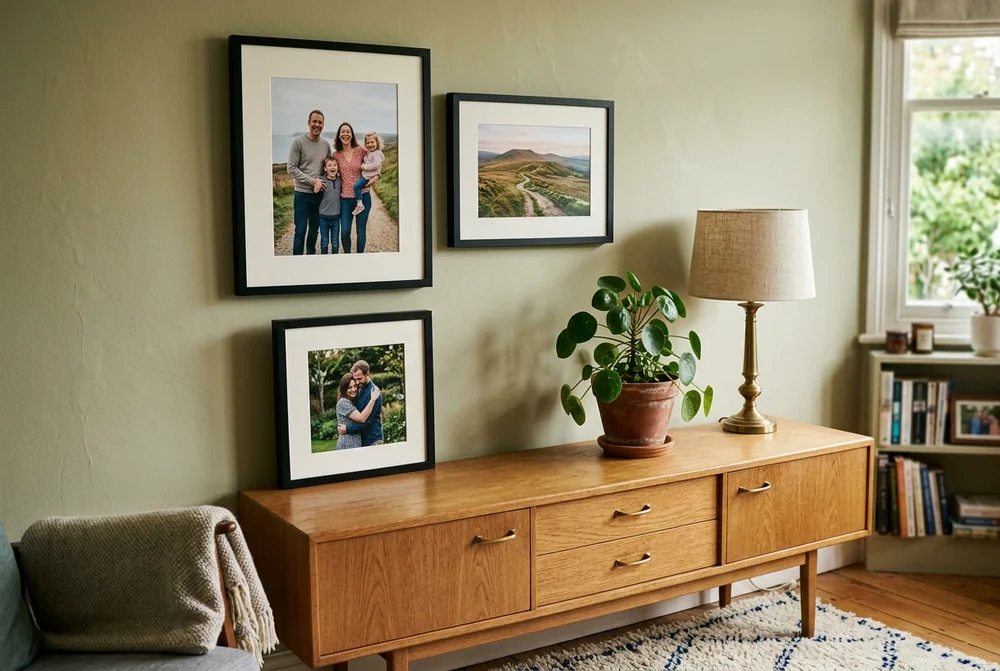
Their weakness is that they arrive loose. Fifty prints have no order, no captions and no protection until you give them some, and every handling adds fingerprints. If your prints are destined for display rather than a drawer, framed photo prints solve the protection problem at the same time. And if you are unsure which surface to pick, our glossy vs matte comparison settles it in two minutes: matte for framing and glare-free viewing, gloss for punchy colour in albums.
Photo books: what they do well, and where they struggle
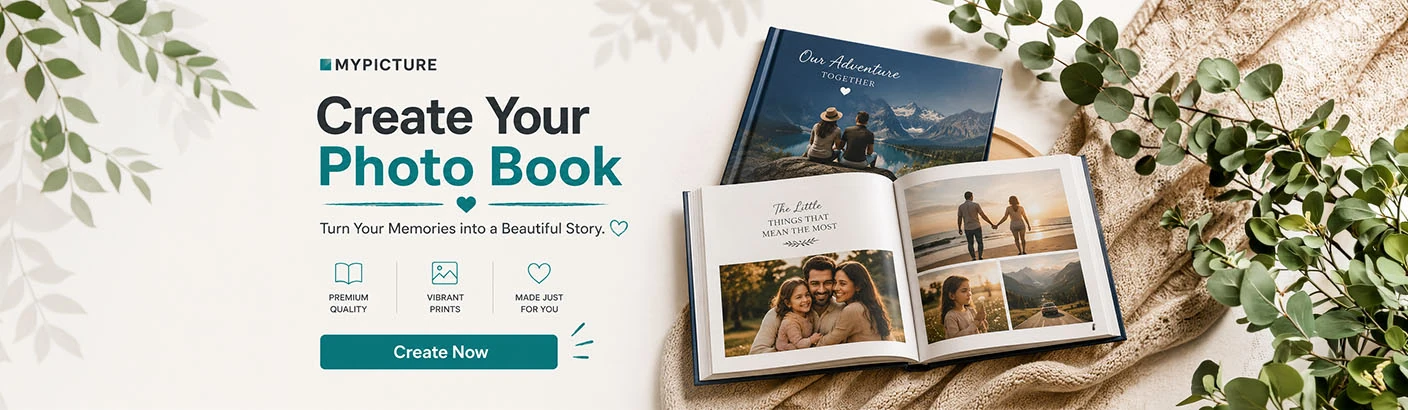
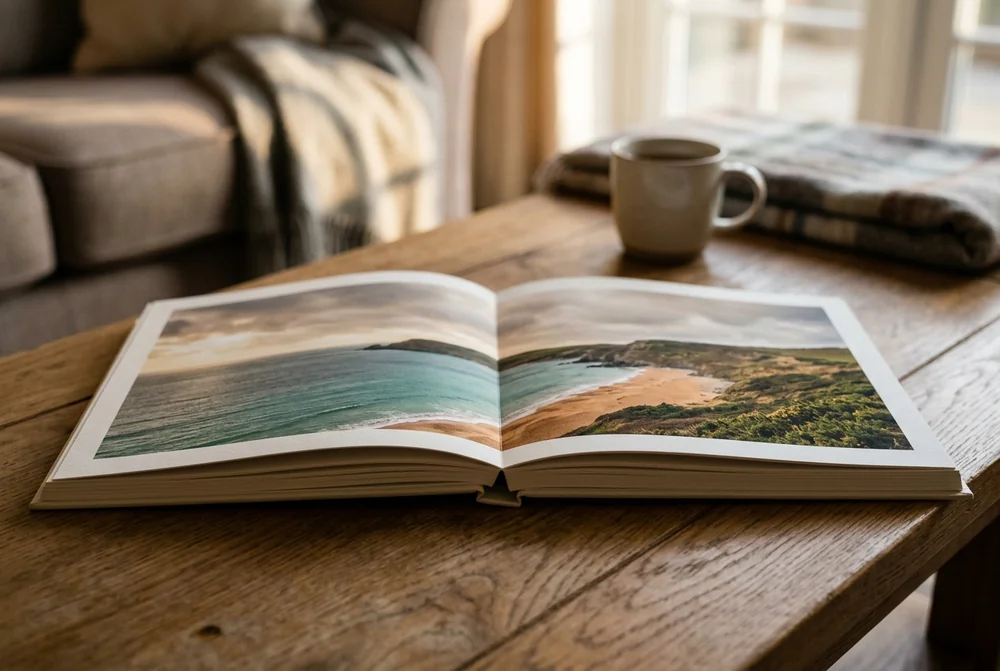
A photo book prints your images directly onto bound pages, so the photos, their order and your captions become one object. MYPICTURE personalised photo books come in five sizes - A5, A4, A3, 20x20cm and 30x30cm - from £8, with 14 to 248 pages, hardcover, softcover, ring-bound and booklet bindings, and every book printed in the UK. Choose the photographic print option and the pages are developed on archival-grade photo paper with layflat binding as standard, so a panorama can run across a full double-page spread without disappearing into the gutter.
The book's strength is permanence with meaning. Pages cannot scatter, fade unevenly on a windowsill or lose their order, and a caption written today saves a guessing game in twenty years. Duplicates are the other quiet advantage: reordering an identical copy for a parent or a sibling takes one click, where duplicating an album of loose prints means reprinting and rebuilding it by hand.
The honest weakness is that a book is fixed. Once printed, next month's photos cannot join it - for a collection that grows continuously, loose prints in a slip-in album work better, a trade-off we cover fully in our photo book vs photo album comparison. It is also fair to say that if outright print quality is your only criterion and budget is not, CEWE's reputation for photo books is deserved - our round-up of the best photo books in the UK compares the main services side by side, MYPICTURE included.
Photo book vs photo prints: side by side
Photo prints
Photo book
Price from
£0.07 per print (minimum 20)
£8 (A5, minimum page count)
Protection
Only what you give them - box, album or frame
Bound between covers; every page protected
Order and captions
None built in - you arrange and label them
Fixed layout with captions, dates and titles
Flexibility
Add, remove and reshuffle at any time
Fixed once printed
Duplicates
Reorder individual prints
Reorder the whole book in one click
Display
Frames, gallery walls, fridge doors, wallets
Coffee table, bookshelf, gift
Best for
Favourites you frame, gift and swap around
Events and eras: weddings, holidays, baby years
The table points to a simple division of labour rather than a winner. Prints are raw material - cheap, flexible and frame-ready. A book is a finished product - protected, ordered and made to be handed to someone. Households that keep their photos best usually run both: a book per event or per year, and a steady supply of prints for frames and gifts.
Which costs less? A worked example
Take 100 holiday photos. As 10x15cm prints at £0.08 each, the set costs £8, and you will want an album or storage box on top. As an A4 photo book, the price starts at £12 for the minimum 14 pages; at three to four photos per page, 100 photos need roughly 26 to 34 pages, and added pages cost extra - so expect the finished book to cost more than the prints.
Per photo, prints are clearly cheaper. What the book buys for the difference is the design, the binding, the captions and the protection - the work you would otherwise do yourself with an album and an evening. If you want the book's result without the design time, QuickBook lays your uploaded photos out automatically and lets you adjust the result before ordering.
How to store printed photos so they last
Paper photographs have four main enemies: light, heat, moisture and acids in poor-quality storage materials. Get those four right and prints last for generations.
Keep them cool, dry and dark. A cupboard or shelf inside the living space beats a loft, garage or cellar, where temperature and humidity swing through the year.
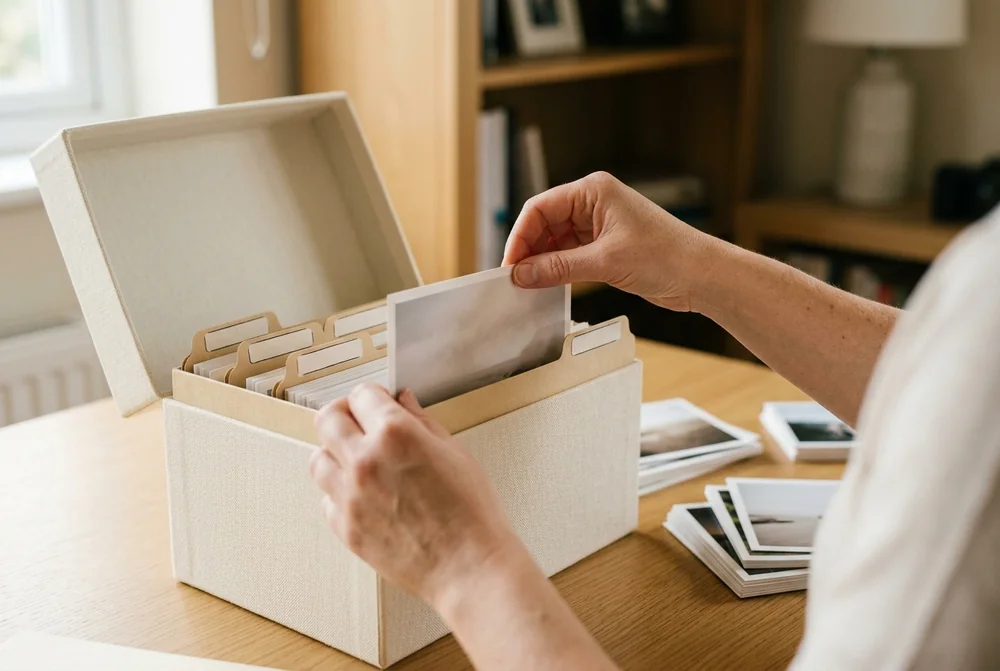
Use acid-free boxes, sleeves or albums. Conservation guidance from The National Archives warns specifically against PVC plastic pockets, self-adhesive "magnetic" albums and sticky tape, all of which attack photos chemically over time.
Handle prints by their edges. Fingerprints leave oils on the surface that show up as stains years later.
Keep displayed photos out of direct sunlight. A framed print on a sunlit wall fades measurably faster than the same print across the room. Rotate favourites, or hang the irreplaceable ones away from the window.
A photo book sidesteps several of these risks by design - closed covers block light and dust, and pages cannot pick up fingerprints in a drawer - which is one reason books make such dependable long-term keepsakes.
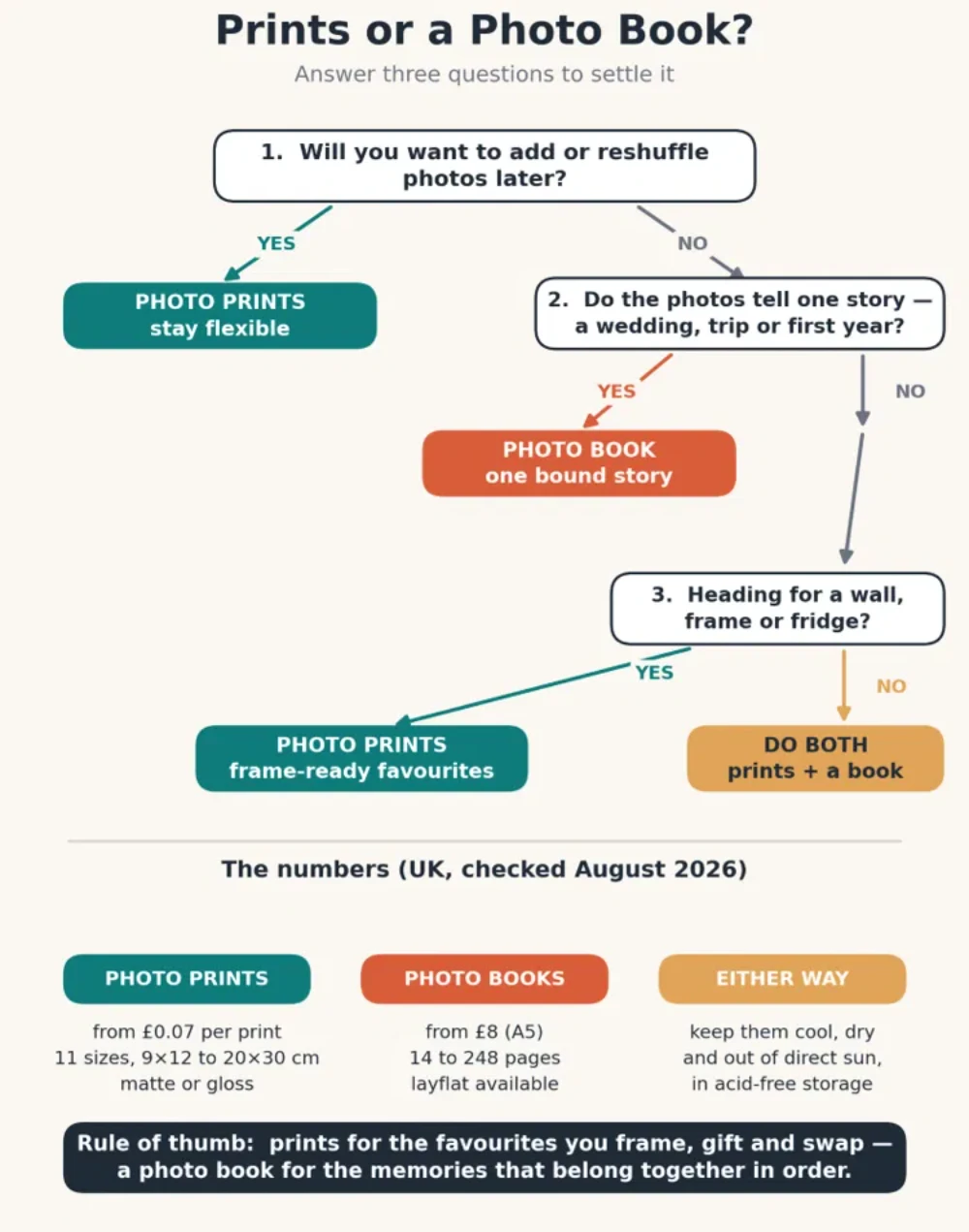
A three-question test to settle it
Still torn? Answer these three questions about the photos in front of you.
1. Will you want to add or reshuffle photos later? If yes, order prints - a book cannot grow.
2. Do the photos tell one story with a beginning and an end? A wedding, a trip, a first year - if yes, a photo book will tell it better than any box of prints.
3. Are they headed for a wall, a frame or the fridge? If yes, prints - a book lives on a table, not a wall.
If your answers split between the two, that is your answer as well: print the display favourites, and put the story into a book.
Why Choose MYPICTURE Over Other UK Photo Printing Services?
MYPICTURE competes on price without cutting the parts that matter: photo prints from £0.07 on premium photo paper with 12-colour printing, photo books from £8 printed and bound in the UK on up to 248 pages, and free UK delivery on orders over £49. The Lowest Price Guarantee beats any like-for-like UK price by 5% - in effect, we do the comparison shopping for you. On the dimensions below, here is how we compare with two services UK buyers most often weigh up.
Buyer's guide
MYPICTURE
Photobox
Snapfish
Photo book from
£8 (A5)
£12.99 (small format)
£8.00 (A5 papercover, sale)
Maximum pages per book
248
120
150
Lowest Price Guarantee
Beats any like-for-like UK price by 5%
Not advertised
Not advertised
Customer rating
4.93/5, 170,882 reviews (Trusted Shops)
4.1/5, 155,238 reviews (Trustpilot)
4.3/5, 172,255 reviews (Trustpilot)
The most useful takeaway is the division of labour: prints for the favourites you frame, gift and swap, and a photo book for the memories that belong together in order. Start with the photos you would be saddest to lose - upload them to MYPICTURE and have them on paper, or between covers, this week.
Frequently asked questions
Is it cheaper to print photos or make a photo book?
Per photo, prints are cheaper. In the UK, standard 10x15cm photo prints start from around £0.08 each, while photo books start from £8 and rise with page count. A photo book costs more because it includes binding, layout and protection in one finished object. If you simply want your photos on paper, order prints; if you want them told as a story, the book earns the difference.
Are photo books worth it?
A photo book is worth it for photos that belong together - a wedding, a holiday, a child's first year. You get the images, their order and your captions bound in one protected volume, and you can reorder identical copies for family in one click. For loose favourites you plan to frame or swap around, ordinary photo prints are the better buy.
How many photos should be in a photo book?
Most photo books work best with one to four photos per page. A 26-page book comfortably holds 40 to 80 photos, and larger formats running to 100 pages or more can hold several hundred. Fewer, stronger photos almost always make a better book than every photo you took - choose the images that carry the story.
Is it better to store photos in albums or boxes?
Both work if the materials are acid-free. Boxes suit large collections because prints stay flat, stack safely and are quick to sort. Albums suit photos you want to browse, and slip-in pockets protect prints from fingerprints. Avoid old self-adhesive "magnetic" albums and PVC pockets, which damage photos over time. Keep either in a cool, dry spot away from sunlight.
How should I store 30 years of photos?
Sort them by decade or event first, and let go of duplicates and failed shots. Move the keepers into acid-free boxes or albums, stored somewhere cool and dry rather than a loft or cellar. Scan the irreplaceable ones so a digital copy exists, then consider printing the very best into a photo book - one volume per decade makes a manageable, browsable archive.