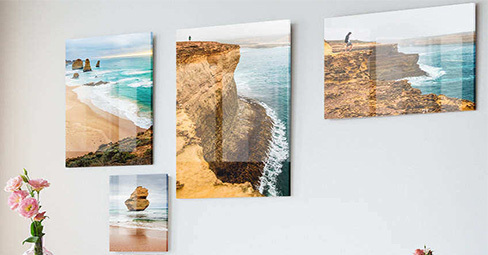
You have found the photo. The one that makes you stop scrolling every single time. Now you want it big and proud on the wall — but the printing site is asking you to choose between canvas and acrylic, and you have no idea which one will actually look best in your home.
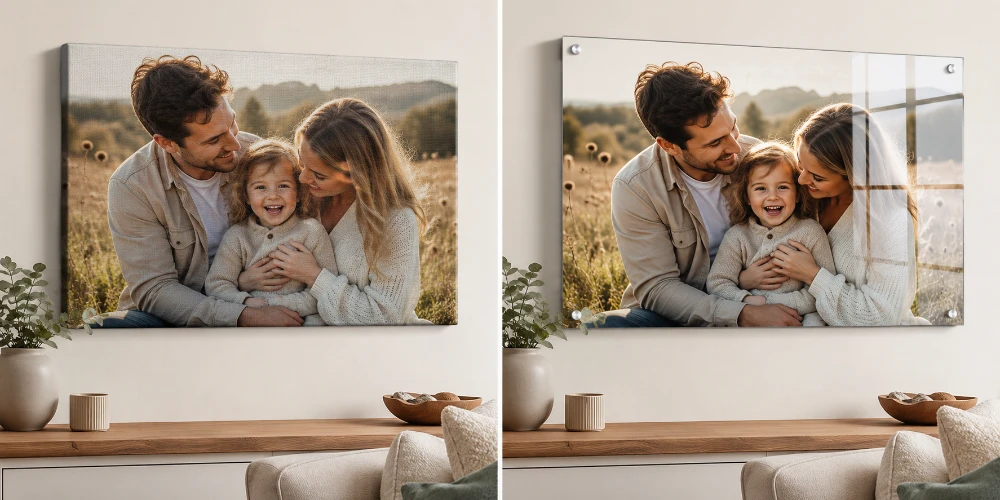
It is a fair question, and the honest answer is that there is no single winner. Canvas and acrylic are both brilliant. They just do different jobs. One brings warmth and a soft, painting-like feel. The other brings depth, shine and punchy colour that almost glows.
This guide breaks down the real differences — cost, quality, durability, lighting and care — in plain English, with UK prices and UK homes in mind. By the end you will know exactly which format suits your photo, your room and your budget. We print both here at My Picture, so we are not going to talk one down to sell the other. We will just tell you how they truly compare.
In a Nutshell
Canvas = warm, textured, glare-free and the cheapest option. Best for family photos, landscapes and cosy rooms.
Acrylic = glossy, deep, vivid and premium. Best for bold colour, fine detail and modern spaces.
Cheaper? Canvas, from around £4.50.
More durable in tough rooms? Acrylic.
Quick rule: choose canvas for warmth and value, acrylic for wow-factor and colour.
What Is a Canvas Print?
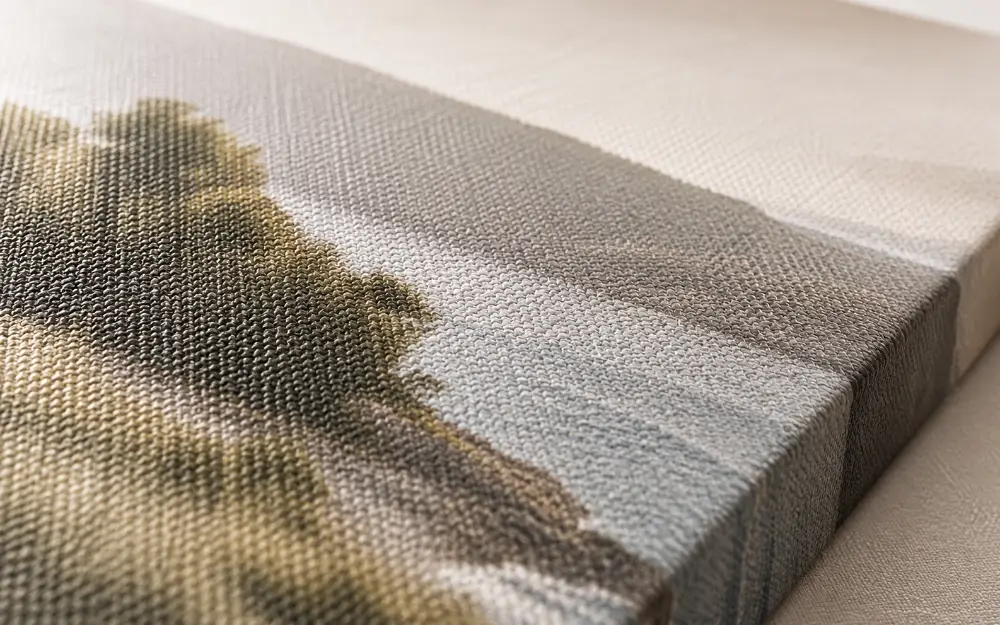
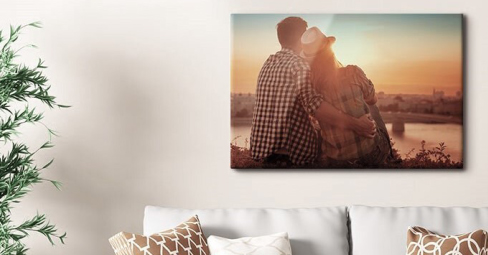
A canvas print is your photo printed onto real canvas material, which is then wrapped around a wooden frame and pulled tight at the back. It is the same idea as a classic painting hung in a gallery — which is exactly why it feels so familiar and timeless on the wall.
This wrap-around finish is called gallery-wrapped. Because the canvas folds neatly around the edges of the frame, there is no need for an outer frame at all. It looks finished from every angle and is ready to hang straight out of the box. You can choose how the edges look too — mirrored, stretched, or a solid white or black edge — depending on whether you want the image to wrap round or sit on a clean border.
At My Picture, we print our canvas prints using HP latex inks, which are solvent-free and give deep, rich colours. The printed canvas is then hand-stretched over a real pine stretcher frame, so it stays beautifully taut for years without sagging.
How a canvas print is made
Your photo is printed onto the canvas fabric using fade-resistant latex inks.
The canvas is wrapped around a solid pine stretcher frame.
It is pulled taut and stapled at the back, like an artist's canvas.
It arrives ready to hang on a single hook — no glass, no heavy fixings.
The look and feel of canvas
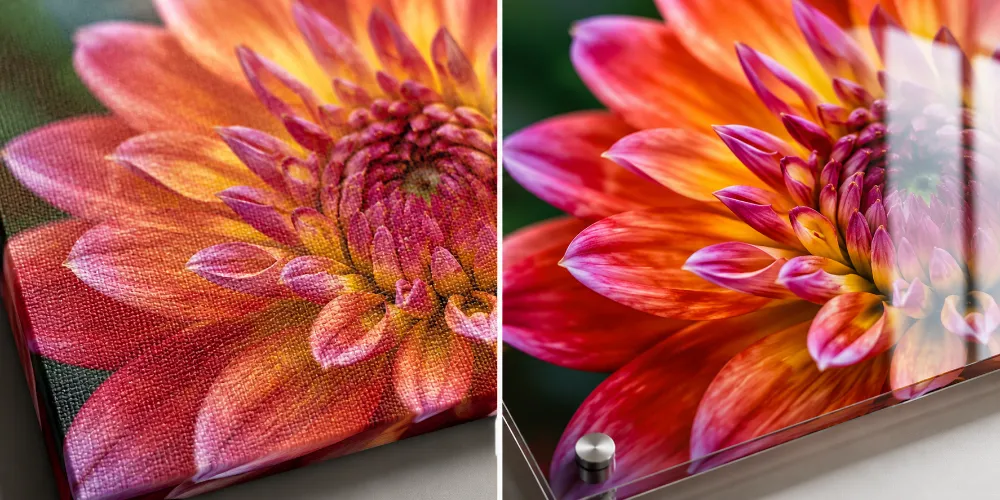
Canvas has a gentle woven texture you can actually see and touch. That texture softens the image slightly and scatters light, which gives it that warm, hand-made, artistic quality. It is the reason canvas suits portraits, landscapes and emotional family moments so well — it feels less like a screen and more like a piece of art.
It is also wonderfully practical. A canvas print is light, easy to hang, and because there is no glass, it never throws back glare from a window or a lamp.
What Is an Acrylic Print?
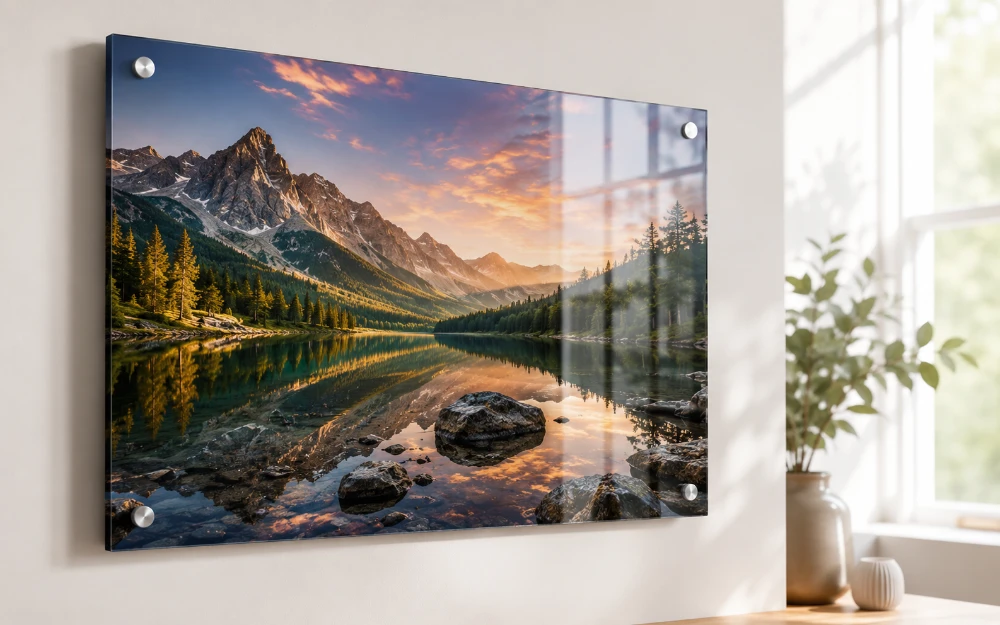
An acrylic print is your photo displayed behind a slim, crystal-clear panel of acrylic glass. Your image is reproduced in ultra-sharp detail and then sealed beneath the glass, which makes colours look richer and gives the whole piece a striking sense of depth. If you want the full background, our guide to what an acrylic print is walks through every step.
Our acrylic photo prints use a 3mm-thick acrylic panel with hand-polished edges and a frameless, borderless design. A hidden hanging system sits behind the print, so it appears to float just off the wall.
Two ways to build an acrylic print
It helps to know there is more than one way photos end up behind acrylic, because it affects the quality:
Direct print: your image is printed onto a pure-white multilayer backing, then covered with the acrylic panel. This is the high-quality, great-value standard.
Photo-paper (premium): your image is reproduced on real lab-quality photo paper, laminated to the backing, then sealed under the glass. This is the top-end finish for the very sharpest detail.
Both give you that signature acrylic depth and shine. The premium version simply squeezes out a touch more detail for photographers and fine-art images.
The look and feel of acrylic
Acrylic is all about shine and clarity. The glossy surface makes colours pop, deepens the darks and brings out fine detail you might not even notice on a matte print. Light plays across the surface and seems to glow from within, which is why acrylic looks so at home in modern flats, smart offices and minimalist rooms.
It feels premium because it is. You pay a little more, but in return you get a sleek, contemporary statement piece that genuinely catches the eye the moment someone walks in.
Canvas vs Acrylic: The Full Comparison Table
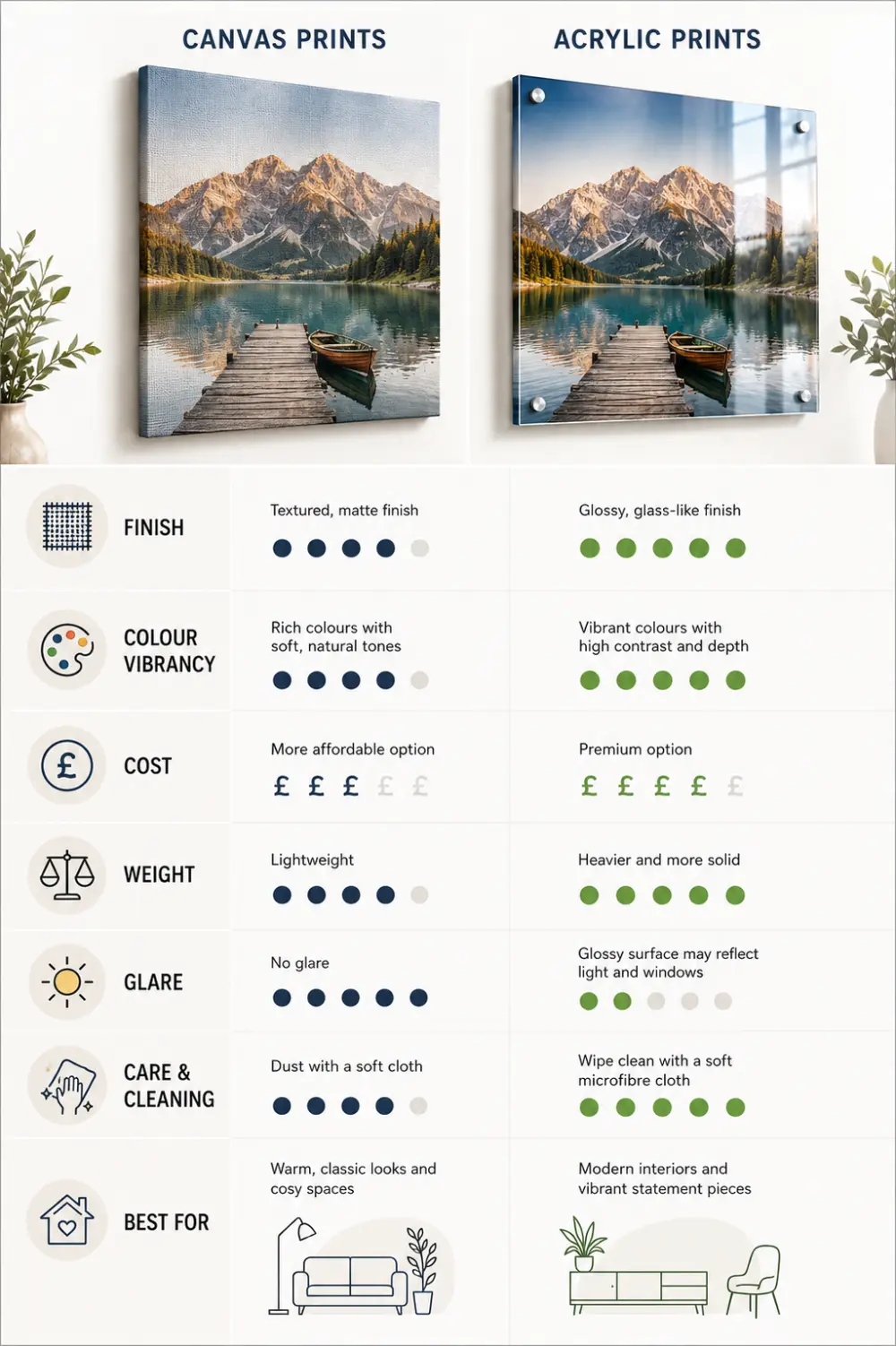
Short on time? This table sums up how the two stack up across every factor that matters. We dig into the detail underneath.
Factor
Canvas Print
Acrylic Print
Finish
Soft, matte, woven texture
Glossy, smooth, glass-fronted
Colour
Warm, natural, slightly muted
Vivid, deep, high contrast
Depth effect
Flat, painting-like
Strong 3D sense of depth
Best mood
Cosy, classic, gallery
Modern, sleek, premium
Glare
None — absorbs light
Can reflect bright light
Weight
Very light
Heavier — needs firm fixings
Cost
Most affordable, from ~£4.50
Premium — costs more
Humid rooms
Best avoided
Handles moisture well
Cleaning
Dust with a dry cloth
Wipe glass with a soft cloth
Hanging
Single hook, ready to hang
Hidden floating hanger
Best photos
Portraits, landscapes, family
Bold colour, detail, cityscapes
Lifespan
Years; 75-year fade guarantee
Years; protected by glass
Cost: Which Is Cheaper?
For most people, budget is the first deciding factor — so let us get straight to it.
Canvas is the more affordable choice. Our canvas prints start from around £4.50 for a small format, which makes them a brilliant first step into custom wall art. Because they are so good value, you can fill a whole wall with a gallery of canvases without spending a fortune, and bundle savings make bigger orders even kinder on the wallet.
Acrylic sits in the premium bracket. The acrylic glass, the precision cutting and the hand-polished edges all cost more to produce, so you will pay a bit extra. But for a single statement piece in a key spot — above the sofa, in the hallway, in the office reception — many people feel that touch of luxury is well worth it.
Why acrylic costs more
The 3mm acrylic panel is a premium material, cut to size with CNC milling.
The edges are polished by hand for that flawless, glassy finish.
The hidden floating hanger system is included to keep the borderless look clean.
There is simply more material and more careful handling in every piece.
How to think about value, not just price
Cheaper does not always mean better value, and dearer does not always mean overpriced. It depends on the job you need the print to do.
If your goal is...
Best value pick
Why
Cover a big wall for less
Canvas
Lowest cost per square centimetre
One show-stopping piece
Acrylic
Premium finish where it counts
A whole gallery wall
Canvas
Bundle savings on multiple prints
A gift that feels luxurious
Acrylic
Reads as high-end straight away
Trying wall art for the first time
Canvas
Low risk, low spend
In short: canvas gives you the best value per square centimetre, while acrylic gives you a high-end finish that justifies the higher price. If you want maximum wall coverage for your money, canvas wins. If you want one piece that genuinely stops people in their tracks, acrylic earns its keep.
Quality, Colour and Image Detail
Both formats produce genuinely lovely results, but they handle your photo in very different ways. This is where the choice really starts to matter.
Colour and contrast
Acrylic is the clear winner for vivid colour and crisp detail. The clear glass layer adds contrast and saturation and a sense of depth, so bright, bold, high-resolution images look spectacular. If your photo is full of strong colour — a sunset, a city at night, a flower in close-up, a splash of ocean blue — acrylic will make it sing.
Canvas takes a softer approach. The woven texture mutes colours very slightly and scatters the light, giving a more natural, true-to-life feel. That gentleness is a strength, not a flaw — it is exactly what makes portraits and landscapes feel warm rather than clinical or over-processed.
Sharpness and fine detail
If your image is packed with fine detail — architecture, jewellery, product shots, sharp wildlife — acrylic shows every line because the smooth surface does not interrupt the image. Canvas texture, by contrast, can very slightly soften the finest detail, which is usually flattering for people but less ideal for technical shots.
Match the format to your photo
High-resolution, colourful photos: acrylic shows them off best.
Portraits and people: canvas flatters skin tones and softens harsh detail.
Older or lower-quality photos: canvas is more forgiving, as the texture hides minor flaws.
Black-and-white images: both look superb, but acrylic adds extra drama to the contrast.
Fine art and detailed work: acrylic, ideally the photo-paper premium version.
A quick word on photo quality
Whichever format you pick, your print is only as good as the file you upload. As a rule of thumb: if the photo looks sharp on your screen at full size, it will print well. Acrylic is less forgiving here because it reveals everything, so always use your sharpest, highest-resolution version for an acrylic print. Avoid heavily zoomed shots, screenshots and very dark or blurry images for either format.
Durability, Fading and Lifespan
If you want your print to look great for decades, durability matters — especially in real UK homes with damp winters and bright summer windows.
Acrylic is the tougher, lower-maintenance option. The glass surface protects your image from dust, moisture and everyday knocks. It copes far better in steamy or humid spots than canvas does, and the sealed construction keeps the colours locked in.
Canvas is robust too, but needs a little more care. The fabric can attract dust and is happiest away from direct sunlight, radiators and bathrooms. Treated well, a quality canvas will easily last for many years.
Do these prints fade?
All our wall prints — canvas and acrylic alike — are made with fade-resistant HP latex inks and built to last. Our canvas prints come with a 75-year fade guarantee when kept out of direct sunlight, so longevity really is not in question for either format. Acrylic adds a layer of glass that also helps shield the image from UV light, which is handy on brighter walls.
How long will each one last?
Realistically, both will outlast most of the furniture in the room when cared for properly. The deciding factor is rarely the lifespan itself — it is which format suits the conditions of the wall you have in mind. A canvas in a dim, dry hallway will be just as happy in 20 years as an acrylic in a sunny kitchen.
The honest summary on durability: both last for years. Acrylic simply needs less day-to-day care and copes better in bright or humid rooms, while canvas prefers a dry, shaded spot.
Glare, Light and Where You Hang It
This is the practical point most guides skip — and it can make or break how your print looks once it is on the wall.
Canvas never reflects glare. Its matte surface absorbs light, so you can hang it opposite a window or under a bright lamp and still see the image perfectly. That makes canvas the safer bet for sunny rooms, conservatories and tricky lighting.
Acrylic can catch reflections. The same glossy surface that makes colours glow can also bounce back light from a window or a ceiling downlight. In the right spot those reflections add to the magic; directly facing strong sunlight, they can get in the way. So think about where the light falls before you choose acrylic for a very bright wall.
A simple rule for lighting
Your wall / room
Best choice
Bright wall facing a window
Canvas — glare-free
Softly lit or evening-lit room
Acrylic — the shine works for you
Kitchen or bathroom (humidity)
Acrylic — handles moisture
Dim hallway or landing
Either; acrylic adds a lift of light
Conservatory or sunroom
Canvas — no reflections in strong sun
Weight, Hanging and Installation
How a print goes up on the wall is a bigger deal than people expect — especially for renters and anyone nervous about drilling.
Canvas is feather-light and fuss-free. Most canvases need nothing more than a single picture hook, and smaller ones can even go up with adhesive strips — perfect if you cannot make permanent holes. That makes canvas one of the most renter-friendly wall art choices going.
Acrylic is heavier and needs firmer fixings. The glass panel has real weight, so it comes with a hidden floating hanger and we recommend secure fixings such as rawl plugs, especially for larger sizes. The reward is that lovely floating look with no visible frame. Our step-by-step guide to hanging acrylic prints walks you through the tidiest method.
Hanging tips for both
Hang the centre of the print at around 145cm from the floor — the standard gallery eye level.
Use a spirit level; it takes 30 seconds and saves a crooked print bothering you forever.
For heavier acrylic, find a stud or use proper cavity fixings on plasterboard walls.
Cut a paper template the size of your print and tape it up first to test the position.
Cleaning and Care
A few minutes of care keeps either print looking its best for years.
Cleaning a canvas print
Dust gently with a clean, dry, soft cloth or a soft brush.
Avoid water, sprays and solvents — moisture is canvas's enemy.
Keep it away from radiators, steam and direct sun to prevent warping or fading.
Cleaning an acrylic print
Wipe the glass with a soft, dry or barely damp microfibre cloth.
Never use abrasive pads or harsh chemicals — they can scratch or cloud the surface.
A quick wipe now and then is usually all it needs, which is part of acrylic's appeal.
Which Looks Best in Your Room?
Style matters as much as the photo. Here is how each format fits different UK interiors.
Choose canvas if your room is...
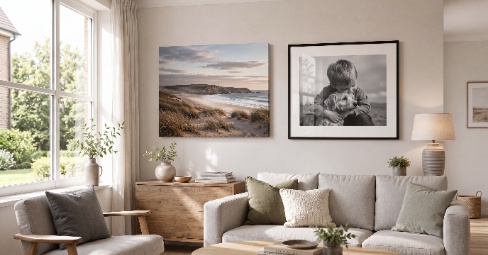
Traditional or period — canvas suits beamed cottages, Victorian terraces and floral, homely lounges.
Family-focused — a wall of canvas portraits feels warm and personal.
Cosy and layered — canvas adds softness rather than shine.
Bright and sunlit — no glare to worry about, even opposite a big window.
Choose acrylic if your room is...
Modern or minimalist — the sleek, frameless look complements clean lines.
A home office or studio — acrylic reads as polished and professional.
Full of bold colour and contemporary furniture — acrylic matches that energy.
A kitchen or bathroom — the glass shrugs off humidity.
Still torn? Plenty of homes use both: a soft canvas gallery in the living room and a single acrylic statement piece in the hallway. You can browse the full range of wall decor options to see how the formats sit alongside each other.
What About Metal and Other Formats?
Canvas and acrylic are the two big hitters, but they are not your only choices. It helps to know where they sit in the wider line-up, because the right answer for you might be something in between.
Metal (aluminium) prints put your photo on a tough aluminium composite panel. They are weatherproof, ultra-durable and give a cool, modern, slightly muted finish — a great middle ground if you love the contemporary feel of acrylic but want something even more rugged. Our aluminium photo prints even work in humid rooms and sheltered outdoor spots.
Acrylic and aluminium combined is our most luxurious option of all. The acrylic + aluminium print pairs a glass front with a metal backing for the ultimate gallery look — the depth and shine of acrylic plus the stability and strength of metal.
Posters are the budget-friendly, easy-to-swap choice. If you like refreshing your walls often or you are decorating on a tight budget, a photo poster print on real photo paper is a smart, low-commitment pick — and you can always add a frame later.
How the main wall art formats compare
Format
Finish
Cost
Best for
Canvas
Matte, textured
£
Warmth, value, family photos
Acrylic
Glossy glass
£££
Colour, depth, modern rooms
Metal
Cool, muted
££
Durability, humid/outdoor
Acrylic+Alu
Glossy + solid
££££
The ultimate gallery look
Poster
Paper
£
Budget, easy swaps
A Note on Quality and Conscience
It is worth knowing that the inks behind both formats are designed with more than just colour in mind. Our HP latex inks combine the stability of solvent-based inks with the kinder, non-toxic qualities of water-based inks — so you get rich, lasting colour without the harsh chemical smell of older printing methods. Whichever format you choose, you are getting a print built to be looked at for decades, not replaced in a year.
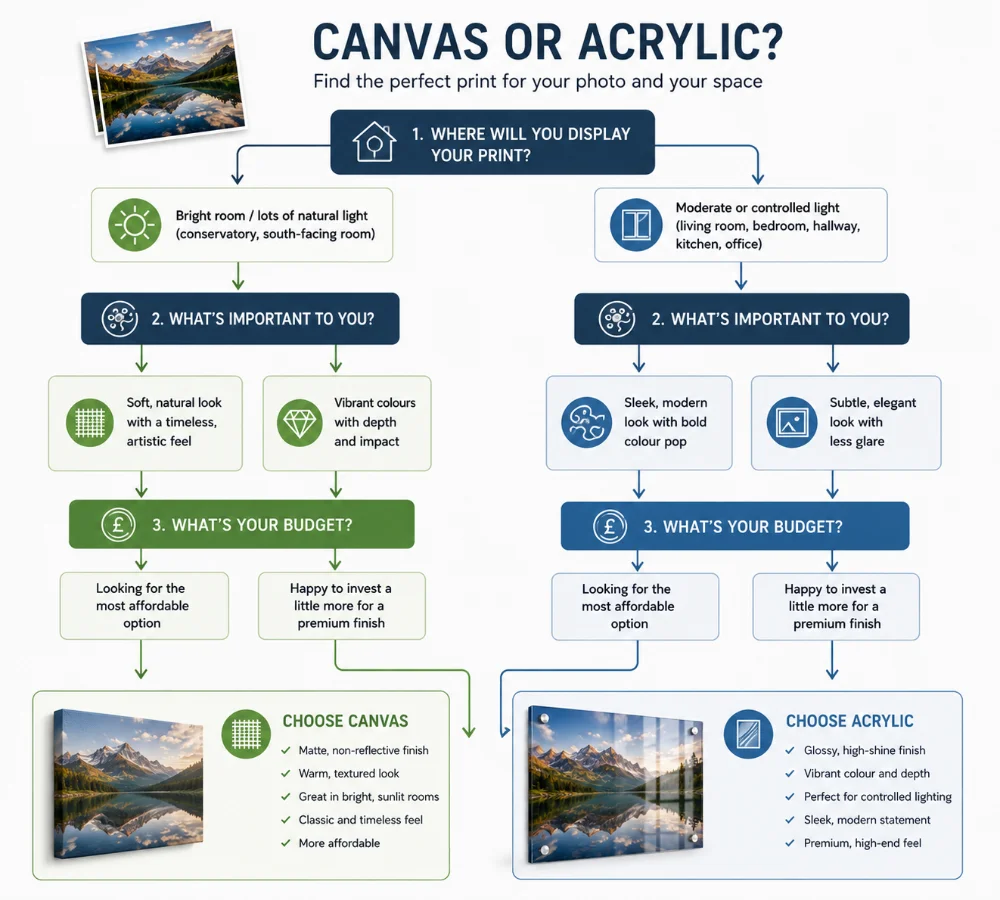
How to Decide in 30 Seconds
If you only remember one thing, make it this:
Pick canvas if you want warmth, a classic feel, no glare and the best price.
Pick acrylic if you want shine, depth, vivid colour and a premium, modern statement.
Match it to the room — cosy and traditional leans canvas; sleek and modern leans acrylic.
Check the light — a very sunny wall is happier with canvas; a humid room needs acrylic.
Look at the photo — soft, personal and people-focused suits canvas; bold, sharp and colourful suits acrylic.
For a deeper side-by-side straight from our own studio, our full acrylic vs canvas breakdown goes even further into the detail and shows real examples.
The Bottom Line
Canvas and acrylic are both fantastic ways to get your favourite photos off your phone and onto the wall, where they belong. Canvas brings warmth, texture and unbeatable value. Acrylic brings shine, depth and a premium edge.
Neither is a wrong answer. It simply comes down to the photo you love, the room it is going in, the light it will sit in and the feeling you want when you walk past it every single day. Pick the one that matches that, and you will be glad every time you look up at it.
Frequently Asked Questions
Are canvas or acrylic prints better?
Neither is better overall — they are better at different things. Canvas is warmer, cheaper and glare-free, which suits family photos and cosy rooms. Acrylic is glossier, more vivid and more premium, which suits bold images and modern spaces. Match the format to your photo, your room and your budget rather than looking for a single winner.
Are acrylic prints more expensive than canvas?
Yes. Acrylic prints cost more because the acrylic glass, precision cutting and hand-polished edges are premium to produce. Canvas is the most affordable wall art format and starts from around £4.50, making it the better choice if you want to cover more wall for less.
What is an acrylic print?
An acrylic print is your photo displayed behind a slim panel of crystal-clear acrylic glass. The glass deepens colours and creates a striking sense of depth, while a hidden hanging system lets the borderless print appear to float just off the wall. The image is either printed directly onto a white backing or, in the premium version, onto real photo paper before being sealed under the glass.
What is a canvas print?
A canvas print is your photo printed onto real canvas fabric and wrapped around a wooden frame, pulled tight and fixed at the back — just like a traditional painting. This gallery-wrapped finish needs no outer frame and arrives ready to hang.
Do acrylic prints have glare?
They can. The glossy surface that makes colours glow will also reflect bright light, so an acrylic print directly facing strong sunlight may catch some glare. In softer or evening light, the shine works in your favour. If you are worried about a very bright wall, canvas is the glare-free option.
Are acrylic prints waterproof?
Acrylic prints are highly water-resistant. The sealed glass front protects the image from moisture and dust, which is why acrylic handles humid rooms like kitchens and bathrooms far better than canvas. They are not designed to be submerged, but everyday humidity is no problem at all.
Do canvas prints fade, and how long do they last?
A quality canvas print kept out of direct sunlight will last for many years. Ours are printed with fade-resistant HP latex inks and backed by a 75-year fade guarantee, so fading is not a real concern as long as you avoid hanging it in harsh, direct sun for years on end.
Are canvas prints good quality?
Yes — a well-made canvas print on a solid pine frame, printed with latex inks, is a genuinely high-quality piece of wall art. The key markers of quality are real wood stretcher bars, taut canvas, solvent-free inks and a clean gallery-wrapped edge, all of which our canvases include.
How do you clean canvas and acrylic prints?
For canvas, dust gently with a clean, dry, soft cloth and keep it away from moisture. For acrylic, wipe the glass with a soft, dry or barely damp microfibre cloth — avoid abrasive pads and harsh solvents, which can scratch or cloud the surface.
Which lasts longer, canvas or acrylic?
Both last for years when cared for, and our canvas prints carry a 75-year fade guarantee. Acrylic tends to need less day-to-day care because the glass protects the image from dust and moisture, making it the more hard-wearing choice in busy, bright or humid rooms.
Are acrylic prints heavy and hard to hang?
Acrylic is heavier than canvas because of the glass panel, so it needs firmer fixings such as rawl plugs, especially in larger sizes. It comes with a hidden floating hanger that keeps the look clean. Canvas, by contrast, is very light and usually needs just a single hook.
Which is best for a bright, sunny living room?
Canvas. Its matte surface absorbs light and never reflects glare, so the image stays clear even when hung opposite a window. Acrylic can look fantastic in sunlight too, but only if you position it so strong light does not bounce straight back at you.
Which is best for a modern home or office?
Acrylic. Its glossy, frameless, floating finish suits clean lines, bold colour and contemporary furniture, and it reads as polished and professional — ideal for a smart living room, studio or office reception.
Canvas vs framed print — what is the difference?
A canvas print is gallery-wrapped around a frame with no glass and no visible border, giving a soft, painting-like look. A framed print sits behind glass with a surrounding frame and usually a white mount, giving a more formal, traditional finish. Canvas feels more relaxed and modern-classic; framed prints feel more structured. Our canvas vs framed prints guide covers the full comparison.
Can I use a phone photo for canvas or acrylic prints?
Usually, yes. Modern smartphones have plenty of resolution for most print sizes. Canvas is a little more forgiving with lower-quality images because its texture softens minor flaws, while acrylic shows every detail — so use your sharpest, highest-resolution photo for an acrylic print.
Can I hang an acrylic print without lots of holes?
Yes. Acrylic prints come with a hidden floating hanger that needs only minimal fixing, and you can plan the exact position with a paper template before drilling. Because acrylic can be weighty, use firm fixings such as rawl plugs for a secure, tidy result.