byJonathan Vincent– 15+ years of experience in photography, printing & personalised products17 minutes
You've got hundreds, maybe thousands, of photos sitting on your phone. Birthdays, holidays, the dog being daft, that one perfect sunset on the last evening abroad. And every so often the same thought lands: I really should do something with these before they're lost in the scroll.
So you start looking — and almost straight away you hit a fork in the road. Do you want a photo album or a photo book? The two names get thrown around as if they mean the same thing. They don't. They're made in completely different ways, they look and feel different in the hand, they age differently, and they cost differently. One of them will suit your photos far better than the other.
This guide settles it properly. We'll define each one in plain terms, walk through every real difference — printing, paper, binding, cost, longevity — and give you a clear way to decide. By the end you'll know exactly which to order and why. No jargon, no filler.
Key Takeaways
A photo album holds prints you make yourself. You slot or stick each finished photo into sleeves or onto pages by hand.
A photo book has your photos printed straight onto the pages during production, as one designed layout — like a magazine or proper book.
Albums are hands-on and easy to update: ideal if you enjoy arranging photos and want to keep adding to a collection.
Books are polished and compact: ideal if you want a finished keepsake and you're working from digital photos.
For one-off events (weddings, big trips), a photo book usually wins on value and presentation. For a growing, casual collection, an album is hard to beat.
Avoid old 'magnetic' self-adhesive albums for anything you want to keep — the adhesive can yellow and damage prints over the years.
The Short Answer
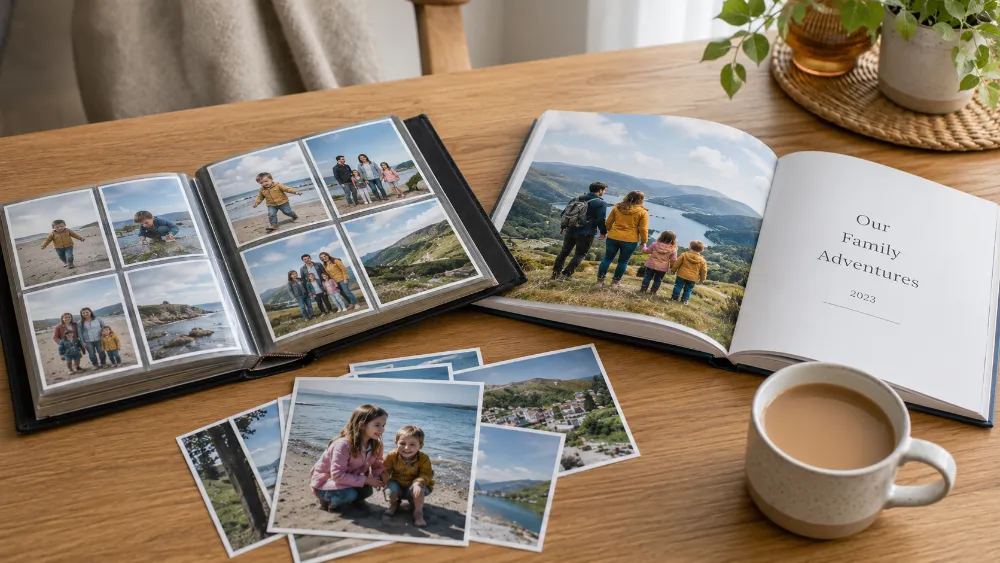
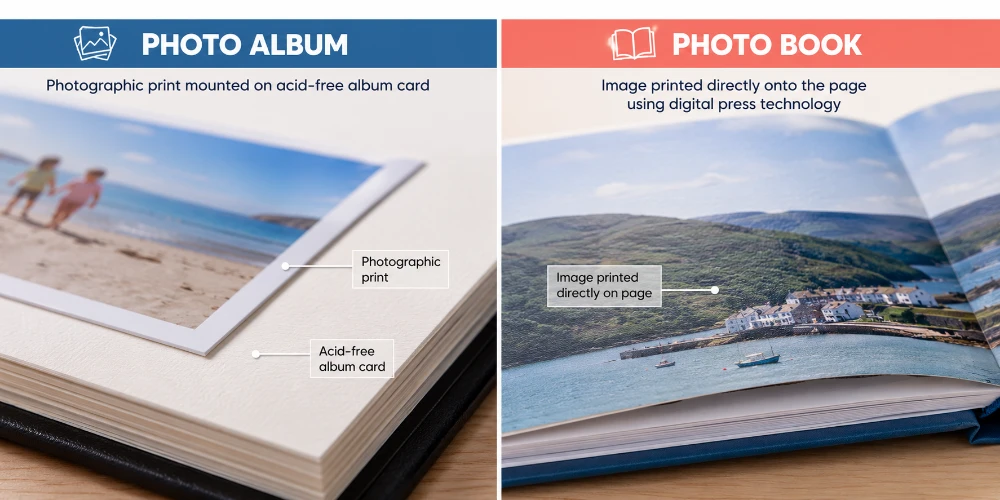
The main difference is how your photos get onto the page. In a photo album, you add separate printed photos by hand, slotting them into pockets or sticking them onto pages. In a photo book, your photos are printed directly onto the pages as part of a single designed layout, then bound into a finished book. An album is a holder for prints; a book is the print.
Everything else — the look, the cost, how easy it is to update, how long it lasts — flows from that one difference. The rest of this guide unpacks what it means for you.
What Is a Photo Album?
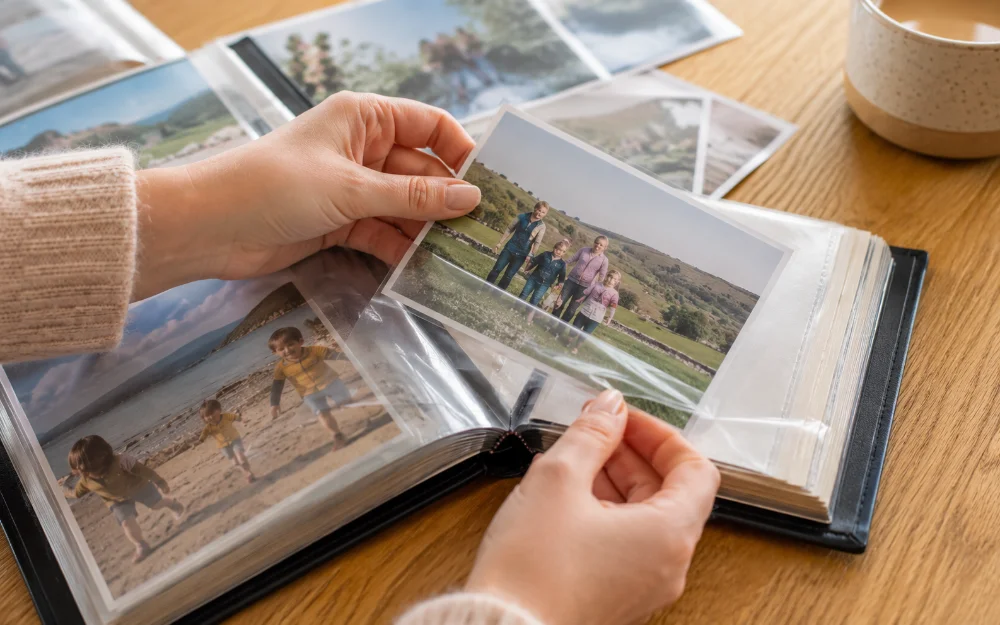
A photo album is a book of empty pages or pockets that you fill with photos you've already had printed. You place each print by hand, which makes albums hands-on, easy to rearrange, and well suited to growing collections.
The album is the format most of us grew up with — the one your parents pulled off the shelf at Christmas. It's really a clever, durable holder for prints you've ordered separately. Here are the main types you'll come across in the UK:
Album type
How it works
Best for
Slip-in
Pre-made clear pockets, usually sized for 6x4" prints. Slide photos in, swap any time.
Easy everyday collections
Self-adhesive
Sticky pages with a clear film over the top. Mix photo sizes freely on one page.
Flexible, creative layouts
Traditional / mounted
Thick card pages; fix photos with corners or glue and write notes by hand.
Heirlooms and keepsakes
Scrapbook-style
Blank pages built for embellishments — stickers, tickets, journaling and craft.
Crafters and storytellers
Leather or linen
Premium hand-finished covers over traditional pages, often refillable.
Weddings and gifts to keep
The big appeal is that it's tactile. You hold the actual prints, you decide the order on the day, and you can tuck in a cinema ticket, a pressed flower or a handwritten date in the margin. Because nothing is permanent, you can pull a photo out and swap it whenever the mood takes you. It's the closest thing to scrapbooking without needing a drawer full of craft supplies.
If that creative, do-it-yourself side appeals, our guide on how to create a personalised photo album walks through photo selection and layout ideas step by step.
What Is a Photo Book?
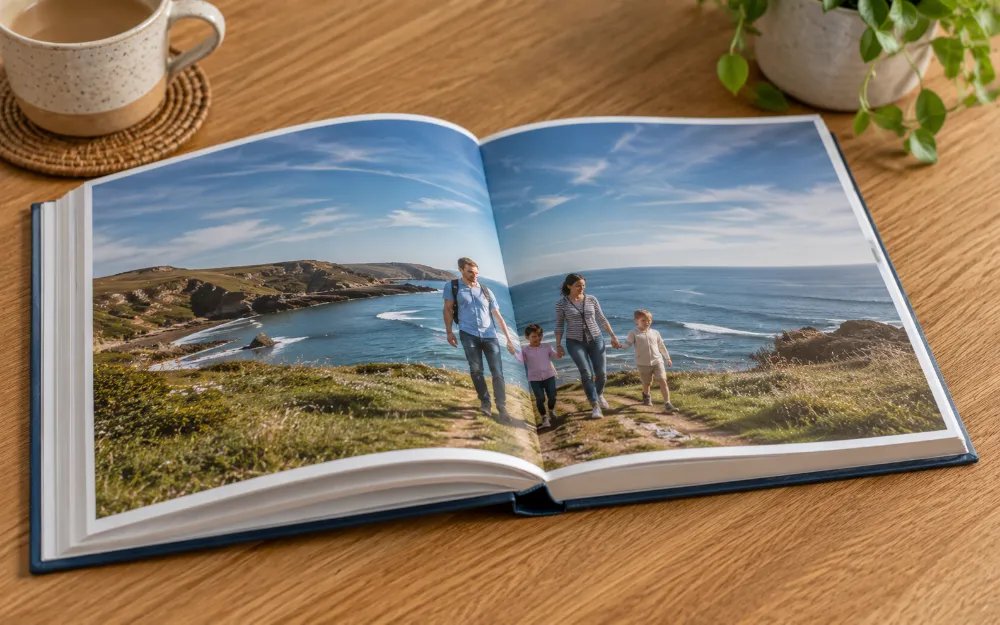
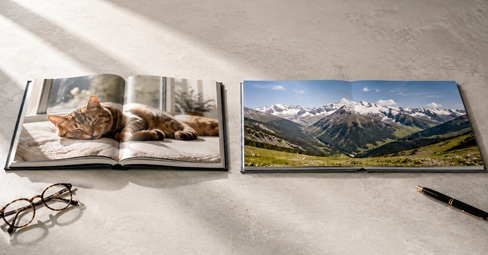
A photo book is a custom book where your photos are printed directly onto the pages as part of a designed layout. You build it on screen — arranging photos, adding captions and backgrounds — then it's printed and bound into one finished, ready-to-enjoy book.
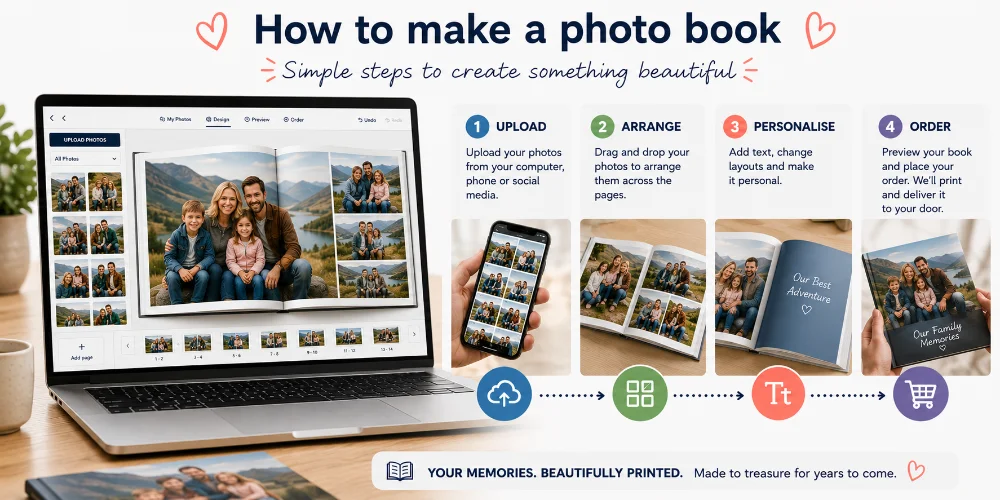
A photo book takes the modern route. There are no separate prints and no assembly. You design it digitally: upload your photos, drag them onto the pages, decide how big each one sits, add a few words, then send the finished design off to be printed and bound. What lands on your doormat is one neat, professional-looking book.
Because the printing is done in one professional run, the finish stays clean and consistent from cover to cover. No plastic sleeves, no sticky pages curling at the edges — just your photos sitting flush on the paper, often spilling right to the page edge.
For the full background on how these are put together, our explainer on what a photobook is covers formats, cover types and design features in more detail. The main binding styles are worth knowing before you choose:
Binding style
What makes it different
Best for
Softcover
Light, flexible paper cover. The most affordable way in.
Casual books, multiple copies
Hardcover
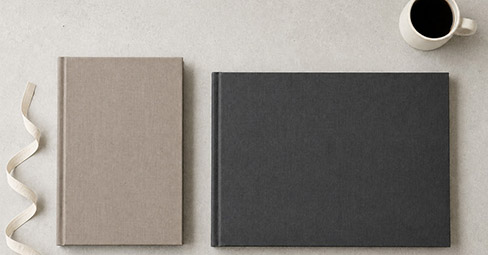
Rigid board cover that feels like a proper book and survives handling.
Gifts and keepsakes
Lay-flat
Pages open completely flat so a photo can cross both pages with no fold.
Landscapes, weddings, panoramas
Ring-bound
Pages held on rings; lies flat and is easy to flick through.
Practical, everyday use
You can explore all of these on our personalised photo book range, which starts from around £4 for a softcover and scales up to large hardcover and lay-flat formats.
Photo Book vs Photo Album: The Key Differences at a Glance
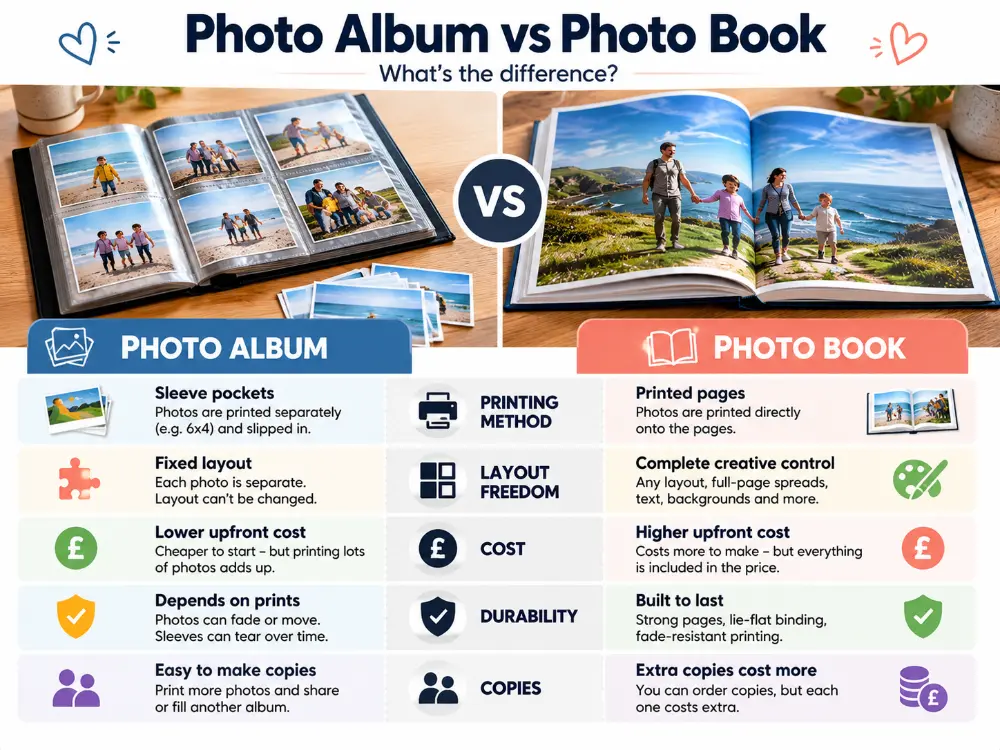
Here's the heart of it. This table sums up how the two compare across the things people actually weigh up before they buy.
What you're comparing
Photo Album
Photo Book
How photos go in
You print photos separately, then slot or stick them in by hand
Your photos are printed straight onto the pages as part of the design
The overall look
Classic, hands-on, scrapbook feel with real prints you can lift out
Clean, modern, magazine-style finish with photos flush on the page
Layout freedom
Limited to the size of the sleeves or pockets you've got
Full control of size, position, captions, backgrounds and full-page spreads
Best for photo count
A smaller or steadily growing collection
Lots of photos kept tidy in one slim, compact volume
Adding & swapping
Easy — pull a photo out and pop a new one in any time
Fixed once printed, but you can reorder an updated copy
Copies for family
Each one assembled by hand, one at a time
Reprint as many identical copies as you like at the click of a button
Space on the shelf
Gets bulkier as prints build up
Stays slim and neat, even with hundreds of photos
Typical UK starting price
Low upfront, but printing each photo adds to the total
From around £4 for a softcover; more for hardcover or lay-flat
Lifespan
Decades if well made; avoid old 'magnetic' sticky pages
Decades with quality paper and ink; hardcover handles use best
How They're Made: The Technical Difference
This is where the two products genuinely part ways — and understanding it explains every other difference on this page.
Albums: real prints, mounted by hand
With an album, your photos exist as finished prints before they ever reach the book. They're usually produced on photographic paper, which is light-sensitive paper developed to give rich, true-to-life colour and deep blacks. You then place each print yourself — into a pocket, onto a sticky page, or fixed with photo corners onto thick card.
The pages of a good traditional album are made from heavy, acid-free card. 'Acid-free' matters: ordinary paper slowly releases acids as it ages, which can yellow and brittle anything pressed against it. Acid-free stock is designed to stay stable for generations, which is why heirloom and wedding albums are built this way.
Books: photos printed into the pages
With a photo book, there are no separate prints at all. Your images are printed onto the paper during production, exactly where you placed them in the design. There are two common methods. Most photo books are produced on a digital press — the same broad technology used for magazines and brochures — onto book paper with a gloss, silk or matte finish. Some premium books are made on photographic paper instead, for a result closer to a traditional print.
The inks matter too. Quality modern printing uses pigment or latex inks chosen for stability and fade resistance. (For context, the same family of HP latex inks we use on our canvas prints is prized for combining the durability of solvent inks with the safety of water-based ones.) Good ink on good paper is what keeps a photo book looking vivid years down the line.
So the headline is simple: an album is built around prints; a book is printed as one piece. That single fact is why books look more finished, why albums are easier to change, and why each suits a different kind of project.
Paper, Pages and Materials
A quick word on the stuff you can actually feel, because it's where quality shows.
Album pages are typically thick acid-free card — sturdy enough to hold mounted prints flat and survive decades of page-turning. Slip-in albums add clear, photo-safe pockets over the top.
Book pages are measured in gsm (grams per square metre). Heavier paper feels more substantial and is less likely to show print through from the page behind. Lay-flat books use one continuous folded sheet per spread, which is why the page can run unbroken across the centre.
Covers are where albums often pull ahead on luxury: hand-finished leather and linen feel special and age beautifully. Photo books counter with full photo-wrapped hardcovers, where your chosen image wraps right around the front, spine and back.
Finish — gloss makes colours pop and suits bold, punchy images; matte and silk resist fingerprints and glare, which is why they're popular for books that get handled a lot, like wedding albums.
Cost: Which Works Out Cheaper?
An empty album looks cheaper, but you still pay to print every photo that goes in it, so the total creeps up. A photo book bundles printing, paper and binding into one price — usually better value for a finished, one-off project. For a slowly growing collection, an album spreads the cost out over time.
This is the bit that surprises people. The album on the shelf has the smaller price tag — and at the till, it is cheaper. But an empty album does nothing on its own. You have to print every photo separately, and once you've filled a chunky album, those print costs have quietly added up to more than you expected.
A photo book rolls everything into a single price. A simple softcover can start from around £4, with hardcover and lay-flat books costing more depending on size and page count. Crucially, that price already includes the printing — there's nothing more to buy.
Scenario
Photo album route
Photo book route
A finished one-off project (e.g. a wedding or a single big trip)
Print every photo, then buy the album — print costs stack up
One price covers printing, paper and binding — usually better value
A slowly growing collection added to over years
Buy prints a few at a time and slot them in as you go
You'd reorder a new book each time you want to add more
Several copies for family members
Assemble each one by hand — slow and fiddly
Reprint identical copies instantly — far cheaper per copy
The rule of thumb: for a fixed collection you're finishing in one go, a photo book usually gives you more for your money. For an open-ended collection you'll add to over years, an album lets you pay as you go. If you want several copies for relatives, a book wins easily — reprinting is instant, while every album has to be built by hand. You can check current sizes and prices on the photo book range.
Durability: Which Lasts Longer?
Both can last for decades when made well and looked after. Traditional albums on acid-free pages are famously long-lived, which is why they're chosen for heirlooms. Quality photo books hold colour very well too, and a hardcover stands up to handling. The one thing to avoid is old 'magnetic' sticky-page albums, whose adhesive can yellow and damage prints over time.
Longevity comes down to three things: the materials, how the photo is fixed to the page, and how you store it.
What helps photos last
Acid-free pages and mounts — they don't release the acids that yellow and brittle prints over time.
Pigment or latex inks on quality paper — far more fade-resistant than cheap dye-based printing.
A sturdy cover — a hardcover or hand-bound album protects the pages from knocks and bends.
Sensible storage — kept out of direct sunlight and away from damp, almost anything lasts longer.
What shortens their life
Old self-adhesive 'magnetic' albums — the sticky film can yellow, lift and chemically attack prints after a decade or two.
Thin, low-quality book paper — pages can bend or work loose with heavy use.
Sunlight and humidity — the two great enemies of any photo, print or book alike.
In short: a well-made traditional album is the classic 'pass it down the generations' choice, but a good hardcover photo book is no fragile thing — kept sensibly, it will comfortably outlast most of the furniture in the room.
Where Does a Scrapbook Fit In?
People often ask how a scrapbook differs from both. A scrapbook is really a type of photo album — one built for embellishment. The pages are blank and you add not just photos but stickers, journaling, washi tape, ticket stubs and other keepsakes. It's the most creative and hands-on option of all, and the most time-consuming.
A photo book gives you some of that creative satisfaction — captions, backgrounds, custom layouts — but digitally, in minutes rather than evenings, and with a polished printed result. If you love the craft itself, scrapbook. If you love the look but not the glue, a photo book is the shortcut.
Which Should You Choose?
There's no single right answer — it depends on your photos and what you want from the finished thing. Use this quick guide to point yourself in the right direction.
Choose a photo album if…
Choose a photo book if…
You enjoy the hands-on bit — choosing, printing and arranging photos yourself
You want a polished, finished look with no fiddly assembly
You like swapping photos in and out over time
You're working from digital photos on your phone or laptop
You want to add tickets, notes or other keepsakes alongside the photos
You need several matching copies for family members
You've a steadily growing collection rather than one finished event
You want captions, full-page spreads and a designed layout
You want a hand-finished leather or linen heirloom to pass down
You want great value for a one-off project done in a single go
Still on the fence? Ask yourself whether you enjoy the making as much as the having. If arranging photos by hand sounds like a relaxing Sunday, an album will be a pleasure. If you'd rather skip straight to a finished keepsake, a book is the easier ride.
Best Choice by Occasion
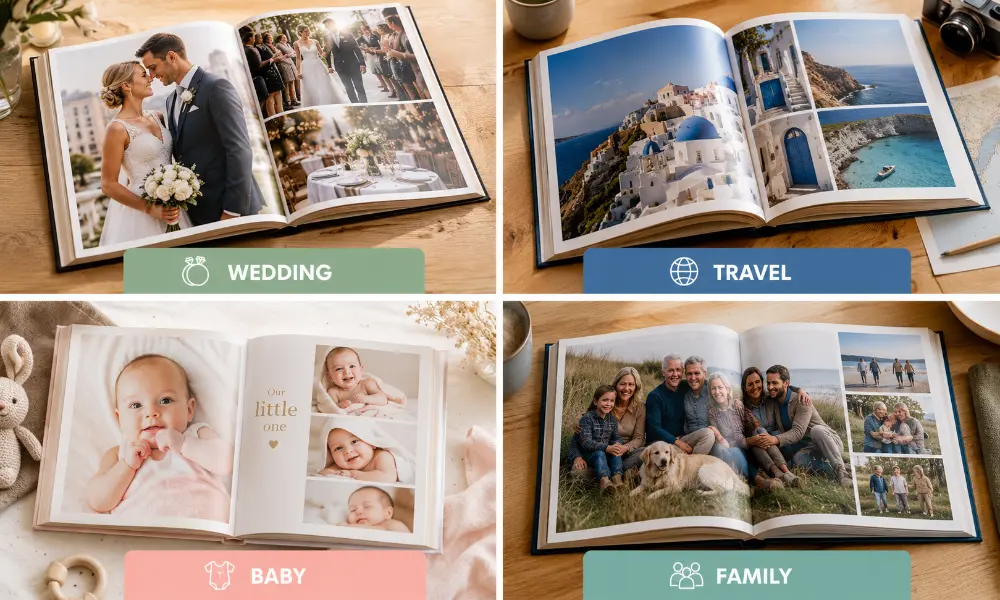
Weddings
For most couples, a photo book is the natural choice. A lay-flat book lets a single shot — the first dance, the confetti, the two of you laughing — sweep across two full pages with no fold getting in the way. And when both sets of parents want a copy, you reprint matching books in minutes rather than building three albums by hand. That said, a hand-finished leather or linen album still has an undeniable heirloom quality if that's the feeling you're after. Our full wedding photo book guide covers how many photos to include and how to plan the layout.
Holidays and travel
A book shines when you want to tell the story of a trip — adding a line about where you were and stitching the days together in order. An album is lovely if you simply want a relaxed home for your favourite snaps as they're developed, especially if you print as you go.
Baby's first year
A photo book makes a beautiful, tidy month-by-month record you can reprint for grandparents. An album suits parents who'd rather add new prints across the year without committing to a final design straight away — handy when you genuinely don't know which moments are still to come.
A growing family collection
This is album territory. If you want something you keep adding to — a shelf of years rather than a single finished volume — the slot-and-swap freedom of an album is hard to beat. Plenty of families keep one album 'live' on the coffee table and turn finished years into books for the bookshelf.
Instant and retro prints
If you shoot on an instant camera or order retro-style prints, a small slip-in or pocket album made for that format keeps them tidy and protected. These little prints rarely suit a designed photo book, so the album is the better home.
Beyond the Page: Other Ways to Show Off Your Photos
A book or album is a wonderful home for a whole collection. But your very best shots — the two or three you'd never want buried on a page — deserve to be seen every day, not just when someone reaches for the shelf.
That's where wall and home pieces earn their keep. A favourite portrait looks striking as a framed photo print with a clean white mount, while a wide landscape has real presence as a canvas print above the sofa.
For something you can change on a whim, MIXPIX® photo tiles let you put a grid of photos on the wall and rearrange them whenever you like, with no drilling. And if you've ended up with a stack of lovely images that didn't make the final cut, ordering a few extra photo prints is the simplest way to fill an album or slip one into a frame on the side table.
A photo can travel off the wall, too. A treasured family shot on a personalised photo cushion brings a little of that same warmth to the sofa. The principle is simple: your album or book holds the whole story, and a few standout pieces around the home keep the best moments in view.
How to Put One Together
Making a photo album, step by step
Order prints of the photos you want — 6x4" is the most common size for slip-in albums.
Choose your album type: slip-in for ease, self-adhesive for flexible sizing, traditional or scrapbook for a hands-on feel.
Lay your prints out in order before you commit, so the story flows the way you want it to.
Slot or fix each photo in place, adding notes, dates or little keepsakes as you go.
Making a photo book, step by step
Pick your format and binding — softcover, hardcover or lay-flat — and a size that suits your photos.
Upload your photos and let a smart layout do the first pass, or arrange every page yourself.
Add captions, backgrounds and the odd design touch to bring the pages to life.
Check the on-screen preview page by page, then order — and add extra copies if family want their own.
The Bottom Line
Both photo books and photo albums do the same wonderful job: they rescue your memories from the endless scroll and put them back in your hands, where you can actually enjoy them.
Choose a photo album if you love the hands-on side, want to keep adding over time, or want a hand-finished heirloom. Choose a photo book if you'd rather have a polished, finished keepsake — especially for a wedding, a big trip, a new baby or any moment you want to remember properly, and especially when you need copies for the family.
Whichever you pick, the hardest part is also the nicest: sitting down with all those photos and choosing the ones that made you smile.