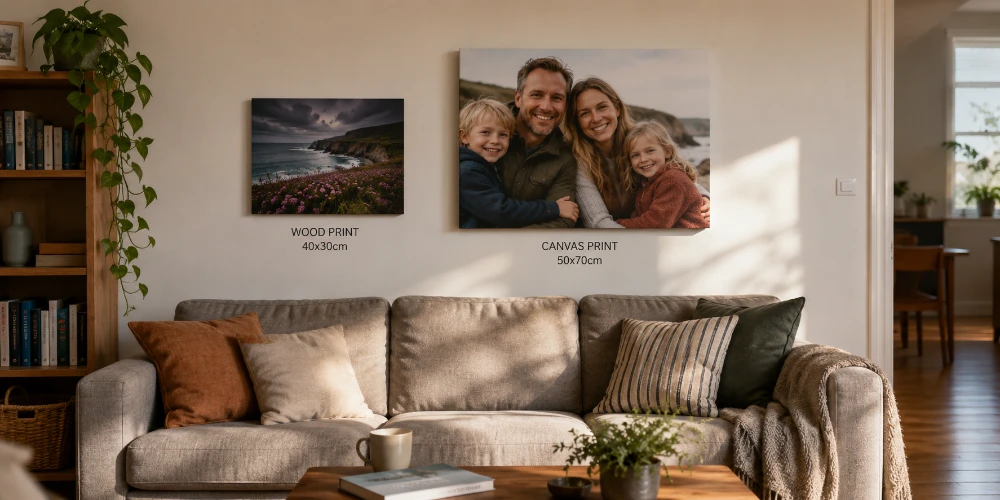
So you've found the perfect photo, and now you're stuck on the harder question: should you print it on wood or on canvas? Both turn a phone snap into proper wall art. Both look far better in real life than they do on a screen. But they feel completely different in a room, and the right choice really does come down to your photo, your walls and how you live.
Here's the short answer, and we'll back every word of it up below: canvas is the safe, affordable all-rounder that suits almost any photo and any room, while wood is the warmer, more characterful choice that shines with landscapes, nature and anything with a rustic feel. Neither is "better" across the board. One of them is better for you — and by the end of this guide you'll know exactly which.
We print both here at My Picture, so we're not going to pretend one is perfect and the other is rubbish. We'll give you the honest pros and cons, a full side-by-side table, room-by-room advice for typical British homes, and a simple three-question test to settle it.
Key takeaways
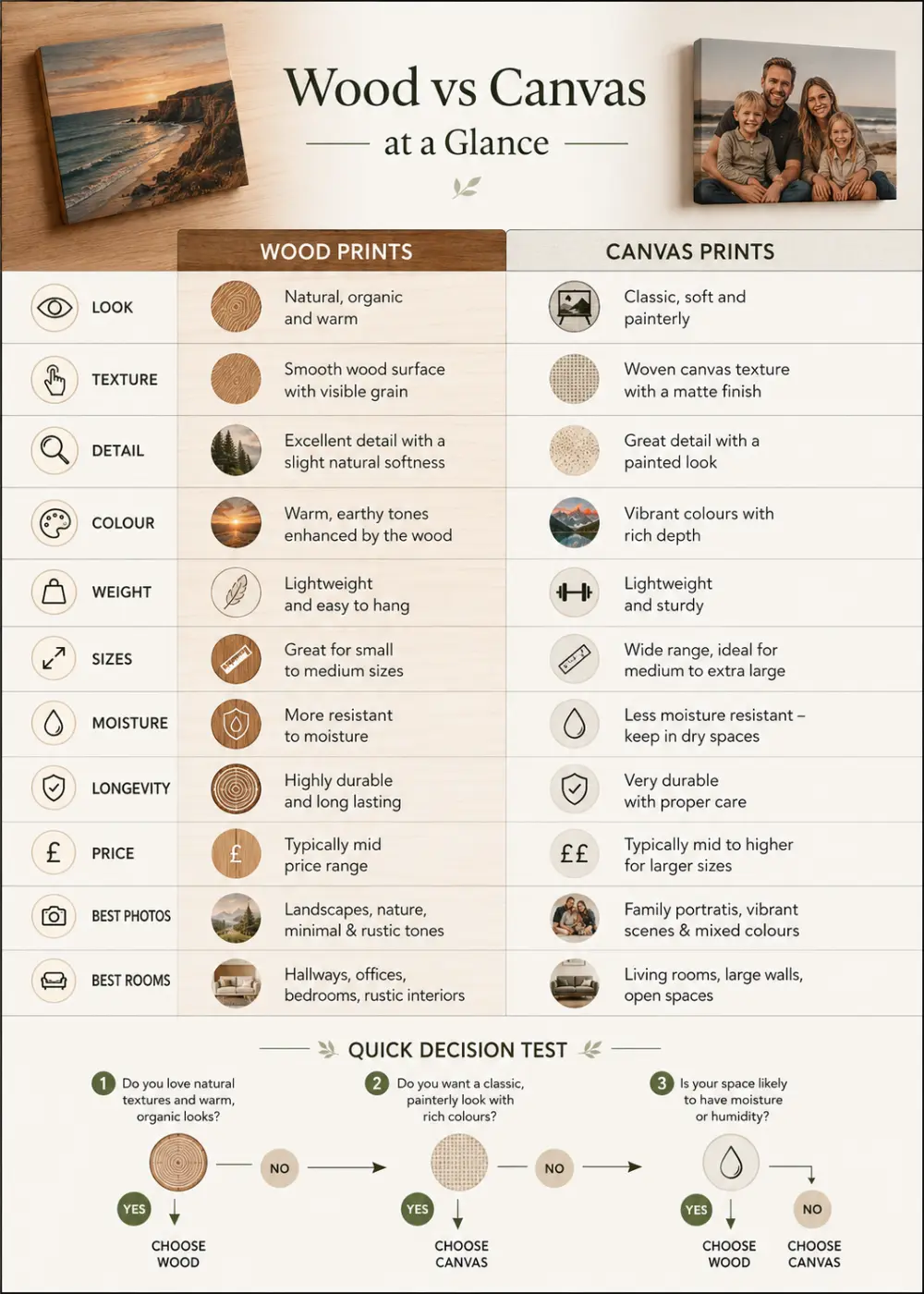
Canvas wins on price, weight and versatility. It starts cheaper, comes in the widest range of sizes (up to 120×80cm), is light and easy to hang, and flatters nearly every photo — especially portraits and family shots.
Wood wins on warmth, texture and character. The natural grain shows softly through the print, so no two pieces are ever identical. It's rigid, sits flat and slim against the wall, and looks stunning with landscapes, nature and black-and-white shots.
Detail: canvas is slightly softer, wood is crisp but tinted. Canvas weave gently mutes fine detail; wood prints are sharp but pick up the timber's warm tone, so whites read as cream, not bright white.
Moisture is wood's weak spot. Wood reacts to damp and heat, so steer clear of steamy bathrooms and directly above radiators. Canvas copes better, though neither loves a truly wet room.
Longevity: canvas has the proven edge. Our canvas prints use solvent-free HP Latex inks and carry a 75-year fade guarantee. Wood is tough and rigid, but keep it out of direct sunlight and damp for the best life.
Best of both? Mix them. A gallery wall that combines wood and canvas looks curated and personal — more on how to do that well further down.
The quick verdict, at a glance
If you're in a hurry, this is the whole guide in one paragraph. Choose canvas when you want an affordable, foolproof result that works with any photo — particularly people, pets and big statement pieces. Choose wood when you want something with genuine texture and warmth, you love the natural look, and your photo is a landscape, a nature shot or anything that suits a softer, vintage feel. Everything after this is the detail that helps you feel sure.
What is a wood print?
A wood print is your photo printed directly onto a wooden panel. There's no paper and no glass — the ink goes straight onto the timber surface, so the wood becomes part of the picture. Our photo prints on wood use a 10mm-thick premium plywood panel in a naturally warm tone, printed with 12-colour technology and sealed with a protective matte finish that keeps fingerprints at bay.
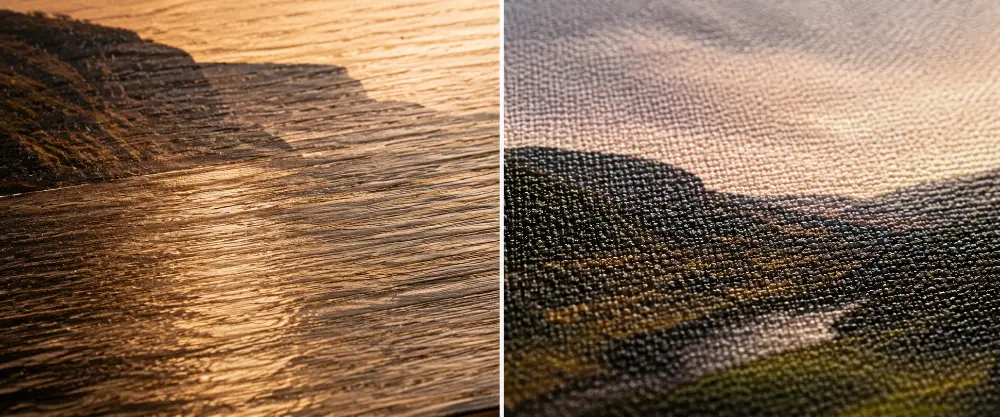
The magic is in the material itself. Because the ink sits on real wood, the fine grain shows gently through the lighter parts of your image. That means every wood print is genuinely one of a kind — the timber's pattern is never exactly the same twice. The edges are printed with a soft fade-out effect too, which gives a tasteful vintage look that sits beautifully with the organic feel of the wood.
The natural look (and what it means for your whites)
There's one quirk worth understanding before you order. Most direct-to-wood printing doesn't lay down a white base layer, so any white or very pale areas in your photo take on the warm colour of the timber underneath. A bright white wedding dress becomes a soft cream; a pale sky turns gently golden. For a lot of photos that's a lovely, cosy effect. For a crisp, colour-accurate shot where you need whites to stay white, it's something to bear in mind.
This is exactly why wood suits certain photos so well: landscapes, woodland and nature scenes, autumn colours, and black-and-white images all lean into that warm, natural character rather than fighting it. If you want to see the ordering process end to end, our step-by-step guide to printing on wood walks you through it.
What is a canvas print?
A canvas print is your photo printed onto artist-style canvas fabric, then wrapped around a wooden frame and fixed at the back — the same way a traditional painting is made. This wrap-around style is called gallery-wrapped, and it's why a canvas looks finished from every angle without needing an outer frame.
Our canvas prints are hand-stretched over real pine stretcher frames made from FSC-certified timber, and printed with solvent-free HP Latex inks. The standard frame is a slim, elegant 2cm deep; there's an XXL double-depth option for larger pieces that need extra presence and strength. Sizes run all the way up to a generous 120×80cm, and prices start from just £4.50.
The finish is soft and slightly textured — that gentle weave gives photos a warm, painterly quality. There's no glass, so there's no glare and nothing to smash, which makes canvas a sensible pick for family homes and children's rooms. It's also very light for its size, so hanging is usually a one-hook job.
Wood prints vs canvas prints: the head-to-head
This is where the real decision gets made. Let's go through the things that genuinely change how a print looks and lasts on your wall — not marketing fluff, just the differences you'll actually notice.
1. Look and finish
Canvas has a classic, arty feel. The wrap-around edges and soft weave make it read like a painting, which is why it slots into almost any style of room. Wood is more of a talking point. That warm timber tone and the grain peeking through give it a handmade, natural character that a lot of people fall for the moment they unwrap it. If you want something that quietly fits in, lean canvas. If you want something people comment on, lean wood.
2. Texture and feel
Both have texture, but of different kinds. Canvas is fabric — soft, matte and gently ridged. Wood is solid and smooth to the touch, with the grain giving it a subtle three-dimensional quality. Wood feels more substantial in the hand; canvas feels lighter and more forgiving.
3. Detail and sharpness
If pin-sharp detail is your priority, wood has a small edge on paper because it's a flat, hard surface. Canvas weave very slightly softens the finest details — rarely a problem for wall art viewed from a metre away, but worth knowing for images packed with tiny detail. The catch is that wood's warm tint can pull colours off-true, so "sharp" and "colour-accurate" aren't the same thing here.
4. Colour and vibrancy
Canvas gives you truer, more even colour across the whole image, because the print sits on a consistent white-ish surface. Wood shifts everything a touch warmer and cannot show a pure bright white. For sunny holiday photos, autumn landscapes and earthy tones, that warmth is a bonus. For punchy, saturated images or anything where colour accuracy matters, canvas is the safer bet.
5. Glare and lighting
Good news: neither wood nor canvas suffers from the mirror-like glare you get with glass-fronted frames. Our wood prints have a matte protective finish and canvas is naturally non-reflective, so both look great in bright rooms and under spotlights. If you have a wall that catches a lot of window light, this is one worry you can cross off entirely.
6. Weight and hanging
Canvas is the lighter of the two, especially at larger sizes, and most pieces go up on a single hook. Wood is heavier for its size because it's solid timber, though at 10mm it's still slim and every one of our wood prints comes with a free hanger set. For a big statement piece, canvas is easier to lift and level on your own. For smaller pieces, the difference is barely noticeable.
7. Durability and longevity
This is where canvas pulls ahead on proven performance. Our canvas prints use solvent-free HP Latex inks — which combine the toughness of solvent inks with the safety of water-based ones — and we back them with a 75-year fade guarantee. If you want the full picture on that, our guide to how long canvas prints last digs into it.
Wood is genuinely tough — rigid, hard-wearing and it won't sag or slacken the way a poorly tensioned canvas can over many years. Its main enemies are damp and strong sunlight, which we'll come to next. Treat a wood print kindly and it will last for many years; treat a canvas kindly and it's built to outlast most of your furniture.
8. Moisture and humidity
Wood is a natural material, so it responds to its environment. In a normal, well-heated UK living room it's perfectly happy. But wood absorbs and releases moisture with the air around it, and big swings in damp or heat can cause slight movement over time. That makes wood a poor choice for steamy bathrooms, directly above a hot radiator, or a cold, damp conservatory.
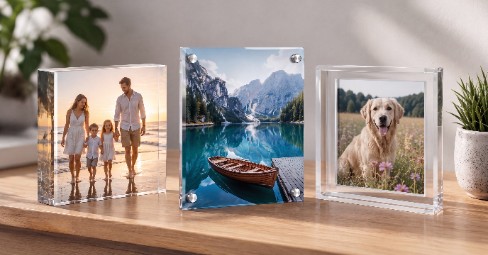
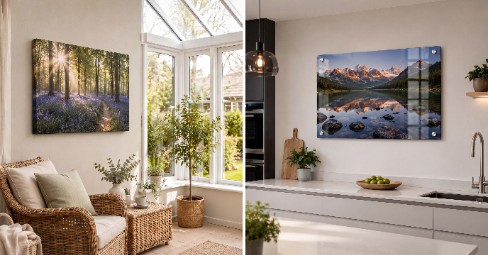
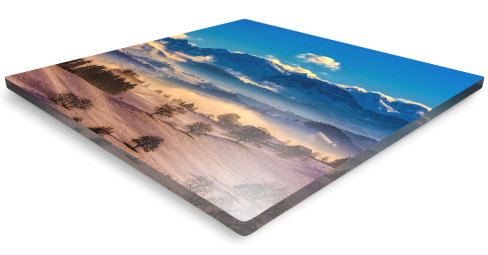
Canvas handles humidity a little more gracefully, but it isn't waterproof either. If you're set on wall art for a bathroom or a busy kitchen, a sealed acrylic print is the material actually built to shrug off steam and splashes. For every dry room in the house, though, both wood and canvas are absolutely fine.
9. Size range
Canvas offers the broadest choice, from small pieces right up to 120×80cm, so it's the natural pick for a big feature wall or an oversized statement above the sofa. Wood comes in a strong range of smaller and medium sizes, ideal for gallery clusters, shelves and cosy corners, but it doesn't stretch to the same giant formats. If you're thinking wall-dominating, think canvas.
10. Price and value
Canvas is usually the more affordable option size for size, and it starts lower, which is why it's the default for gallery walls and multi-buys. Wood costs a little more because you're paying for a solid, precision-milled timber panel — but you're getting a unique, characterful piece for it. We'll break down real UK prices for both further down so you can compare like for like.
11. Sustainability
Both score well here, which is reassuring if eco credentials matter to you. Our canvas frames are made from FSC-certified timber, and our wood prints use plywood produced to environmentally friendly guidelines. The solvent-free HP Latex inks on our canvas are low-emission and safe enough for a nursery. Whichever you choose, you're not sacrificing your conscience for your walls.
The full comparison, side by side
Here's everything above in one skimmable table. If you only read one thing in this guide, make it this.
What matters
Wood print
Canvas print
Look
Warm, rustic, natural, characterful
Classic, arty, painting-like
Texture
Solid, smooth, visible grain
Soft, matte, gently woven
Detail
Crisp, but warm-tinted
Very good; weave softens fine detail slightly
Colour
Warmer; no pure white
Truer, more even colour
Glare
None (matte finish)
None (no glass)
Weight
Heavier (solid timber)
Light, easy to hang
Sizes
Small to medium range
Small up to 120×80cm
Moisture
Sensitive — keep dry
Copes better, still not waterproof
Longevity
Tough and rigid; keep out of damp/sun
HP Latex inks, 75-year fade guarantee
Price
A little more per size
From £4.50; best value
Best photos
Landscapes, nature, B&W, rustic
Portraits, family, pets, statements
Best rooms
Living room, bedroom, hallway, study
Any dry room; great for big walls
Which suits your photo best?
The single biggest factor is the photo itself. The material should flatter your image, not fight it. Here's a quick guide to what tends to work.
Photos that love wood
Landscapes and nature: rolling hills, woodland, coastlines and countryside all suit the warm, organic feel. Our wood panels are made for exactly this.
Autumn and golden-hour shots: warm tones sit beautifully with the timber.
Black-and-white images: mono photos gain a lovely depth and vintage character on wood.
Rustic, cosy or vintage scenes: anything with a homely, natural mood.
Photos that love canvas
Portraits and family photos: true skin tones and clean whites make faces look their best.
Pets: a big canvas of the dog or cat is a perennial favourite — detail and colour both shine.
Holiday and travel shots: bright, saturated scenes stay vivid and true.
Big statement pieces: when you want one large image to own a wall, canvas goes bigger.
A simple rule of thumb: if your photo is about a place or a mood, wood often wins. If it's about a person, a pet or pure colour, canvas usually wins.
Room by room: what works in a typical UK home
British homes come with their own quirks — chimney breasts, alcoves, low new-build ceilings, and the odd damp corner. Here's how the two materials play out room by room.
Living room
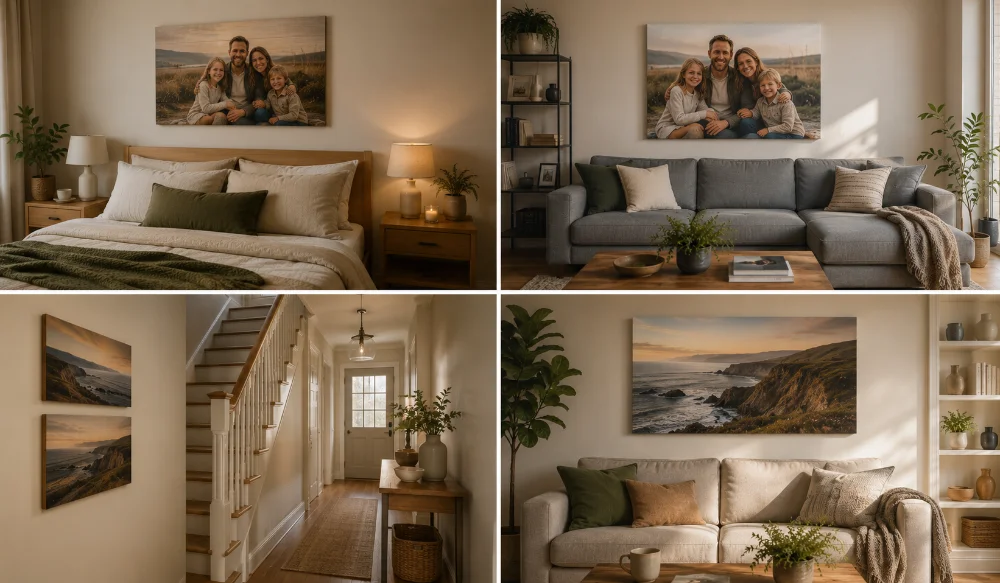
Your most-looked-at wall deserves the most thought. For a big statement above the sofa, canvas is the natural choice — it goes large and stays light. For a cosier feel, a cluster of wood prints on the chimney breast or in the alcoves brings warmth and texture. Many living rooms look best with a mix of the two.
Bedroom
Bedrooms suit softer, calmer wall art. Wood's warm tones create a restful, cocooning feel above a bed or on a dressing-table wall. Canvas works too, especially for a favourite couple's photo or a calming landscape in muted colours.
Hallway and stairs
Hallways take knocks and see changing light, so glare-free, hard-wearing art makes sense. A run of small wood prints climbing the stairs looks smart and characterful, while a row of matching canvases feels clean and gallery-like. Both avoid the glass-glare problem that plagues framed prints in bright hallways.
Kitchen
A kitchen away from the hob and sink is fine for either material. But near steam, heat and cooking splatter, be cautious with wood in particular. Keep any print well clear of the cooker, and if it's a genuinely steamy spot, consider a wipe-clean acrylic instead.
Bathroom
Honestly? We'd skip both wood and canvas in a bathroom that gets properly steamy. Repeated damp is the one thing wood really doesn't like, and canvas won't thank you for it either. A downstairs loo or a very well-ventilated bathroom is lower risk, but a sealed acrylic is the safer call for wet rooms.
Nursery and children's rooms
No glass to smash makes both materials child-friendly. Canvas is especially reassuring here: it's light, soft-edged and printed with solvent-free inks that are safe for little ones' rooms. Wood is lovely for a natural, Scandi-style nursery, just fixed securely and away from radiators.
Home office and study
A wood print of a favourite landscape brings a calm, grounding feel to a work-from-home setup, and the matte finish means no glare on video calls. Canvas works well for brighter, more energising images if you'd rather your backdrop had a lift.
Wood or canvas as a gift?
Both make brilliant, personal presents — far more thoughtful than the usual last-minute shop-bought gift. Wood has a slight edge for gifting because it feels special and handcrafted, and its warmth suits sentimental photos. For a freestanding keepsake that sits on a shelf or desk rather than hanging on a wall, our photo wood blocks are a lovely option — a chunky 25mm block with the same natural grain and vintage fade-out edges.
Canvas makes a generous, impressive gift when you want to go big — a large family portrait for grandparents, say, or a couple's favourite travel shot as a housewarming present. If in doubt for a gift, match the material to the photo and the person: warm and rustic, choose wood; bold and bright, choose canvas.
What's on-trend for 2026?
If you like your decor to feel current, the timing is good for both. British interiors in 2026 are moving away from cold, all-white minimalism towards warmer, more natural and more personal spaces. Natural materials, earthy tones and texture are everywhere — part of the wider "biophilic" trend of bringing the outside in.
That shift plays straight into wood's hands. A wood print with visible grain is about as natural and tactile as wall art gets, and it pairs perfectly with the wood finishes, plants and earthy palettes leading this year's look. Canvas, meanwhile, remains the most popular personalised wall-art format in the country — versatile enough to carry the warm, layered, gallery-wall style that's having a real moment. In short, whichever you pick, you're on trend.
How to care for wood and canvas prints
Both are low-maintenance, but a few simple habits keep them looking their best for years.
Caring for a wood print
Dust gently with a dry, soft cloth — no water, no sprays.
Keep it out of direct, strong sunlight to protect the colours.
Avoid damp rooms and don't hang it directly above a radiator.
The matte protective finish resists fingerprints, so light handling is fine.
Caring for a canvas print
Dust with a dry, soft cloth or a light feather duster.
For a mark, use a barely-damp cloth and let it air-dry — never soak it.
Keep out of prolonged direct sunlight, as with any wall art.
Don't press hard on the face; the fabric is tensioned over the frame.
Cost comparison: what you'll actually pay
Prices move with our regular Factory Price offers, so treat these as a realistic "from" guide rather than a fixed quote — always check the live size and price before you order. The pattern, though, is consistent: canvas starts lower and stays a little cheaper size for size, while wood carries a small premium for that solid timber panel.
Roughly this size
Canvas (from)
Wood (from)
Good for
Small (around 20×20cm)
£4.50
£7.90
Shelves, clusters, gifts
Medium (around 40×30cm)
from ~£12
£19.90
Above a desk or sideboard
Large (around 60×40cm)
from ~£20
£29.90
Above the sofa, feature spots
Extra large (80×60cm)
from ~£34
£54.90
Statement walls
Oversized (up to 120×80cm)
Available
Not offered
Big feature walls
The takeaway: if budget is tight or you're buying several pieces for a gallery wall, canvas stretches further. If you want one characterful piece and don't mind paying a little more for it, wood earns its keep.
Still unsure? The three-question test
Answer these three and the winner usually picks itself.
What's in the photo? People, pets or bold colour → lean canvas. A landscape, nature or a rustic mood → lean wood.
Where's it going? A big feature wall or a slightly damp-prone room → canvas. A cosy corner, shelf or feature cluster in a dry room → wood works beautifully.
What look do you want? Clean, classic and versatile → canvas. Warm, natural and one-of-a-kind → wood.
Two out of three pointing the same way? That's your answer. A perfect split? You've just found a great excuse to mix the two.
Can you mix wood and canvas on one wall?
Absolutely — and done well, it looks fantastic. A gallery wall that blends both materials feels collected and personal rather than off-the-shelf. The trick is to give the mix a thread of consistency so it reads as intentional: keep a shared colour treatment (for example, all warm-toned, or all black-and-white), or a shared theme (all travel, all family). If you're also weighing up framed pieces for the mix, our guide to canvas prints vs framed prints is a handy companion read.
Lay the whole arrangement out on the floor first, start with your largest piece roughly in the centre, and build outwards. Mixing the smooth warmth of wood with the soft texture of canvas gives a wall depth that a single material can't quite match on its own.
The final verdict
There's no universal winner, and anyone who tells you otherwise is probably selling one and not the other. Canvas is the versatile, affordable all-rounder that flatters almost any photo and any dry room — the safe, brilliant default. Wood is the warm, textured, one-of-a-kind option that turns the right photo into a genuine talking point.
Pick canvas for people, pets, bold colour and big statement walls. Pick wood for landscapes, nature and anything with a cosy, natural feel. And if you can't choose — mix them, and enjoy a wall with real depth and character. Whichever way you go, you're turning a photo you love into something you'll actually look at every day, which beats leaving it stuck on your phone.
Frequently Asked Questions
Are wood prints better than canvas prints?
Neither is better overall — it depends on your photo and room. Wood suits landscapes, nature and rustic, warm-toned images and adds real texture. Canvas suits portraits, family photos and bold colour, comes in bigger sizes, costs less and copes better with everyday conditions. Match the material to your image.
Which lasts longer, wood or canvas prints?
Canvas has the proven edge for longevity. Our canvas prints use solvent-free HP Latex inks and carry a 75-year fade guarantee. Wood prints are rigid and hard-wearing, but they're more sensitive to damp and strong sunlight, so their lifespan depends more on where you hang them.
Do wood prints show the wood grain through the photo?
Yes, and that's the appeal. The natural grain shows softly through the lighter areas of your image, so every wood print is unique. It gives a warm, organic, handmade feel. If you want a completely flat, uniform surface instead, canvas is the better choice.
Can I put a wood print or canvas print in a bathroom?
It's best avoided in a steamy bathroom. Wood is sensitive to damp and canvas isn't waterproof either. A well-ventilated space or downstairs loo is lower risk, but for genuine wet rooms a sealed acrylic print is the material actually designed to handle steam and splashes.
Are wood prints heavier than canvas prints?
Yes. Wood prints are solid timber, so they weigh more than canvas of the same size, though at 10mm thick they're still slim and come with a free hanger set. Canvas is much lighter for its size, which makes large statement pieces easier to lift, level and hang on your own.
Do wood prints have accurate colours?
Wood shifts colours slightly warmer because the ink sits on natural timber with no white base, so pure whites read as soft cream. That's flattering for landscapes and warm-toned photos. If you need true, accurate colour and crisp whites — for portraits or vivid shots — canvas reproduces colour more faithfully.
Which is cheaper, wood or canvas prints?
Canvas is generally cheaper size for size and starts from just £4.50, which makes it the go-to for gallery walls and multi-buys. Wood carries a small premium because you're paying for a solid, precision-milled panel. Prices vary with current offers, so check the live size and price before ordering.
What photos look best on wood?
Landscapes, woodland and nature scenes, coastal shots, autumn colours, black-and-white images and anything with a rustic or vintage mood look wonderful on wood. The warm tone and visible grain complement these subjects. Bright, colour-critical images and portraits usually look better on canvas.
Do canvas or wood prints reflect glare?
No — this is a win for both. Canvas has no glass and wood prints have a matte protective finish, so neither produces the mirror-like glare you get from glass-fronted frames. That makes both a smart choice for bright rooms, sunny walls or spaces lit with spotlights.
Are wood and canvas prints eco-friendly?
Both score well. Our canvas frames use FSC-certified timber and solvent-free, low-emission HP Latex inks that are safe even for a nursery. Our wood prints use plywood made to environmentally friendly guidelines. Whichever you choose, you're getting wall art with sound sustainability credentials.
Can I mix wood and canvas prints on the same wall?
Yes, and it looks great. A gallery wall combining both materials feels curated and personal. Keep a consistent thread — a shared colour treatment or theme — so the mix looks deliberate. Lay it out on the floor first, start with the largest piece in the centre and build outwards from there.
How do I clean a wood or canvas print?
For both, dust gently with a dry, soft cloth. For a mark on canvas, use a barely-damp cloth and let it air-dry — never soak it. Avoid water and sprays on wood entirely; its matte finish resists fingerprints. Keep either out of prolonged direct sunlight to protect the colours.