UK Photo Sizes Guide: Every Standard Print Size Explained
 by Sophie Hartley– 5 years of experience in photo products
Choosing the right photo sizes can feel surprisingly tricky. You scroll through your phone gallery, pick a stunning holiday snap or a family portrait, and then hit a wall of numbers: 6x4, 7x5, A4, 10x8. What do they actually mean? Which standard photo sizes will fit your frames? And how do you avoid that frustrating moment when your print arrives cropped in all the wrong places?
Whether you are ordering prints for a gallery wall, selecting a picture frame, or preparing passport photos, understanding standard photo print sizes saves you time, money, and disappointment. The good news is that photo sizes in the UK follow a fairly logical system once you know the basics. From the classic 6x4 snapshot to the generous A3 poster format, each size serves a different purpose and suits a different space.
This guide breaks down every common photo size you are likely to encounter, explains how they compare, and helps you pick the perfect dimensions for your next print. No jargon, no guesswork, just clear answers.
In this article, you'll discover:
- What are the most common standard photo sizes in the UK, and when should you use each one?
- How does A4 photo size compare to traditional print sizes like 10x8 and 12x8?
- Which photo frame sizes match which print dimensions?
- What is the UK passport photo size, and what dimensions are required for applications?
- How do you choose the right photo size for canvas prints and wall art?
- What is the normal photo size for everyday prints and social media?
- How can you resize a photo without losing quality?
- Which standard photo picture sizes work best for different rooms in your home?
At a Glance: Standard photo sizes in the UK range from small 6x4 inch prints (the most popular snapshot size) up to large-format A3 and beyond. The normal photo size for everyday use is 6x4 inches (15x10 cm), while A4 photo size (29.7x21 cm) is ideal for framed displays. Matching your photo dimensions to the correct photo frame sizes ensures crisp, perfectly fitted results every time.
Standard Photo Sizes in the UK: The Complete Breakdown
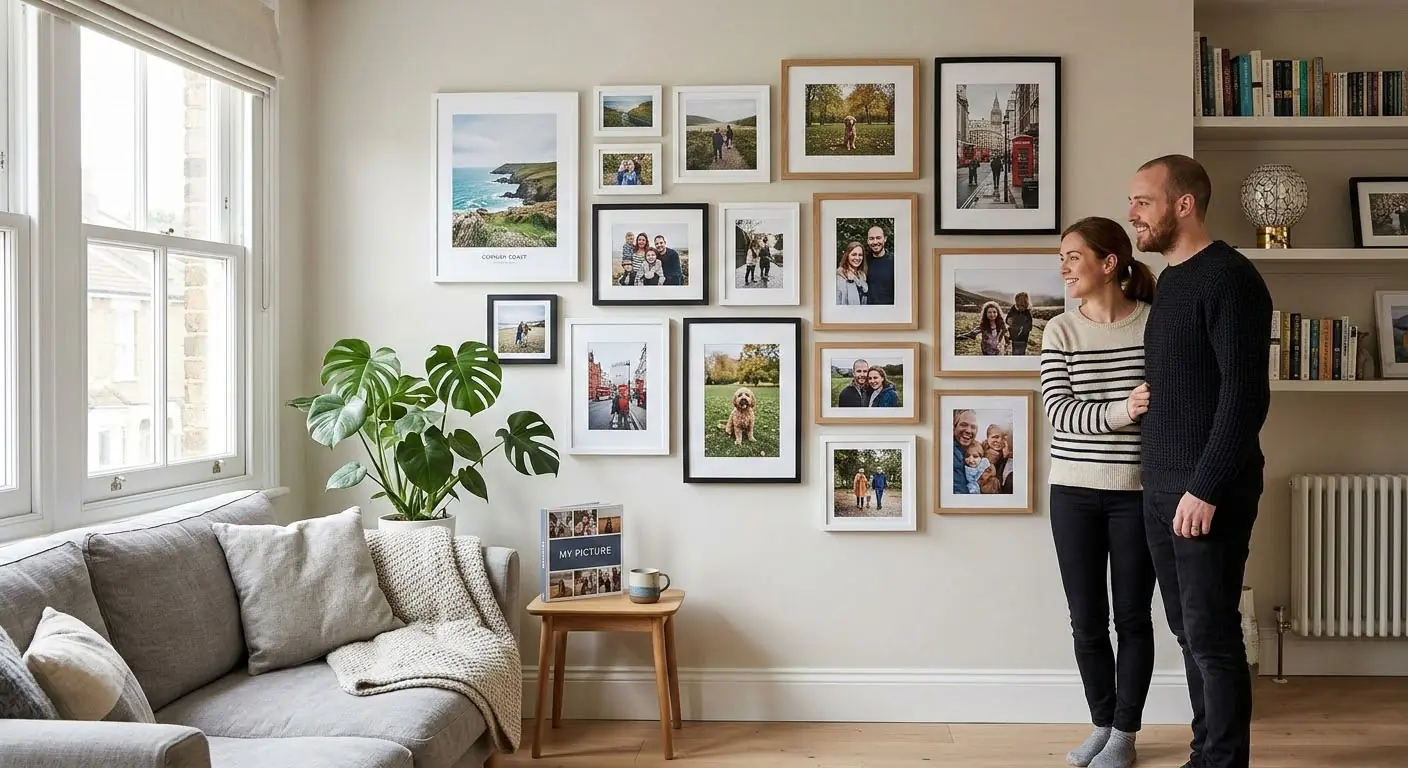
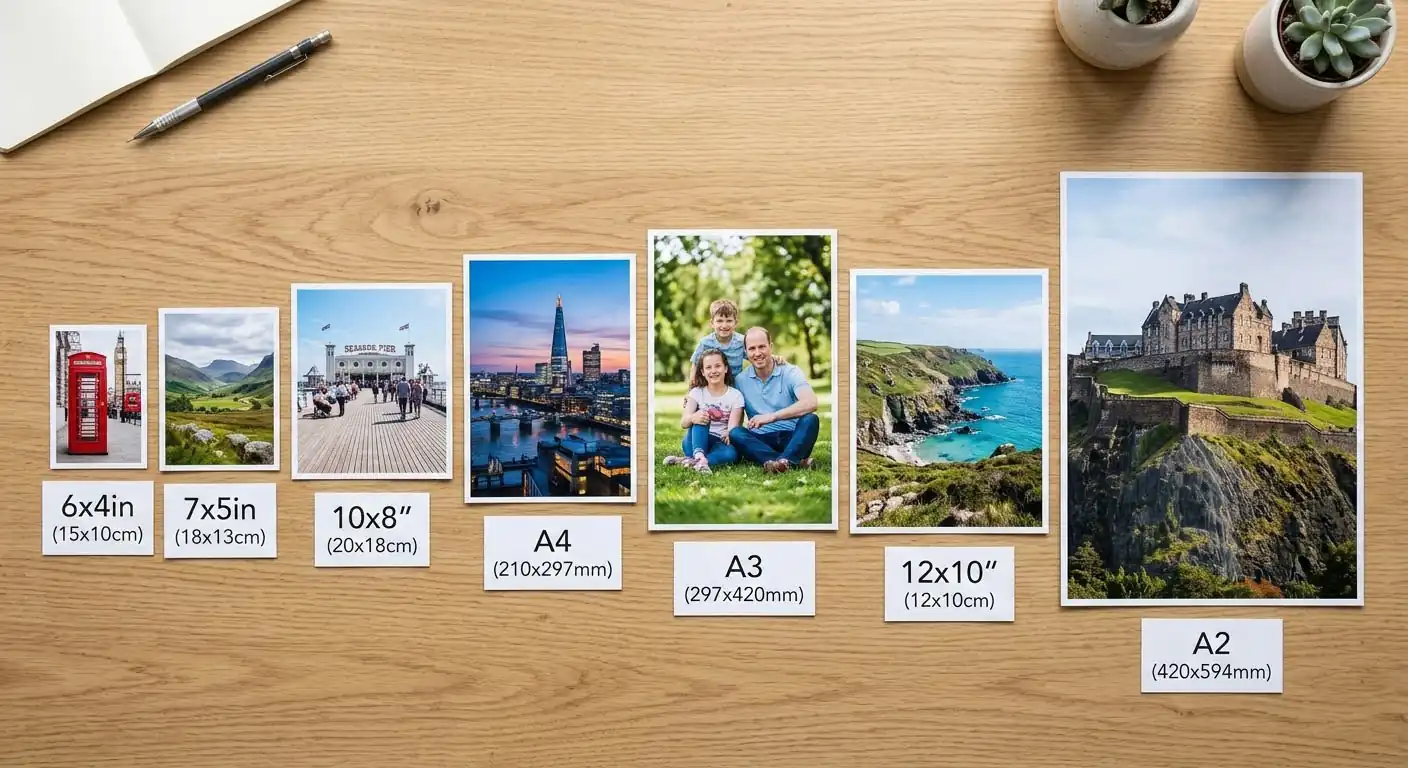
Every photo print you have ever held started with a simple question: what size? In the UK, standard photo sizes follow two overlapping systems. The first is the traditional inch-based system inherited from photographic printing (6x4, 7x5, 10x8). The second is the metric A-series used across Europe (A5, A4, A3). The table below lists all common photo sizes in cm and inches so you can compare both systems at a glance, and knowing how they relate to each other makes ordering prints far simpler.
The most popular standard photo size in Britain remains the classic 6x4 inch print. It is the default size at most high-street photo printing services and online providers alike. This is the size that fits neatly into a standard photo album, slips into a greeting card, or stands in a small desk frame. Think of it as the workhorse of photo printing.
Larger prints like 7x5, 8x6, and 10x8 are popular choices for framed displays on shelves, mantlepieces, and bedside tables. Once you move beyond 10x8, you enter territory better suited to wall-mounted frames and statement pieces, where A4 and A3 photo sizes come into play.
Small Photo Sizes: 6x4 and 7x5
The 6x4 inch print (15.2 x 10.2 cm) is the normal photo size that most people picture when they think of a "photograph." It matches the 3:2 aspect ratio of most DSLR cameras and many smartphone cameras, which means minimal cropping. A 7x5 inch print (17.8 x 12.7 cm) is slightly larger and works beautifully for portraits. It has a different aspect ratio, so expect a small crop compared to a standard phone photo.
Both sizes fit readily available photo frames sold across the high street and online. A 6x4 frame is one of the most common in any homeware store. The 7x5 is equally popular and gives portraits a touch more presence without dominating a shelf.
Medium Photo Sizes: 8x6, 9x6, and 10x8
Moving up, 8x6 inch prints (20.3 x 15.2 cm) offer a noticeable step in visual impact. This size is a favourite for family portraits and wedding photos displayed on sideboards. The 10x8 inch print (25.4 x 20.3 cm) is the classic "portrait size" beloved by photographers, and it remains the most popular photoshoot frame size for professional sittings.
A 9x6 inch print (22.9 x 15.2 cm) is less common but matches the 3:2 ratio perfectly at a larger scale, making it ideal if you want a bigger version of a 6x4 without any cropping at all.
Large Photo Sizes: 12x8, A4, and A3
The 12x8 inch print (30.5 x 20.3 cm) is where photos start to command attention on a wall. It is a popular choice for framed photo prints in hallways and living rooms. The A4 photo size (29.7 x 21 cm, roughly 11.7 x 8.3 inches) is the most widely used metric format for photo printing in the UK. It fits standard A4 frames and is large enough for detailed landscapes and group shots.
A3 (42 x 29.7 cm, roughly 16.5 x 11.7 inches) is the go-to for statement prints and photo poster prints. If you want to frame photo A3 size for maximum impact, picture a sheet roughly twice the size of A4, or about the width of a large laptop screen. It makes a striking centrepiece above a sofa or dining table.
If you are specifically planning a poster rather than a framed print, size conventions differ slightly from standard photo dimensions. Our dedicated guide What Is A Standard Poster Size covers the most common poster sizes used in the UK, how they compare to A-series paper sizes, and which format works best for different rooms and wall spaces.
A4 Photo Size vs Traditional Print Sizes: Which Should You Choose?
One of the most common questions when ordering prints is whether to go with a traditional size like 10x8 or opt for the A4 photo size instead. They are remarkably close in physical dimensions, but there are practical differences worth understanding.
The A4 format (29.7 x 21 cm) is slightly taller and narrower than a 10x8 (25.4 x 20.3 cm). This means A4 suits portrait-orientation photos particularly well, while 10x8 tends to feel more balanced for both landscape and portrait shots. The real deciding factor is often the frame: A4 frames are everywhere because A4 is the universal paper size in the UK, so finding a matching picture frame is effortless.
If you are printing photos for a professional setting, such as a home office or a clinic waiting room, A4 looks polished and intentional. For a cosy family display on a mantlepiece, 10x8 often feels more natural and photographic. Neither choice is wrong; it comes down to the look you prefer and the photo frame sizes you already own.
| Size | Dimensions (inches) | Dimensions (cm) | Aspect Ratio | Best For |
|---|---|---|---|---|
| 6x4 | 6 x 4 | 15.2 x 10.2 | 3:2 | Albums, small frames, everyday prints |
| 7x5 | 7 x 5 | 17.8 x 12.7 | 7:5 | Portraits, greeting cards |
| 8x6 | 8 x 6 | 20.3 x 15.2 | 4:3 | Family photos, sideboard displays |
| 10x8 | 10 x 8 | 25.4 x 20.3 | 5:4 | Classic portraits, desk frames |
| A4 | 11.7 x 8.3 | 29.7 x 21 | √2:1 | Wall frames, professional displays |
| 12x8 | 12 x 8 | 30.5 x 20.3 | 3:2 | Large framed prints, hallway displays |
| A3 | 16.5 x 11.7 | 42 x 29.7 | √2:1 | Poster prints, statement wall art |
| 16x12 | 16 x 12 | 40.6 x 30.5 | 4:3 | Gallery-style wall displays |
Photo Frame Sizes: How to Match Prints to Frames Perfectly
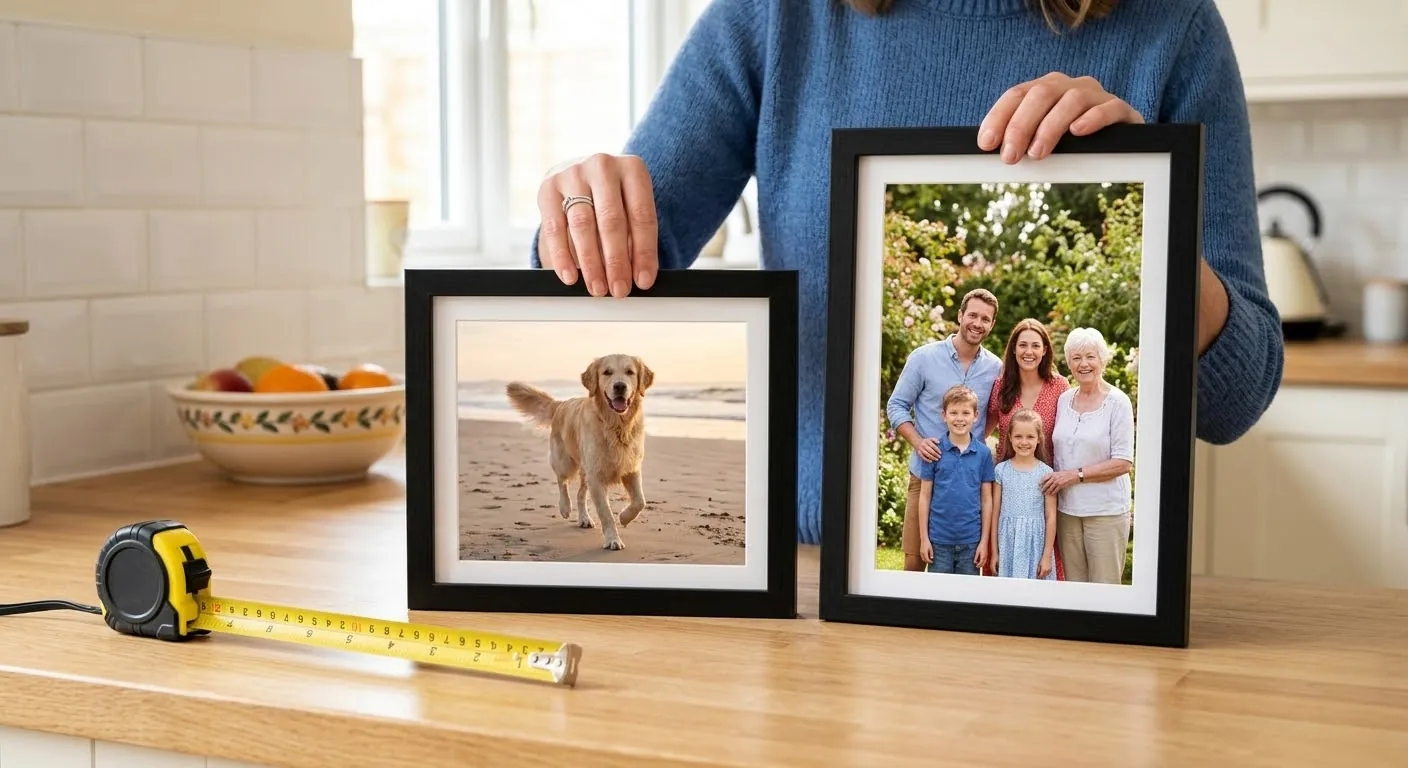
Nothing ruins a freshly printed photo quite like discovering it does not fit the frame you bought. Understanding the relationship between picture frame sizes and standard photo picture sizes prevents this entirely. The key is knowing that frame sizes in the UK are almost always listed by the size of the opening (the visible area), not the outer frame dimensions.
When shopping for a picture frame, you will see labels like "6x4 frame" or "A4 frame." These refer to the photo size that fits inside. Some frames include a mount (also called a mat), which is the cardboard border around the photo inside the frame. A mounted frame labelled "10x8 with 7x5 mount" means the outer frame holds a 10x8 sheet, but the visible window shows a 7x5 photo. This is a popular way to give smaller prints a more gallery-like presentation.
Standard Picture Frame Photo Sizes in the UK
Here are the most common photo frame sizes you will find in British shops:
- 6x4 inches – the most widely sold frame size, perfect for snapshots
- 7x5 inches – ideal for portrait photos and greetings
- 8x6 inches – a versatile mid-size for family photos
- 10x8 inches – the classic portrait frame
- A4 (11.7 x 8.3 inches) – standard for certificates, prints, and documents
- 12x10 inches – a generous size for feature photos
- A3 (16.5 x 11.7 inches) – for large prints and posters
- 16x12 inches – a popular gallery wall size
Tip: If you want a cohesive gallery wall, mixing two or three frame sizes (such as 6x4, 10x8, and A4) creates visual interest without looking chaotic. Our guide on how to arrange photos on a wall walks you through layouts step by step.
Passport Photo Size and UK Requirements: What You Need to Know
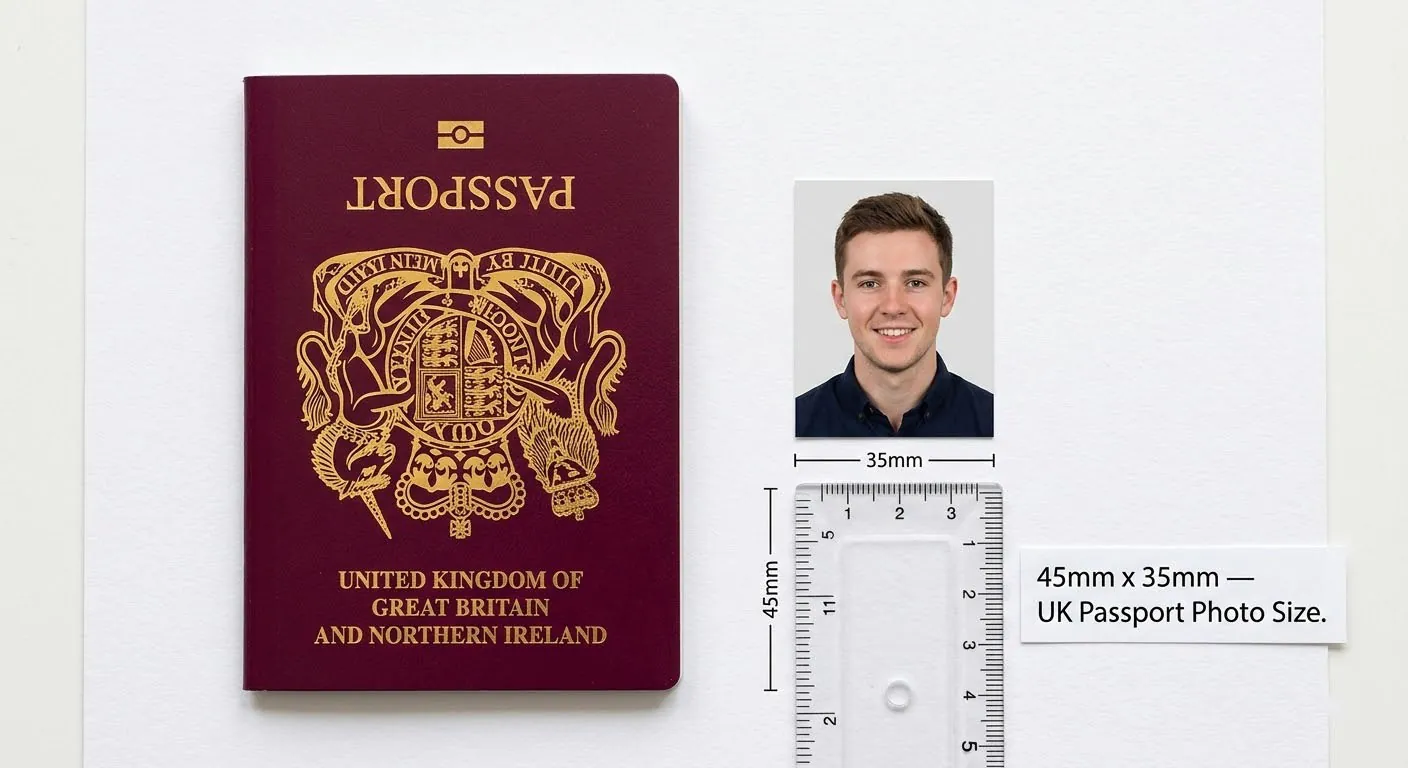
Passport photos follow their own strict rules, and getting the dimensions wrong means your application gets rejected. The standard UK passport photo size is 45mm x 35mm (4.5 x 3.5 cm). This is significantly smaller than any standard print size and has very specific composition requirements set by HM Passport Office.
British passport photo specs require that your head (from chin to crown) measures between 29mm and 34mm in the photo. The background must be plain light grey or cream. Your expression should be neutral with your mouth closed. These passport photo requirements apply whether you take the photo at a booth, a high-street photo service, or at home.
If you are preparing passport photos yourself, many photo printing services allow you to upload a correctly sized image and print multiple copies on a single 6x4 sheet. This is often far cheaper than using a booth, and some providers even offer free photo prints of passport images as part of a bundle. Just ensure your image meets the official United Kingdom passport photo requirements before printing, as even slight deviations in head size or background colour can cause rejection.
Passport Photo vs Standard Print Sizes
| Photo Type | Size (mm) | Size (cm) | Size (inches approx.) |
|---|---|---|---|
| UK Passport Photo | 45 x 35 | 4.5 x 3.5 | 1.8 x 1.4 |
| Visa Photo (US) | 51 x 51 | 5.1 x 5.1 | 2 x 2 |
| Standard 6x4 Print | 152 x 102 | 15.2 x 10.2 | 6 x 4 |
| Standard 7x5 Print | 178 x 127 | 17.8 x 12.7 | 7 x 5 |
Choosing the Right Photo Size for Canvas Prints and Wall Art
When you move beyond standard photo prints and into wall art territory, the size conversation changes completely. Canvas prints, acrylic prints, and aluminium prints are measured in centimetres and come in a much wider range of dimensions than traditional photo sizes. The good news is that you are not limited to standard ratios. You can choose almost any size that suits your wall.
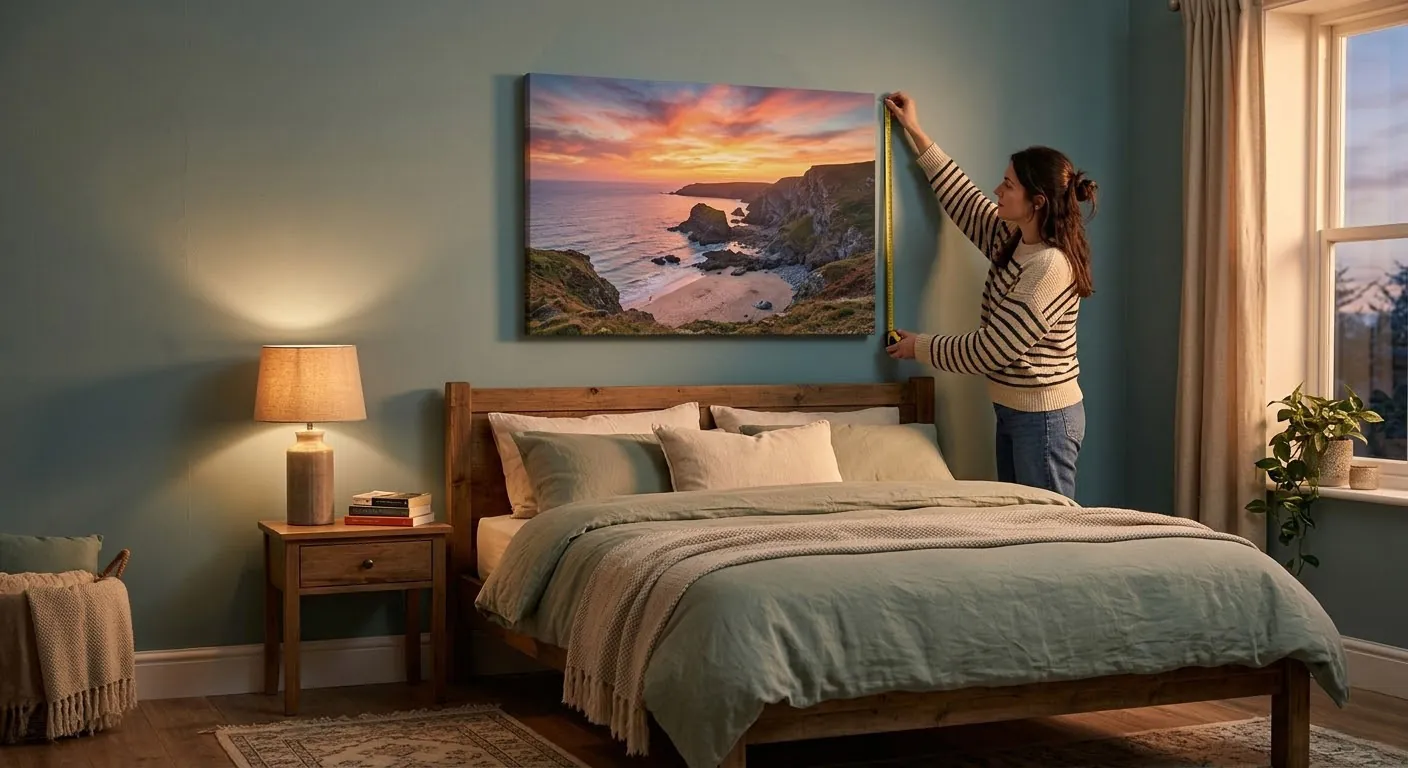
For canvas prints, popular sizes in the UK start at around 20x20 cm for a small square format and go all the way up to 120x80 cm or larger for dramatic feature walls. The most ordered size at My Picture is 60x40 cm, which strikes a balance between visual impact and affordability. This roughly corresponds to a large A2 print area and works beautifully above a sofa, bed, or dining table.
If you are considering a canvas print for the first time, think about the wall space available. A general rule is that your artwork should cover roughly 60 to 75 per cent of the available wall width above a piece of furniture. So above a 150 cm sofa, a canvas between 90 cm and 112 cm wide would look proportional.
For smaller spaces, MixPix photo tiles offer a flexible alternative. Each tile is a compact square that you can arrange and rearrange without drilling. They are brilliant for renters or anyone who likes to refresh their displays regularly.
Canvas Size vs Photo Print Size: Key Differences
| Feature | Standard Photo Print | Canvas Print |
|---|---|---|
| Typical sizes | 6x4 to A3 | 20x20 cm to 120x80 cm+ |
| Aspect ratio | Fixed (3:2, 4:3, 7:5) | Fully customisable |
| Display method | Requires frame | Ready to hang |
| Best for | Albums, desk frames, small displays | Feature walls, living rooms, gifts |
| Material | Glossy or matte paper | Stretched cotton-poly canvas |
One decision that often gets overlooked when ordering a print is the finish. Glossy paper makes colours pop and works beautifully for vibrant holiday and portrait shots. Matte paper reduces glare and suits black-and-white photography or prints hung in brightly lit rooms. If you are unsure which to choose, our guide Glossy Vs Matte Photos breaks down the key differences in detail so you can order with confidence, whatever size you go for.
How to Choose the Perfect Photo Size for Any Purpose: 6 Simple Steps
Picking the right photo size does not need to be complicated. Follow these steps to match your photo to its intended purpose every time, whether you are ordering prints online, visiting a local print shop, or creating wall art.
Step 1: Identify Where the Photo Will Be Displayed
Start with the destination. A photo for your wallet needs a completely different size than one for your living room wall. Desk frames typically hold 6x4 or 7x5 prints. Wall-mounted frames work best at 10x8, A4, or larger. Canvas prints and acrylic photo prints are designed for prominent wall positions and come in much larger formats.
Tip: Measure your available wall or shelf space before ordering. Even a rough measurement prevents the disappointment of a print that feels too small or overwhelms the space.
Step 2: Check Your Photo's Aspect Ratio
Your camera or phone captures images at a specific aspect ratio. Most smartphones shoot at 4:3, while DSLR cameras typically use 3:2. If you order a print size that matches your photo's ratio, nothing gets cropped. A 6x4 print matches a 3:2 photo perfectly. An 8x6 print matches a 4:3 image. Choosing a mismatched ratio means the edges of your photo will be trimmed.
Step 3: Consider the Viewing Distance
Small prints (6x4, 7x5) are meant to be viewed up close, held in your hands, or placed on a shelf at arm's length. Larger prints (A4, A3, 12x8) are designed for wall display where you stand a metre or more away. For a canvas print viewed from across a room, you can get away with a slightly lower resolution image than you would need for a 6x4 close-up print.
Step 4: Check Your Image Resolution
Resolution determines how sharp your print will look. For standard photo print sizes, aim for at least 300 DPI (dots per inch) at the final print size. A typical 12-megapixel smartphone photo (4000 x 3000 pixels) can produce a sharp print up to roughly 13 x 10 inches. For larger formats, 150 to 200 DPI is acceptable for wall art viewed from a distance. Our guide on best resolution for canvas prints explains this in detail.
Tip: If you need to reduce the size of a photo or adjust its dimensions, free tools like the built-in editors on iPhone and Android let you crop to specific ratios before uploading.
Step 5: Match the Print to a Frame (If Using One)
If you already own a frame, measure the opening and order a print to match. If you are buying a new frame, choose your print size first and then find a frame to fit. Remember that mounted frames display a smaller visible area than the frame size suggests. Standard photo picture sizes like 6x4, 7x5, 10x8, and A4 have the widest selection of ready-made frames.
Step 6: Order and Review the Preview
When you upload your photo to an online photo printing service like My Picture, the editor shows you exactly how your image will look at the chosen size. Check for unwanted cropping, especially around faces and important details. With over 350,000 satisfied customers and a 4.8 out of 5 star rating from more than 95,000 reviews, you can trust that the preview accurately represents the final product. Unlike an instant print out from a high-street kiosk, ordering online gives you full control over cropping and sizing before you commit.
Normal Photo Size for Everyday Use: What Most People Print
If you are simply looking for the normal photo size that covers most everyday needs, the answer is straightforward: 6x4 inches. This is the standard photo size that has dominated photo printing in Britain for decades. It fits the most common albums, the most common frames, and the most common wallets. It is the size your parents' photo albums are filled with, and it remains the default at virtually every photo printing service, whether you order from a local shop or an online print provider.
For social media prints, 6x4 works well for landscape-orientation Instagram posts (though square posts will need a square crop or a square frame). If you want something slightly more substantial for a birthday card or a gift, stepping up to 7x5 gives you a noticeable quality improvement without a dramatic price increase. Whether you are looking for photo printing nearby or ordering online, this reliable 6x4 format remains the most popular choice.
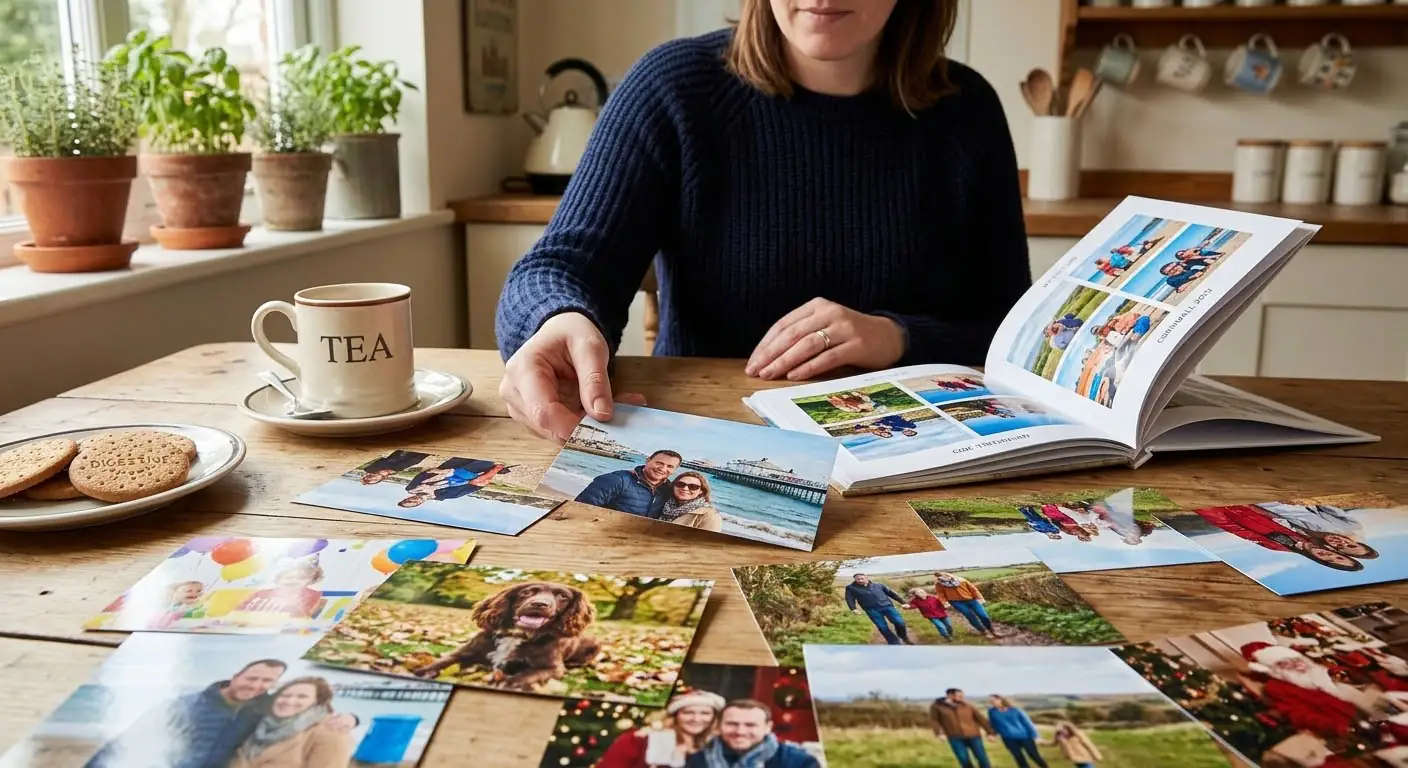
When printing photos for a personalised photo book, the size of each individual photo matters less because the book layout handles the arrangement. Most photo books use A4 or A4 landscape formats, and the software automatically sizes your images to fit the page design. This makes photo books an excellent choice when you have dozens of photos in mixed sizes and orientations.
Conclusion
Understanding photo sizes does not require a degree in mathematics. The standard photo sizes used across the UK follow a clear, logical pattern: small prints (6x4, 7x5) for albums and desk frames, medium prints (8x6, 10x8) for shelves and mantlepieces, and large formats (A4, A3, 12x8) for walls and statement displays. Once you know your photo's aspect ratio and the frame or display method you plan to use, choosing the right size becomes second nature.
Whether you are ordering a set of 6x4 prints for a family album, selecting the perfect A4 photo size for a hallway frame, or sizing up a canvas print for your living room, the key is matching dimensions to purpose. My Picture makes this easy with an online editor that shows you exactly how your photo will look before you order. With FSC-certified materials and ISO 9001:2015 quality standards, your prints are in safe hands. Start with your favourite photo, choose the right size, and bring your memories to life.
Frequently Asked Questions About Photo Sizes
-
The most common standard photo size in the UK is 6x4 inches (15.2 x 10.2 cm). This size matches the 3:2 aspect ratio of most cameras and fits the widest range of photo albums and frames. It is the default size offered by most high-street and online photo printing services.
-
A4 photo size measures 29.7 x 21 cm (approximately 11.7 x 8.3 inches). It is slightly taller and narrower than a traditional 10x8 print. A4 is one of the most popular sizes for framed wall prints because A4 frames are universally available across the UK.
-
UK passport photos must measure exactly 45mm x 35mm. The head height (chin to crown) must be between 29mm and 34mm. The background should be plain light grey or cream, and the expression must be neutral with the mouth closed. These British passport photo specs are set by HM Passport Office.
-
Check the dimensions printed on the frame label, which refer to the photo opening size, not the outer frame dimensions. If the frame includes a mount, the visible photo area will be smaller than the frame size. For example, a 10x8 frame with 7x5 mount displays a 7x5 photo inside a 10x8 frame. Standard picture frame photo sizes (6x4, 7x5, 10x8, A4) offer the widest selection.
-
Yes. Unlike standard photo prints, canvas prints are not limited to fixed sizes. You can choose custom dimensions to fit your wall space. Popular canvas sizes range from 20x20 cm to 120x80 cm. The most important factor is ensuring your image resolution is high enough for the chosen size, typically at least 150 DPI for wall art.
-
You can reduce the size of a photo using free tools built into your phone or computer. On iPhone, use the Photos app to crop to a specific ratio. On Android, Google Photos offers similar cropping tools. For more precise photo adjustment of size and resolution, free desktop tools like GIMP or the built-in Windows Photos editor let you resize images to exact pixel dimensions before uploading to a printing service.