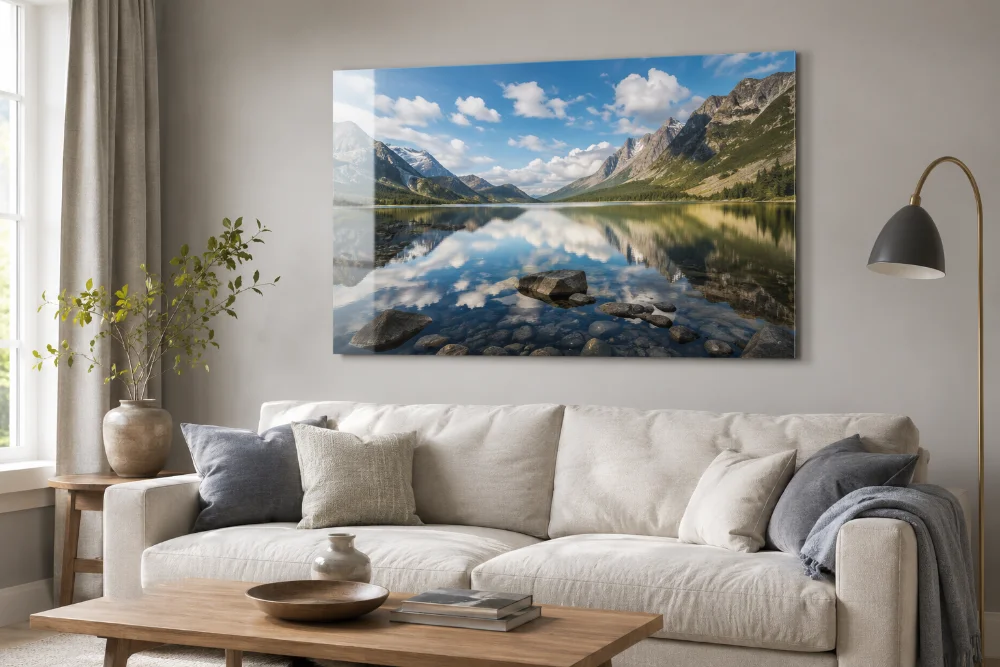
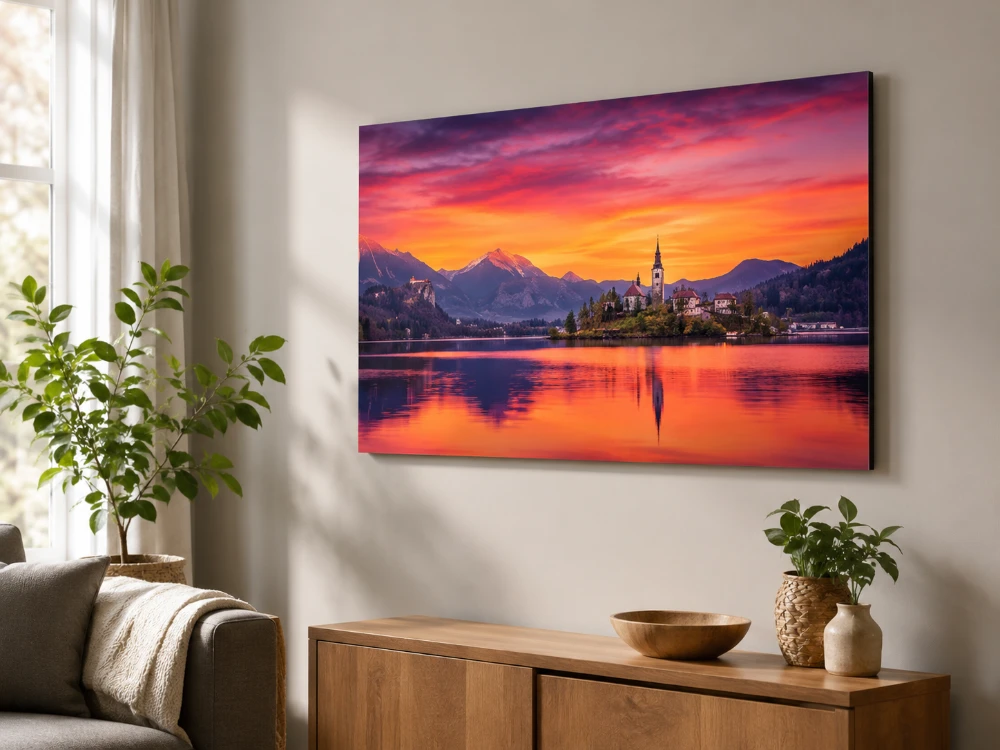
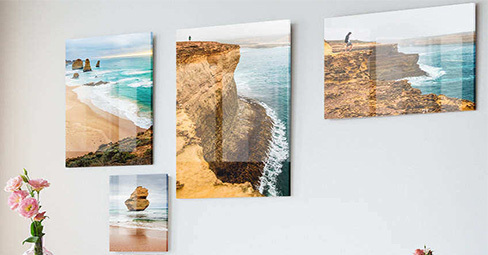
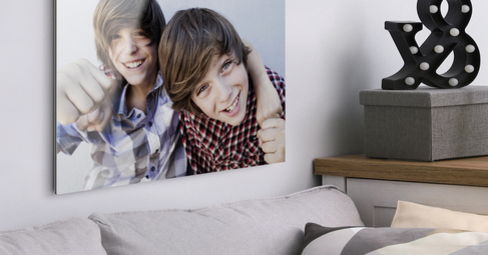
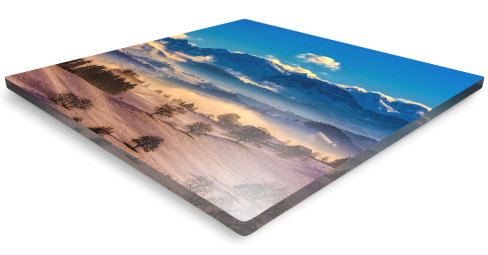
You've got the photo. The one that stops you every time it pops up on your phone. Now you want it out of that camera roll and up where you can actually see it — and someone has mentioned acrylic. Good shout. Acrylic prints are the glossy, gallery-style option that make colours look like they're glowing from inside the glass.
But "acrylic" covers a lot of ground. There are big wall-mounted pieces, little freestanding desk blocks, 3mm panels, 5mm panels, direct prints, face-mounts, even acrylic bonded to aluminium... it's a lot. So we've pulled everything into one honest guide. We print acrylic ourselves here at My Picture, so we're not going to oversell it — we'll tell you exactly when it's brilliant, when canvas or metal makes more sense, what resolution your photo actually needs, and what you should really pay in the UK in 2026.
Grab a cuppa. Let's get your photo on the wall.
Key takeaways
An acrylic print is your photo behind a crystal-clear acrylic glass panel. It gives the deepest colour, a 3D depth effect and a frameless, floating look — the most "gallery" of all the photo formats.
There are two build methods: direct print (great value, superb quality) and face-mount on real photo paper (the premium, gallery-grade route). Most UK shops only offer the first.
Wall prints are thin (about 3mm) and hang; photo blocks are thick (about 2.5cm) and stand on a desk or shelf. Same material, completely different jobs.
Acrylic suits bold, colourful, pin-sharp photos in modern rooms. Canvas is warmer, glare-free and cheaper. Metal is the toughest. Match the format to the photo, not the other way round.
Resolution matters more on acrylic than any other format. Aim for 150 DPI minimum, 200 DPI for close viewing — the tables below show exactly how many pixels each size needs.
Expect UK prices of roughly £13–£21 for small acrylic prints, £30–£50 mid-size, £65–£170+ for large statement pieces, and £6–£20 for blocks.
Clean with a dry or barely damp microfibre cloth only — never glass cleaner, ammonia or anything abrasive.
What exactly is an acrylic print?
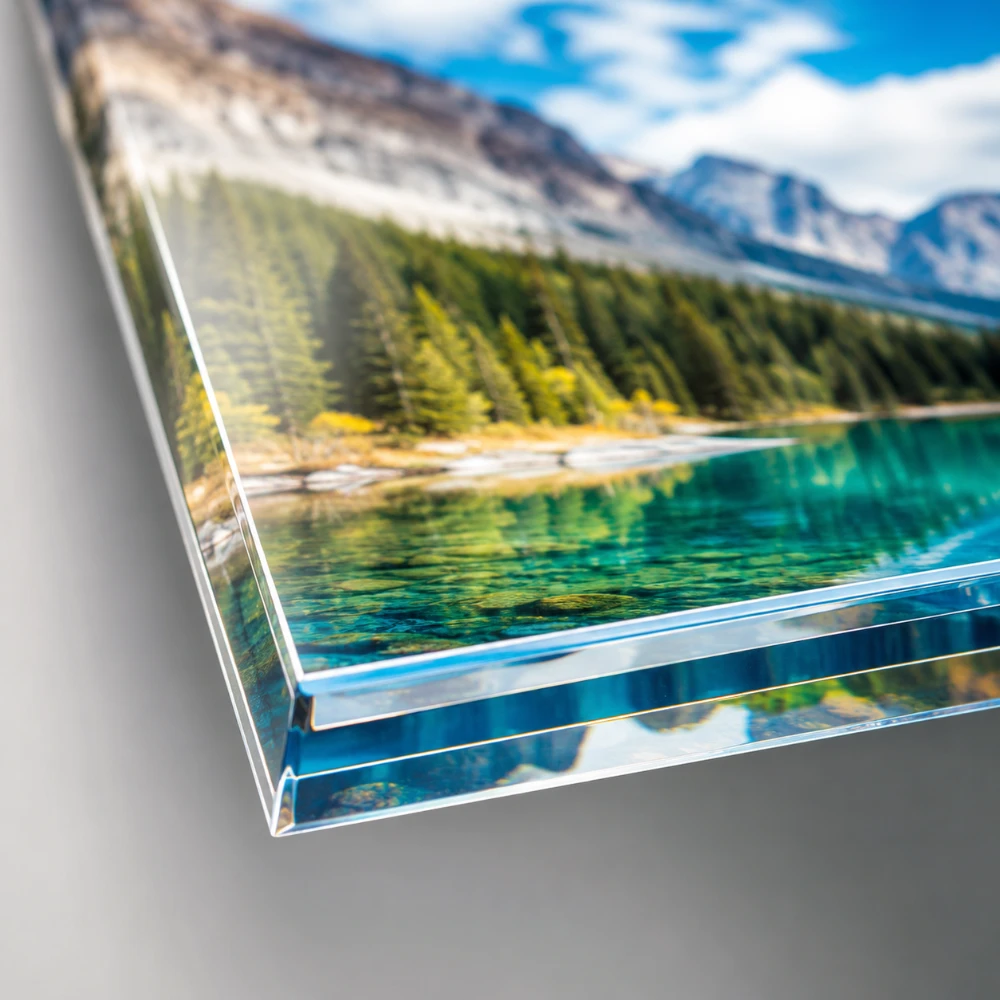
An acrylic print is your photo shown behind (or printed onto the back of) a smooth, see-through sheet of acrylic glass. The clear panel sits over the image and does something a bit magic: it deepens the colours, sharpens the detail and adds a real sense of depth, so the picture looks like it has a bit of life to it rather than sitting flat on paper.
Most acrylic prints are frameless and borderless. There's no wooden surround and no mount — just your image and the glass, with the polished edges of the panel left fully visible. A hidden hanging system sits behind the panel, which is why a good acrylic print looks like it's floating a centimetre or two off the wall. It's a clean, contemporary look that suits modern British homes down to the ground.
People call acrylic a few different things, and they mostly mean the same product. "Perspex prints" and "plexiglass prints" both refer to acrylic — Perspex and Plexiglas are simply long-established brand names for the same material, PMMA (polymethyl methacrylate). The names have a surprisingly grand history: Perspex was developed by ICI chemists in Britain and patented in 1932, while Plexiglas was trademarked in Germany the following year. "Acrylic glass" is the same thing again. So if you've been searching those terms and getting confused, relax: it's all acrylic.
Our own acrylic photo prints use a 3mm panel of flawless acrylic glass with polished edges and that frameless, floating design, in sizes from 20x20cm up to 120x80cm.
How acrylic prints are made: face-mount vs direct print
Here's the bit most shops skip, and it matters because it changes the quality you get. There are two main ways your photo ends up behind acrylic.
Direct print (print-behind-acrylic). Your image is printed with specialised UV printing straight onto a pure-white multilayer backing, and the acrylic panel is bonded on top. The UV inks cure instantly, giving a durable print with sharp detail and vibrant colour. Some firms print in reverse directly onto the back of the acrylic itself and seal it with a backing film. This is the great-value, high-quality standard most UK shops use, and it looks superb.
Face-mount (photo paper behind acrylic). Your image is first printed onto real lab-quality photo paper, then that paper is laminated to the backing under pressure before the acrylic glass is applied. This is the top-end, gallery method. It squeezes out the sharpest detail and the richest tonal range, which is why professional photographers and galleries tend to choose it.
Both give you that signature acrylic depth and shine. Face-mount just goes a little further for fine-art and high-detail work — and usually costs a little more.
At My Picture we offer both routes. Our standard Acrylic uses rich direct printing on a pure-white multilayer backing. Our Acrylic Premium prints your photo on real lab-quality photo paper, then laminates it onto the backing before the glass goes on — the gallery-grade finish. Same lovely depth effect; the Premium simply pushes detail and colour further. Worth knowing: most big UK photo shops only offer the direct method, so a true photo-paper face-mount option is rarer than you'd think.
Quick definition: direct print vs face-mount
Direct print = image printed onto a white backing (or reverse-printed onto the acrylic) with the panel bonded on top. Best value, brilliant results.
Face-mount = image printed on real photo paper, then laminated behind the acrylic. The premium, gallery-grade route for maximum sharpness and colour.
Acrylic photo blocks: the freestanding cousin
Not everything acrylic goes on the wall. Acrylic photo blocks are small, chunky, freestanding pieces that sit on a desk, shelf or mantelpiece — no drilling, no hanging, no frame. They're one of the most popular personalised gifts in the UK, and they're a completely different product from wall-mounted acrylic prints, even though people search for both the same way.
A photo block is a solid slab of acrylic with your image viewed through the clear body. Because the block has real thickness — ours have a generous 2.5cm depth — light bends through it and wraps your picture in a lovely 3D glow. They're shatter-resistant too, so they're safe on a busy desk or in a child's room where a glass frame would make you nervous.
Our photo blocks come in a few flavours. The full-size acrylic block comes in 10x10cm, 20x20cm, 15x10cm and 20x15cm. The mini MixBlox are 5x5cm acrylic cubes made to be grouped — buy a few, mix and match, and build a little cluster of memories across a shelf. There are wood versions too if you want something warmer. For a desk gift under £15 that genuinely makes people go "ooh," a small acrylic block is hard to beat.
A few ways people use them that work brilliantly:
The desk trio. Three MixBlox in a row — partner, kids, dog. Instant morale boost between meetings.
The shelf timeline. A block per year of a child's life, lined up left to right. Add one each birthday.
The new-home gift. A block of the new front door or street sign. Small, personal, and it never needs a nail in a freshly painted wall.
The bedside memory. One favourite photo where it's the last thing seen at night. Simple as that.
The key difference to remember: wall acrylic prints are thin (around 3mm) and designed to hang and cover wall space; acrylic blocks are thick (around 2.5cm) and designed to stand up on their own. Same material, totally different job.
Wall print or desk block?
Choose a wall-mounted acrylic print for a statement piece above the sofa, in the hallway or in a home office. Choose an acrylic photo block for a desk, shelf or bedside table — or as a small, giftable keepsake. Many people end up with both.
Acrylic vs canvas vs metal vs framed: which should you pick?
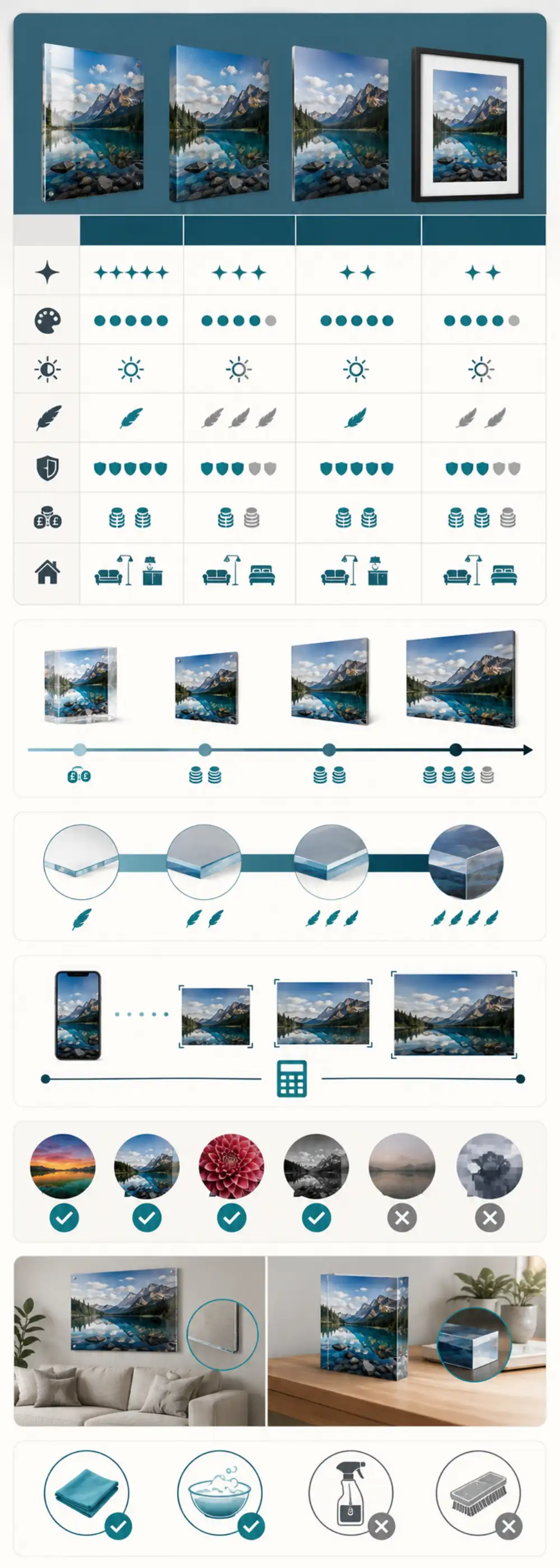
This is the big question, so let's be straight about it. No format is "best" overall — they're best at different things. Here's how acrylic stacks up against the three other options most UK shoppers weigh up.
Format
Finish
Colour & depth
Glare
Weight
Cost
Best for
Acrylic
Glossy, glass-fronted
Vivid, deep, strong 3D depth
Can reflect bright light
Heavier — needs firm fixings
Premium (££–£££)
Bold colour, fine detail, modern rooms
Canvas
Matte, woven texture
Warm, natural, slightly muted
None — absorbs light
Very light
Most affordable (£)
Portraits, family photos, cosy rooms
Metal (aluminium)
Matte or gloss, cool
Vivid but slightly muted, sleek
Low to moderate
Light
Mid (££)
Durability, humid or high-traffic rooms
Framed print
Paper behind glass, with mount
Classic, softer
Depends on glazing
Moderate
Varies (£–££)
Traditional, formal, period homes
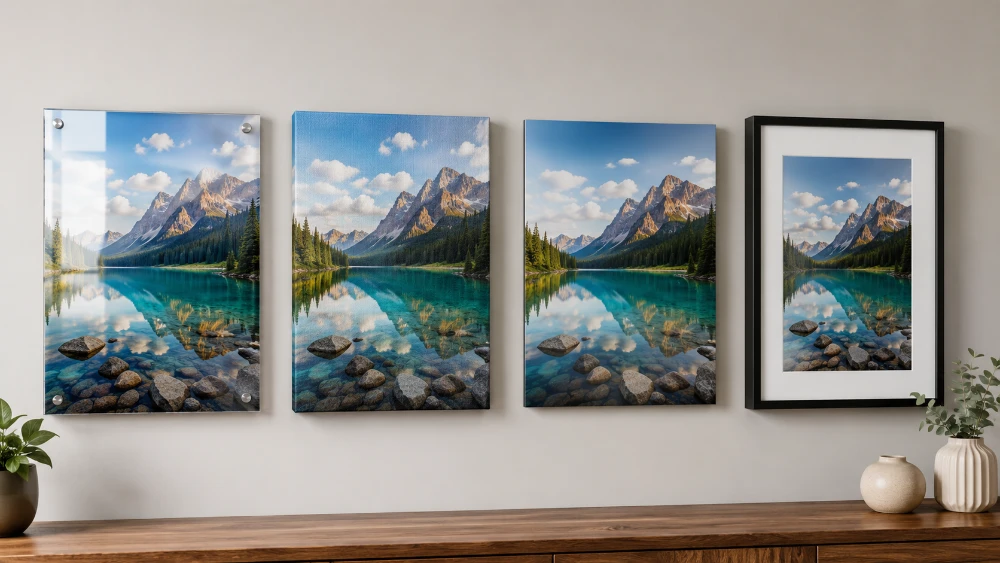
Acrylic vs canvas. Canvas has a gentle woven texture that softens the image and scatters light, giving a warm, painting-like feel that flatters people and landscapes. It never throws glare, it's very forgiving of slightly soft photos, and it's the cheapest option — our canvas prints start from just £4.50, gallery-wrapped on an FSC-certified pine stretcher frame so they arrive ready to hang. Acrylic goes the other way: glossier, deeper, punchier colour and a modern edge, but it demands a sharper photo and costs more. Pick canvas for warmth, forgiveness and value; pick acrylic for wow-factor.
Acrylic vs metal. Both are sleek and modern. A metal print is a direct print on a 3mm aluminium composite panel — cooler in finish, lighter, available in matte as well as gloss, and the tougher of the two: it shrugs off knocks and humidity and suits kitchens, hallways and even sheltered outdoor spots. Acrylic has more depth, more gloss and that glowing, three-dimensional quality metal can't quite match. If you love the contemporary look but a matte finish or maximum toughness matters more, our aluminium photo prints are the sturdier pick; if you want the richest depth and shine, acrylic wins.
Acrylic vs framed. A framed print sits behind ordinary glass with a mount and a surrounding frame — more formal, more traditional, and lovely in a period home. Acrylic is frameless and contemporary. Different moods entirely.
Can't decide between acrylic and metal? There's a third way most people don't know exists: the acrylic and aluminium print combines a high-gloss acrylic glass front with an aluminium backing in one piece. You get acrylic's depth and shine plus the rigidity and floating gallery effect of a metal-backed panel — it's the construction professional galleries use for large fine-art pieces, and it's the most luxurious option in the whole acrylic family.
The 30-second rule
Bold, colourful, sharp photo going in a modern room? Acrylic. Family portrait or landscape for a cosy space, on a budget? Canvas. Need something rugged or matte for a kitchen, bathroom or busy hallway? Metal. Classic look for a period home? Framed. Want the absolute premium, gallery-wall showpiece? Acrylic + aluminium.
Which photos actually look best on acrylic?
Acrylic isn't the right home for every photo, and being honest about that will save you money. The glossy panel amplifies colour and contrast, so it rewards some images and does very little for others.
Acrylic loves:
Vivid, colourful shots — sunsets, tropical seas, autumn leaves, flowers, city lights. The glass makes strong colour positively sing.
High-contrast images — bright subjects against dark backgrounds get real drama.
Sharp, high-detail photos — architecture, cityscapes, macro close-ups. The smooth surface hides nothing and shows every fine line.
Black-and-white photography — the depth and contrast give mono images a striking, sculptural quality.
Professional wedding and portrait photography — the images you paid a photographer for deserve the format that shows every pound of that investment.
Acrylic is less kind to:
Soft, muted or moody images — a gentle, hazy photo won't gain much from the extra punch. Canvas flatters these far better.
Low-resolution or slightly blurry files — because acrylic reveals everything, a soft photo will look softer. Screenshots, WhatsApp-compressed images and heavily zoomed shots are the usual culprits.
Quick rule of thumb: if the photo looks crisp and colourful on your screen at full size, it'll look spectacular on acrylic. If it's a bit soft or subdued, canvas is the more forgiving choice.
What resolution does an acrylic print need?
This is where acrylic differs most from other formats, and almost no UK shop spells it out properly. Because the glass-smooth surface shows every detail, acrylic needs more pixels per centimetre than canvas, where the woven texture quietly absorbs a little softness.
The working standard: 150 DPI is the practical minimum for acrylic; 200 DPI is ideal if the print will be viewed up close (a home office wall, a hallway you pass at arm's length). Canvas gets away with 100–150 DPI. The maths is simple — size in cm, divided by 2.54, multiplied by DPI — but here it is done for you:
Acrylic print size
Minimum pixels (150 DPI)
Recommended pixels (200 DPI)
20x20cm
1,200 x 1,200
1,600 x 1,600
30x20cm
1,800 x 1,200
2,400 x 1,600
40x30cm
2,400 x 1,800
3,150 x 2,400
60x40cm
3,550 x 2,400
4,700 x 3,150
80x60cm
4,700 x 3,550
6,300 x 4,700
100x70cm
5,900 x 4,150
7,900 x 5,500
120x80cm
7,100 x 4,700
9,450 x 6,300
What that means in practice: a standard 12-megapixel phone photo (about 4,000 x 3,000 pixels) comfortably covers acrylic up to around 60x40cm at minimum quality, and around 50x37cm at the premium 200 DPI level. From 80x60cm upwards you'll want a modern high-resolution phone shot taken in good light, or a proper camera file. And remember viewing distance works in your favour — a big print above the sofa is seen from two or three metres away, so it needs fewer pixels per centimetre than a small print you stand right next to.
Always start from the original file, never a screenshot or a photo that's been through WhatsApp (messaging apps compress images hard). If you're unsure what your photo can handle, our full photo print resolution guide has tables for every format and a quick check by camera type. And don't worry about ordering blind — our upload system automatically checks your file against the size you've chosen and warns you if the resolution falls short.
Resolution rule for acrylic
Size in cm ÷ 2.54 × 150 = the minimum pixels your photo needs on that edge. A clean 12MP phone photo handles acrylic up to about 60x40cm. Bigger than that, check your file first — and never print from a screenshot or a WhatsApp-compressed image.
Acrylic print thickness explained: 3mm vs 5mm and beyond
Thickness comes up a lot, and there's some genuine confusion out there, so here's the plain version.
The thickness of the acrylic panel affects three things: how much depth the image appears to have, how rigid the piece is, and how much it weighs (and costs). Common options across the UK market are 3mm, 4mm, 5mm and, at the premium end, 6mm or more.
3mm — slim, light and elegant. Easy to hang, gentle on wall fixings, and a smart, great-value choice for small and medium prints in normal indoor spots. This is what we use, and it still produces that lovely depth effect while keeping the piece light enough for any reasonably sturdy wall.
5mm — noticeably more rigid, with a touch more optical depth and a weightier, "substantial" feel. Popular for larger pieces where extra stiffness helps prevent flex. Heavier, dearer, and it wants firmer fixings.
6mm and up — the gallery/statement tier. Maximum presence, but heavy, pricey, and needs serious mounting hardware.
Bigger numbers aren't automatically "better." A 3mm panel at 40x30cm is beautifully crisp and far easier to live with than a heavy 6mm slab that needs masonry fixings. Thickness should match the size of the print and where it's going, not just chase a spec. (This is also where the acrylic + aluminium construction earns its keep on large formats: the aluminium backing supplies the rigidity, so the piece stays flat without piling on glass thickness.)
Two more things worth knowing. First, clarity barely changes with thickness — clear acrylic transmits up to 92% of visible light regardless of gauge, with the small loss coming from a roughly 4% reflection at each surface. So thickness is about depth, rigidity and weight far more than clarity. Second, freestanding acrylic blocks are a different story: they're deliberately thick (ours are 2.5cm) precisely because that chunkiness is what makes them stand up and glow.
Light, glare and sunlight: the honest bit
Here's the practical point almost every product page glosses over. That glorious glossy surface is a double-edged sword.
In soft or evening light, the shine works entirely in your favour — colours glow and the piece looks luminous, and the reflective surface picks up hints of the room around it, a bit like a mirror or a glass vase would. But an acrylic print hung directly facing a bright window or a harsh downlight can bounce that light straight back at you. It's the same physics as that 4% surface reflection — bright light hitting the panel head-on has to go somewhere.
So before you commit acrylic to a very bright wall, think about where the light falls. Position it so strong daylight hits it at an angle rather than head-on, and it'll look magnificent. If the only spot you have is a sun-blasted wall directly opposite a big window, canvas — which never reflects glare — might genuinely be the better buy for that particular wall.
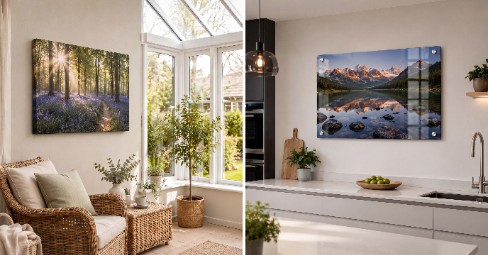
What about fading? Good news here. The gloss acrylic panel gives the print strong UV resistance, so an acrylic print can happily live in rooms with plenty of direct sunlight — conservatory-adjacent lounges, south-facing kitchens, bright landings. Glare is a placement question; fading isn't the worry it is with unprotected paper prints.
Size guide for UK homes
Getting the size right matters more than almost anything else. Too small and your lovely print looks lost and apologetic; too big and it swamps the wall. Here's how to nail it for a British home, in centimetres.
The two-thirds rule. Your print should span roughly two-thirds the width of the furniture beneath it. Above a standard 180–200cm three-seater sofa, that means something around 120cm wide. Above a 120cm fireplace, aim for 80–90cm wide.
Room by room:
Living room, above the sofa. Statement territory. A single large acrylic of 80x60cm or bigger holds its own; for a really wide wall, go up to 100x70cm or 120x80cm.
Bedroom, above the bed. For a standard UK double, choose something 80–100cm wide; for a king, size up to 100–120cm. Portrait orientation often feels more restful above a bed.
Hallway and landing. Narrow spaces love vertical formats or a neat row of matching prints. A tall 30x60cm or a run of three 30x20cm pieces looks smart.
Home office. A 40x30cm or 60x40cm acrylic behind you makes a polished backdrop for video calls — and because it's viewed close-up, this is exactly where the 200 DPI recommendation earns its keep.
Kitchen and bathroom. Acrylic's sealed, wipe-clean front handles steam and splashes far better than canvas. A vivid 40x30cm or 60x40cm brings a plain wall to life.
Desk or shelf. Block territory — a 10x10cm or 20x15cm acrylic block, or a cluster of 5x5cm minis.
Hang at the right height. The centre of your print should sit around 145–150cm from the floor — standard gallery eye level. Above furniture, leave 15–20cm between the top of the sofa or headboard and the bottom of the print. Cut a paper template the size of your print and tape it up first; it takes two minutes and saves a lot of second-guessing.
Beyond the home, it's worth saying that acrylic has become the default in boutique hotels, restaurants and office receptions — the clean, professional look reads as "considered" in a way a poster never will. If you run a business with a bare wall, one large acrylic of your best product, location or team shot works harder than any framed certificate.
Hanging acrylic prints: hidden fixings and standoffs
Because acrylic has real weight — more than canvas — it needs slightly firmer fixings, but it's genuinely not hard. Most quality acrylic prints hang from a hidden system so nothing shows once it's up, which is what creates that floating look. There are three approaches you'll come across.
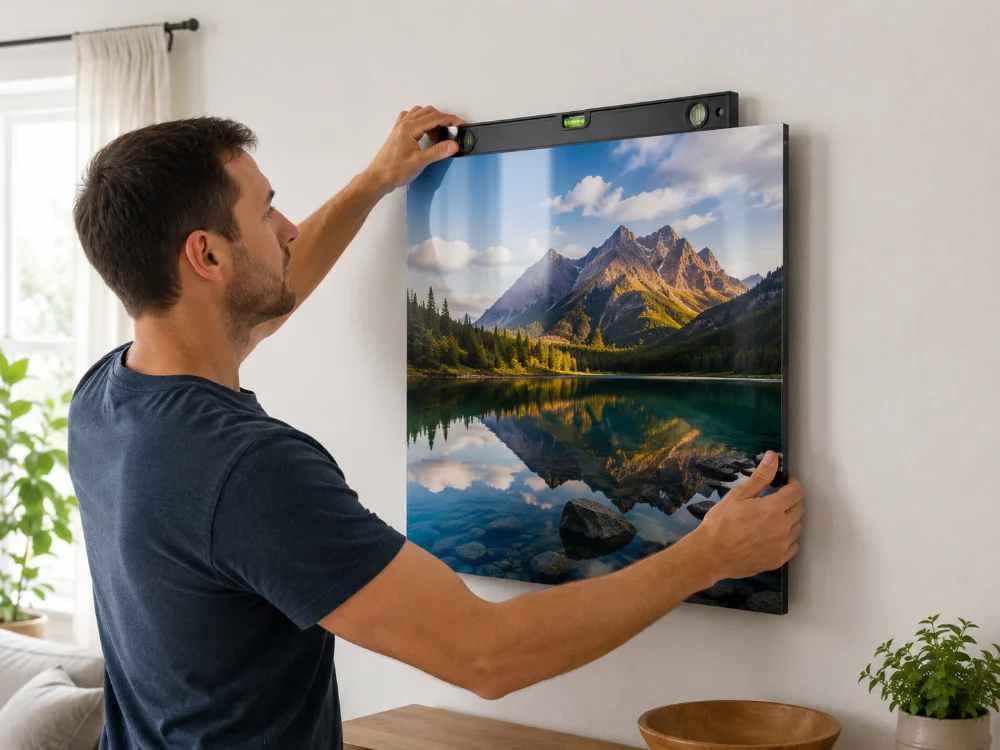
Hanger plate (small and medium prints). A plate bonded to the back of the print that rests on a hook or screw in the wall. Fitting one properly takes five minutes plus patience: roughen the spot on the back with fine sandpaper, clean it with a lint-free cloth dampened with alcohol, let it dry, position the plate, press it on firmly, then — the step everyone skips — leave the print face down for 24 hours while the adhesive fully hardens. Stick small rubber bumpers on the bottom corners so the print sits level and the air can circulate behind it.
Aluminium backframe (large prints). A slim hidden frame on the back that hangs on two level screws or a French cleat. This spreads the weight properly, keeps big panels dead flat against the wall, and makes very large prints surprisingly easy to lift on and off.
Metal standoffs (the visible option). Those polished bolts through the corners you see in office receptions, holding the print a couple of centimetres off the wall. They look sharp and industrial — but they require holes drilled through the print itself, which sacrifices a sliver of image in each corner. If you love the look, plan your photo composition with empty corners.
Whatever the method: on plasterboard use proper wall plugs or find a stud, and use a spirit level — 30 seconds now saves a crooked print annoying you forever. Our step-by-step guide on how to hang acrylic prints walks through the hanger plate and backframe methods with photos.
Cleaning and care
Looking after an acrylic print is easy, but doing it wrong can scratch or cloud the surface, so this is worth 30 seconds of your attention.
Do
Don't
Dust regularly with a clean, dry microfibre cloth or feather duster
Never use glass cleaner or ammonia sprays — they permanently cloud acrylic
For marks, use a microfibre cloth barely dampened with warm water and a drop of washing-up liquid
Never use solvents or alcohol on the print surface
Wipe gently in circles, then buff dry with a second clean microfibre cloth
Never scrub with paper towels, sponges or anything abrasive — they leave fine scratches
Dampen the cloth, working from the edge inwards
Never spray liquid directly onto the print — it can creep behind the panel
For a stubborn spot, moisten the cloth a little more and work just that area gently, then dry it straight away. Keep the print away from radiators and extreme humidity swings, and it'll stay pristine for years. The exact same routine works for acrylic photo blocks.
Cleaning acrylic in one line
Dust with dry microfibre; for marks use a barely damp microfibre cloth with a drop of mild washing-up liquid, then buff dry. Never ammonia, glass cleaner, alcohol or anything abrasive.
Durability: how long will an acrylic print last?
Acrylic is one of the more hard-wearing ways to display a photo. The sealed panel protects your image from dust, moisture and everyday knocks, and acrylic is dramatically safer than real glass: PMMA offers many times the impact resistance of glass at roughly half the weight, and it won't shatter into dangerous shards if it takes a bump — part of why it's the sensible pick for family homes, stairways and children's rooms.
Acrylic is also naturally long-lived. Quality clear acrylic is engineered to keep its clarity for decades — manufacturers guarantee light transmission of up to 90% even after 30 years — and the gloss panel's UV resistance shields the image beneath from fading. Kept sensibly (away from radiators, not pressure-washed!), a quality acrylic print will look brilliant for a very long time indeed.
One honest note on guarantees: our headline 75-year fade guarantee applies to our canvas prints, not to acrylic. That doesn't mean acrylic fades quickly — the UV-resistant panel and quality inks make it very long-lasting — it just means the specific 75-year promise is a canvas thing. We'd rather tell you that plainly than blur the line.
What acrylic prints cost in the UK (2026)
Let's talk money, because acrylic sits at the premium end of the wall art market and it helps to know what's normal.
Across the UK market in 2026, small wall-mounted acrylic prints start at roughly £12–£21, mid-size pieces (around 40x30cm) typically land between £30 and £50, and large statement prints run from about £70 up past £170. Freestanding acrylic blocks are cheaper, often £6–£20 depending on size.
A few things stand out. Thickness varies — from slim 3mm to chunky 5mm, with most in between. Most UK shops use direct printing only; a true photo-paper face-mount tier is genuinely rare, which is worth factoring in if you're printing professional photography. And headline "from" prices at the biggest names are usually pre-sale RRPs, so compare the price you'd actually pay at checkout.
On our side, pricing works on the Factory Price model — we deliver straight from our own production, so the everyday price is already well below typical retail — and it's backed by a Lowest Price Guarantee: find the same acrylic print cheaper elsewhere in the UK and we'll beat that price by 5%. Delivery is free on orders over £49, and acrylic prints typically arrive within 5–8 working days of ordering.
What should I budget?
A small acrylic print or a desk block: £6–£20. A mid-size piece for a bedroom or office (around 40x30cm): £27–£50. A large statement print above the sofa: £65–£120+. Add a little more for photo-paper face-mount quality or an aluminium-backed construction.
Glass prints vs acrylic: aren't they the same?
Not quite — and this trips people up because they look almost identical on a wall. "Glass prints" are printed on actual toughened glass; acrylic prints use acrylic (PMMA). Visually you'd struggle to tell them apart at first glance, but there are real differences.
Acrylic is about half the weight of glass, far more impact-resistant, and can be made in much bigger sizes safely — a large sheet of real glass is a genuine hazard to hang and a nightmare to ship. Acrylic also transmits slightly more light than standard glass, which is part of why the colours look so alive. Glass is more scratch-resistant and feels marginally more "premium" to some, but it's heavier, more fragile and size-limited. For most UK homes — especially with kids about or on a staircase wall — acrylic is the more practical, safer and more versatile pick, which is why it's become the default.
Before you order: a 60-second checklist
Check the file, not the memory. Open the photo full-size on a computer screen. Crisp? Good. Slightly soft? Go one size smaller or choose canvas.
Original file only. Not a screenshot, not a WhatsApp forward, not a heavily filtered copy. Dig out the original from your camera roll or cloud backup.
Match the size to the wall. Two-thirds the width of the furniture below; centre at 145–150cm from the floor. Paper template on the wall if in doubt.
Think about the light. Bright window directly opposite? Angle the placement or pick canvas for that wall. Sunny room generally? Acrylic's UV resistance has you covered.
Pick the right hanging option for the size. Hidden plate for small and medium; backframe for large. Order it with the print so it arrives ready to go.
Crop before you buy. Set the crop yourself in the editor rather than letting an auto-crop decide what gets trimmed — especially for portraits and group shots.
Frequently Asked Questions
What is an acrylic print?
An acrylic print is your photo displayed behind a slim, crystal-clear panel of acrylic glass. The panel deepens colours and creates a striking 3D sense of depth, while a hidden hanging system lets the frameless print appear to float just off the wall. The image is either printed directly onto a white backing or, in premium versions, onto real photo paper.
How are acrylic photo prints made?
Acrylic prints are made one of two ways. In a direct print, your image is UV-printed onto a white backing (or reverse-printed onto the acrylic) and the clear panel is bonded on top. In a face-mount, your photo is printed on lab-quality photo paper and laminated behind the acrylic. Both are sealed for depth, colour and protection.
Are acrylic prints better than canvas?
Neither is better overall — they're better at different things. Acrylic is glossier, deeper and more vivid, so it suits bold, sharp photos in modern rooms. Canvas is warmer, textured, glare-free, more forgiving of soft photos and cheaper, which flatters portraits and family photos in cosy spaces. Match the format to your photo, your room and your budget.
What resolution do I need for an acrylic print?
Work to 150 DPI as the minimum and 200 DPI for prints viewed up close. In practice, a clean 12-megapixel photo (about 4,000 x 3,000 pixels) covers acrylic sizes up to roughly 60x40cm. Larger sizes need higher-resolution files. Always print from the original photo, never a screenshot or a message-app copy, which are heavily compressed.
Do acrylic prints have glare?
Yes, they can. The glossy surface that makes colours glow will also reflect bright light, so an acrylic print hung directly facing strong sunlight may catch glare. In softer or angled light the shine works in your favour. For a wall directly opposite a big window, canvas is the glare-free alternative worth considering for that spot.
Can acrylic prints go in direct sunlight?
Yes. The gloss acrylic panel has strong UV resistance, so acrylic prints can be displayed in bright, sunny rooms without the fading worry you'd have with an unprotected paper print. The practical consideration in sunny rooms is glare rather than fading — position the print so strong light strikes it at an angle rather than head-on.
Are acrylic prints waterproof?
Acrylic prints are highly water-resistant. The sealed panel protects the image from moisture and dust, which is why acrylic copes far better than canvas in humid rooms like kitchens and bathrooms. They aren't meant to be submerged or hung in direct shower spray, but everyday humidity, steam and splashes are no problem at all.
What thickness of acrylic print is best?
For most homes, a 3mm panel is ideal — crisp, light, easy to hang and great value, with the full depth effect. Thicker 5mm or 6mm panels add rigidity and a weightier feel for very large pieces but cost more and need firmer fixings. An aluminium-backed acrylic achieves large-format rigidity without extra glass thickness.
What's the difference between an acrylic print and an acrylic photo block?
An acrylic print is a thin (around 3mm) panel designed to hang on the wall. An acrylic photo block is a thick (around 2.5cm) freestanding slab that stands on a desk, shelf or mantelpiece with no hanging or frame. Blocks use their chunky depth to create a 3D glow and make popular, giftable keepsakes.
How do you clean an acrylic print?
Dust regularly with a dry microfibre cloth. For fingerprints or marks, lightly dampen a soft microfibre cloth with warm water and a drop of mild washing-up liquid, wipe gently in circles, then buff dry with a second clean cloth. Never use ammonia, glass cleaner, alcohol, solvents or anything abrasive, as they scratch or permanently cloud the surface.
Can you frame an acrylic print?
You usually don't need to — acrylic prints are designed to be frameless and borderless, with polished edges and a hidden hanging system that gives a clean, floating look. That frameless design is central to the depth effect. If you want a framed look instead, a traditional framed print behind glass is the format built for that.
How long do acrylic prints last?
A quality acrylic print will look brilliant for decades. The sealed, UV-resistant panel protects the image from dust, moisture and fading, and quality clear acrylic keeps up to 90% light transmission even after 30 years. Keep it away from radiators, clean it with nothing harsher than mild soapy water, and it will stay vivid and clear.
How long does an acrylic print take to arrive in the UK?
Made-to-order acrylic prints in the UK typically arrive within about a week of ordering. Ours take 5–8 working days — around 2 days in production plus 3–6 days shipping — with free delivery on orders over £49. Made-to-order timelines vary by supplier and time of year, so check the shop's delivery page rather than assuming.