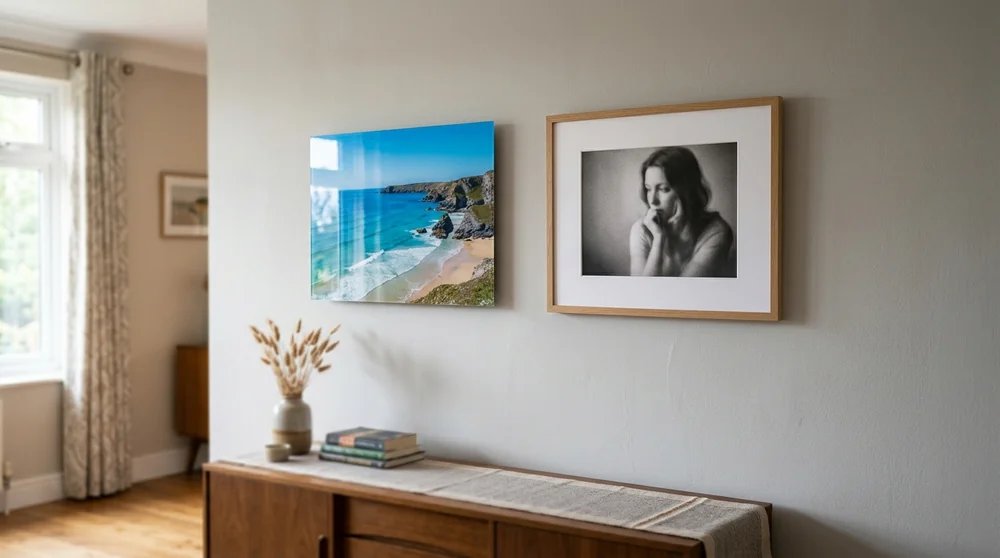
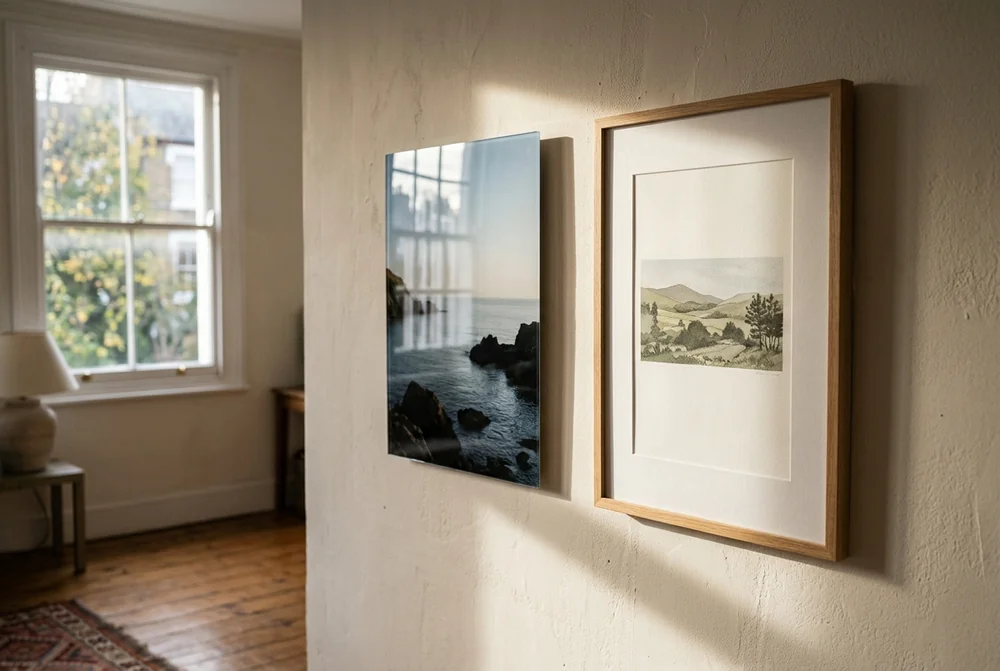
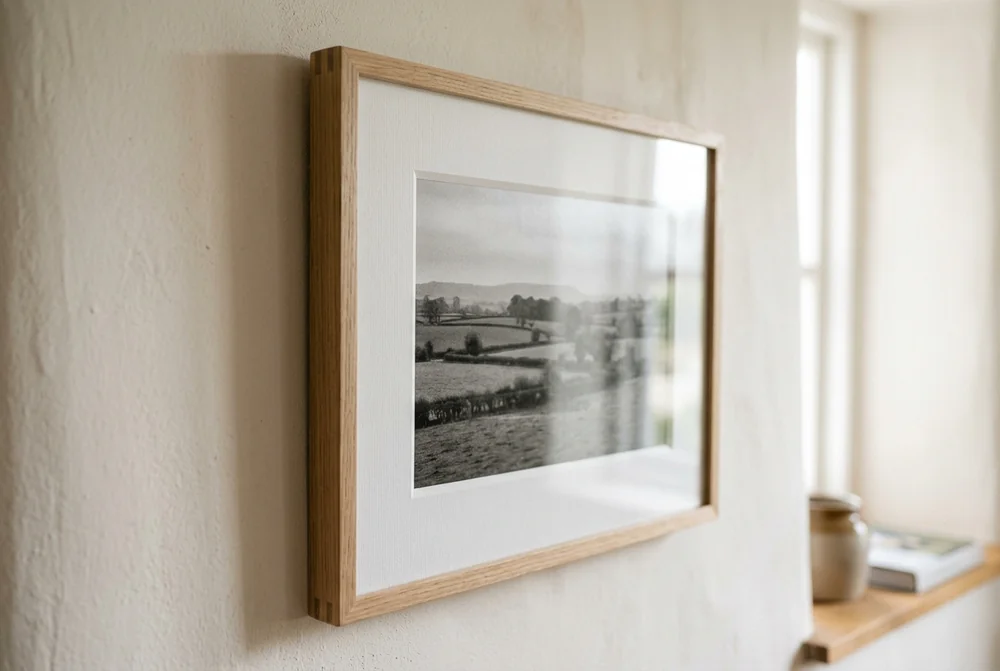
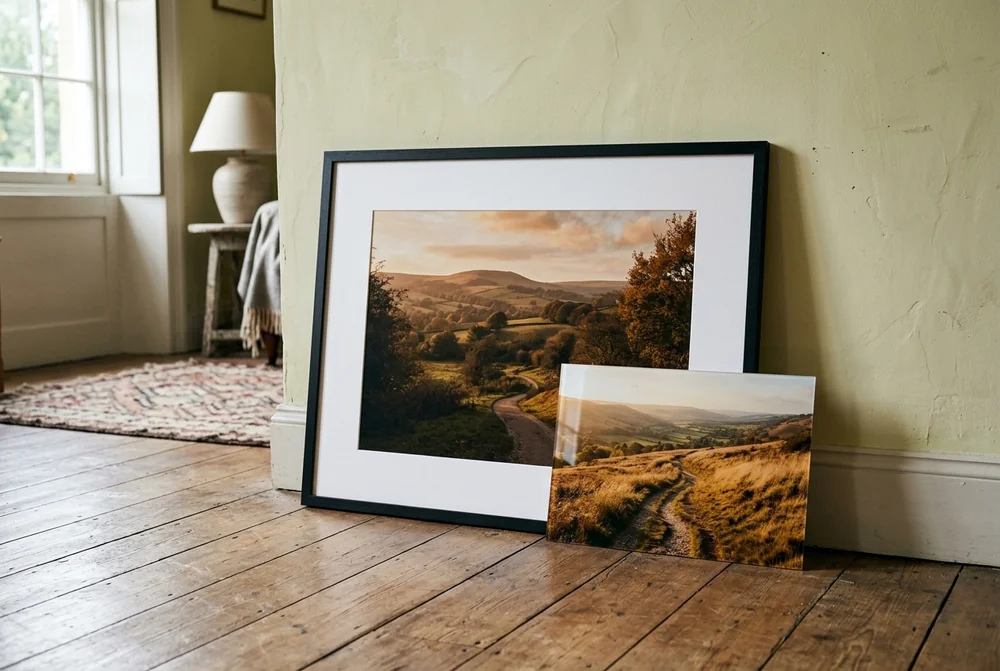
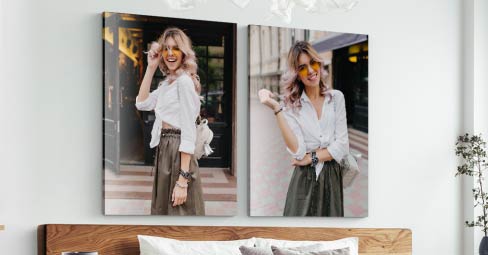
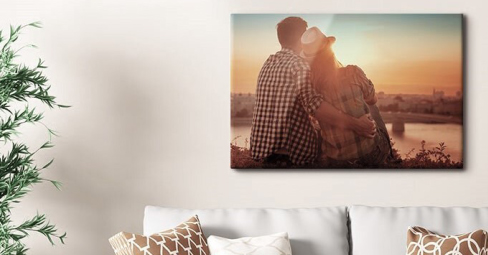
Acrylic prints suit bright, colourful photos and modern rooms. The image sits behind a clear panel with no border, so colours look deep and glossy. Framed prints suit softer, older or black-and-white photos. The white mount and slim frame give the picture a quiet edge and calm the colours down.
Most people choose between the two by looking at pictures on a website. That is the hard way to do it, because both look good in a product shot. The difference shows up on your wall, in your light, with your photo.
So this guide gives you the parts that actually decide it: how each one is built, what each costs at the same size, how they behave in a sunny room, and which photos suit which finish. Every price here comes from the MYPICTURE price list and was checked on 14 August 2026.
The short version
Acrylic is the bolder finish. Your photo goes behind a 3mm sheet of clear acrylic with polished edges and no border. Prices start at £13.00 for 20 × 20cm.
Framed is the quieter finish. Your photo is printed on paper, surrounded by a pure-white mount, and set in a slim frame. Prices start at £14.90 for 20 × 20cm.
The main trade-off is glare. Acrylic is glossy, so it reflects lamps and windows. A framed print reflects less, because the mount breaks up the surface and the paper underneath is not high gloss.
Cost swaps over at around 60 × 40cm. Below that size acrylic is usually cheaper. Above it, framed is cheaper — £54.90 against £69.00 at 80 × 60cm.
Whichever you choose, keep it off a wall that gets hours of direct sun. Light is what fades a photo, not the material around it.
Why the finish matters more than the photo
A print is a photograph plus a shield. The shield decides how the picture looks, and how long it lasts.
The National Archives, which cares for roughly eight million photographs, is blunt about the main risk. Photographic materials are extremely sensitive to light, and colour prints fade fastest under long exposure. Their guidance on handling photographic materials is worth two minutes if you are hanging something you care about.
That one fact does more work than any styling rule. A print in a dark hallway will outlive the same print opposite a south-facing window, whatever it is made of. It also explains why acrylic prints are sold on UV resistance, and why framed prints are sold with a sheet of glazing over the paper. Both are answers to the same problem.
What the two do differently is everything you can see: shine, colour, edges, and how much of your wall the picture takes up.
Acrylic prints: what they do well, and where they struggle
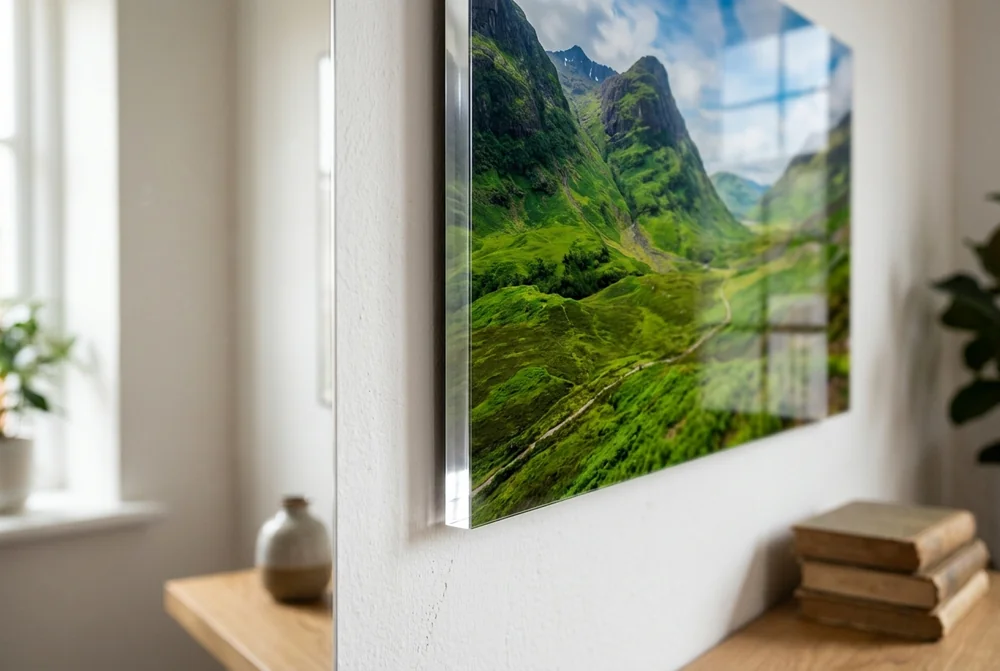
An acrylic print is your photo behind a 3mm panel of clear acrylic. At MYPICTURE the panel is CNC-cut to size and the edges are hand-polished at our production site in Cologne, which is why the sides catch the light. There is no frame and no border. A hidden bracket holds the panel a short distance off the wall, so it appears to float.
You can order acrylic photo prints from 20 × 20cm up to 120 × 80cm, in square, landscape, portrait and panoramic shapes. Two builds are available. The standard version is printed in six colours directly onto a pure-white backing layer. The Premium version is printed in twelve colours on lab-quality photo paper, then laminated behind the acrylic, which gives smoother gradients in skies and skin tones.
Where acrylic wins is punch. The clear panel adds depth, so the photo appears to sit a few millimetres below the surface. Blues, greens and reds come out stronger than they do on paper. It also copes with damp far better than paper or canvas, which makes it the sensible pick for a kitchen or a bathroom wall. A wipe with a soft cloth is the entire maintenance routine.
Where it struggles is light. A glossy panel is also a mirror. Hang a 60 × 40cm acrylic print directly opposite a window and you will spend part of the day looking at the window. Fingerprints show on the front, and the surface will scratch if you clean it with anything rough. It is unforgiving with photos, too: because the finish is so sharp, grain, noise and soft focus are more obvious than they would be behind a mount. A standard phone photo is usually fine up to about 80 × 60cm, but view it at full size before you order anything larger. Our guide to what an acrylic print is covers the resolution side properly.
Framed prints: what they do well, and where they struggle
A framed print is the traditional build. Your photo is printed on premium paper, surrounded by a pure-white mount with a bevelled cut, and held in a slim frame behind a protective sheet of glazing.
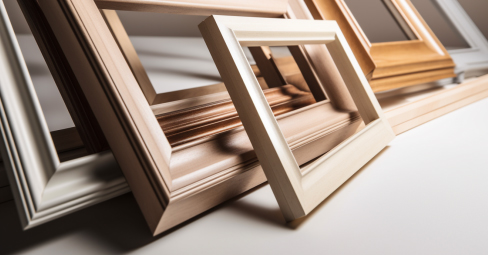
MYPICTURE framed photo prints run from 20 × 20cm to 80 × 60cm, with a choice of five frame designs: black matte, white, walnut flair, oak vintage flair and vintage silver. The frames are made from recycled plastic, which keeps the weight down. A large framed print does not need the heavy fixings a solid wood gallery frame would.
The mount is the part people underrate. That white border does three separate jobs. It gives the eye somewhere to rest before it reaches the photo, so the picture feels calmer on a busy wall. It lifts the print away from the glazing, so nothing can stick to the surface. And it hides a multitude of sins, because a soft edge or a slightly weak corner disappears underneath it. Black-and-white photographs, scanned family pictures and quiet landscapes nearly always look better this way.
Where framed prints struggle is impact. A framed print is a polite object. It does not glow, and against dark paint or busy wallpaper it can fade into the background. The frame and mount also eat into the picture. On a 40 × 30cm framed print, the visible photo is meaningfully smaller than 40 × 30cm, because the mount takes a border on all four sides. If you want the largest possible image for your money, that matters.
It is worth saying plainly where other UK printers do parts of this better. CEWE offers framed prints in wood, metal and plastic with a wider colour range than we carry, and its acrylic prints use a slightly thicker 3.6mm panel with a cut-to-size service. If a real wood frame or an exact non-standard size is the deciding factor for you, they are worth a look. Our round-up of UK photo printing services compares the main names against each other.
The thing most guides get wrong: your frame probably has acrylic in it
Here is the part that changes the whole comparison. Most framed prints sold online in the UK are not glazed with glass. They are glazed with acrylic.
MYPICTURE framed prints use a hand-polished acrylic sheet over the mount, not glass. So do a large share of framed prints from other UK printers, for three practical reasons: acrylic weighs around half what glass does, it does not shatter in transit, and it costs less to ship.
So the real choice is not acrylic against glass. Both products put your photograph behind acrylic. What is left to decide between them is this: what the photo is printed on, whether there is a mount, whether there is a frame, and whether the acrylic is a 3mm edge-polished panel you can see or a thin sheet hidden behind a border.
That is a far more useful way to think about it. You are not picking a material. You are picking whether or not you want a border.
Acrylic prints vs framed prints: side by side
Acrylic print
Framed print
Price from
£13.00 (20 × 20cm)
£14.90 (20 × 20cm)
Largest size
120 × 80cm
80 × 60cm
Look
Gloss panel, no border
Paper print, white mount, slim frame
Glare
High
Low to medium
Colour
Deep, saturated, high contrast
Softer and truer to the original
Damp rooms
Fine in kitchens and bathrooms
Not recommended
Image area
The full size you ordered
Reduced by the mount border
Best for
Travel, colour, modern rooms
Portraits, black and white, older photos
Read that table as a division of labour rather than a scoreboard. Acrylic is the right answer when the photograph is the loudest thing you want in the room. Framed is the right answer when the photograph needs to sit politely alongside furniture, books and other pictures. Most homes end up with both, in different rooms, for exactly that reason.
Which costs less? The five sizes where the answer flips
This is the question the rest of the internet skips, because almost nobody sells both products and publishes both price lists. Here are the sizes MYPICTURE offers in acrylic and framed, side by side.
Size
Acrylic print
Framed print
Cheaper option
20 × 20cm
£13.00
£14.90
Acrylic, by £1.90
30 × 20cm
£17.00
£24.90
Acrylic, by £7.90
40 × 30cm
£27.00
£34.90
Acrylic, by £7.90
40 × 40cm
£35.00
£37.90
Acrylic, by £2.90
60 × 40cm
£42.00
£39.90
Framed, by £2.10
80 × 60cm
£69.00
£54.90
Framed, by £14.10
The lines cross somewhere between 40 × 40cm and 60 × 40cm. Below that point you are paying for the acrylic panel, and it is cheap because the panel is small. Above it, acrylic gets expensive quickly, because a big sheet of 3mm acrylic costs real money and has to survive being posted. A frame and a piece of card do not scale the same way.
So if you are buying one statement piece for above a sofa at 80 × 60cm, framed saves you £14.10. If you are buying four small prints at 30 × 20cm for a stairwell, acrylic saves you £31.60 across the set. The advice that "acrylic is the premium option" is true about the look, and often wrong about the bill.
One more thing on price. Because we operate a lowest price guarantee that beats any like-for-like UK price by 5%, the comparison shopping is largely done for you — you are checking the finish, not hunting a better number elsewhere.
Room by room: where each one belongs
Light and humidity vary enormously from room to room in a British house, and they decide this more often than taste does.
Living room. Whichever faces away from the main window. If your sofa wall is opposite the glass, go framed — an acrylic print there will mirror the daylight for most of the afternoon.
Bedroom. Framed, usually. Bedrooms have lower light and softer photos in them, and a mount suits both. Acrylic works above a bed if the room is modern and the photo is a strong landscape.
Kitchen. Acrylic. Steam, splashes and cooking grease are a paper print's worst enemies, and acrylic wipes clean.
Bathroom. Acrylic, and only acrylic. Do not hang a mounted paper print in a room that gets steamy — the mount will absorb moisture and cockle over time.
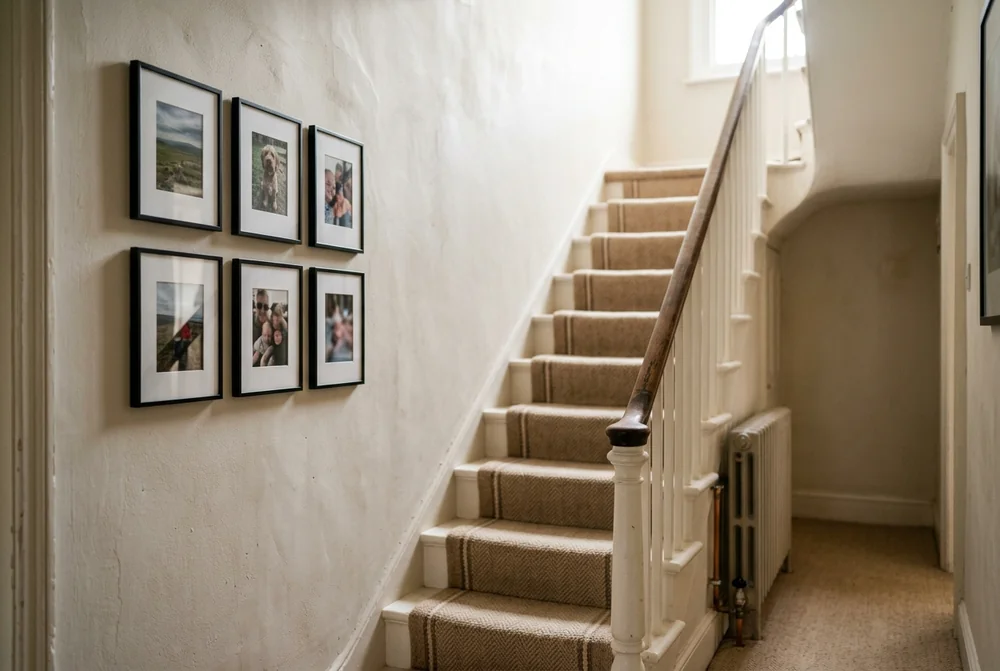
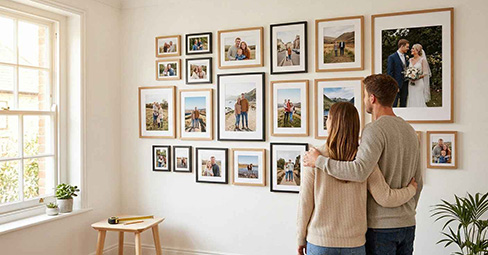
Hallway and stairs. Either, and this is the darkest area of most homes, so it is where a fragile or irreplaceable image should go. A gallery wall of small framed prints in matching frames is the easiest thing to get right here.
Home office. Framed, if you are on video calls. A glossy panel behind your head will bounce your ring light straight into the camera.
If you are still deciding on sizes rather than finishes, our wall art size guide has the measurements for standard UK furniture.
A three-question test to settle it
1. Where is the nearest window? If the wall faces it directly, choose framed. Glare beats every other consideration, and no amount of liking the acrylic look survives six months of squinting at a reflection.
2. Is the photo loud or quiet? Bright colour, strong light, a sharp modern camera file — acrylic. Soft tones, black and white, a scan of an old print, a portrait — framed.
3. How big are you going? Under 40 × 40cm, acrylic usually costs less. Over 60 × 40cm, framed usually costs less.
If you get a split answer, the window question wins. A framed print in the wrong room is still a nice picture. An acrylic print in the wrong room is a mirror with a photo behind it.
Why choose MY-PICTURE.CO.UK over other competitors?
MYPICTURE competes on price and on doing both of these products in-house. Acrylic panels are cut and hand-polished at our own production site in Cologne, framed prints are assembled with a bevel-cut mount as standard rather than as a paid extra, and UK orders arrive within 5 to 8 working days. Delivery is £6 to the UK mainland and free over £49.
The table below compares specific dimensions only — it is not a claim that we are better at everything.
*Ratings and prices correct as of August 2026. Prices exclude delivery; all brands run periodic promotions.
If you are still torn after all of that, buy the small version of the one you like the look of. A 20 × 20cm acrylic print is £13.00 and a 20 × 20cm framed print is £14.90, which is a cheap way to settle an argument with your own wall. Start with your photo and see which one you keep looking at.
Frequently asked questions
What are the disadvantages of acrylic photo frames?
The three real disadvantages are glare, fingerprints and scratches. A glossy acrylic surface reflects windows and lamps, so it is a poor choice for a wall facing your main light source. It shows fingerprints around the edges where people handle it, and the surface will scratch if you wipe it with an abrasive cloth. Acrylic also shows image flaws more clearly than a mounted paper print does, so a low-resolution photo looks worse on acrylic than behind a mount.
Are acrylic photo prints worth the cost?
For bright, sharp, colourful photographs, yes. The clear panel adds depth and colour saturation you cannot get from paper, and it survives damp rooms that would ruin a mounted print. For soft, old or black-and-white images it is often not worth it, because those photos gain nothing from extra contrast. At MYPICTURE, acrylic starts at £13.00 for 20 × 20cm and is generally cheaper than a framed print below 60 × 40cm, so the cost gap is smaller than most people expect.
How long do acrylic prints last?
An acrylic print will hold its colour for decades if it is kept away from direct sunlight. The acrylic panel itself is UV resistant, moisture resistant and does not yellow in normal indoor conditions. The limiting factor is light exposure, not the material. The National Archives notes that colour photographic prints are the most vulnerable to fading from prolonged light, so a wall that gets hours of direct sun will shorten the life of any print, acrylic included.
What is the best material to print photos on?
There is no single best material, only a best match for the photo and the room. Acrylic suits bright, high-contrast images and damp rooms. Framed paper prints suit portraits, black-and-white work and rooms with a lot of daylight. Canvas suits large, soft images where you want a textured, frameless look. Aluminium suits landscapes and black-and-white photography where you want a matte finish with no reflection at all.
Which costs more, an acrylic print or a framed print?
It depends on the size, and the answer flips. At MYPICTURE, acrylic is cheaper below roughly 60 × 40cm: £13.00 against £14.90 at 20 × 20cm, and £27.00 against £34.90 at 40 × 30cm. Above that point framed becomes cheaper, at £39.90 against £42.00 for 60 × 40cm and £54.90 against £69.00 for 80 × 60cm. Large acrylic panels are expensive to produce and post, while a frame and mount cost roughly the same at any size.