How layflat photo books actually work – and when they're worth it
 by Sophie Hartley – 5 years of experience in photo products
The wedding panorama that bends awkwardly down the middle. The travel photo where half the horizon vanishes into the gutter. The newborn portrait that loses its eyes to the spine. These are the small disappointments that send people searching for a layflat photo book in the first place, and they're the same reasons you may be weighing up the upgrade right now. Some retailers spell it as one word, others as "lay flat photo book" with the space; either way, the binding works the same.
A layflat photo book opens completely flat, with each spread behaving like a single continuous canvas. That sounds simple, but it changes how you choose your photos, how you lay out your spreads, and how much you'll pay. This guide walks you through exactly when layflat binding pays off, when a standard photo book is the smarter choice, and how to pick the right format for your particular project.
In this guide, you'll learn:
- What Is a Layflat Photo Book and How Does the Binding Work?
- When Is a Layflat Photo Book Really Worth the Upgrade?
- Layflat vs Standard: How the Two Bindings Compare
- How to Choose Your Layflat Photo Book in 5 Steps
At a glance: A layflat photo book is the premium choice when your project depends on uninterrupted double-page spreads, panoramas, or full-bleed portraits. Expect a higher price tier than a standard softcover or hardcover, but a noticeably more polished result for weddings, travel albums, and milestone gifts. For everyday family books with mostly single-page photos, standard binding still offers excellent value.
What Is a Layflat Photo Book and How Does the Binding Work?
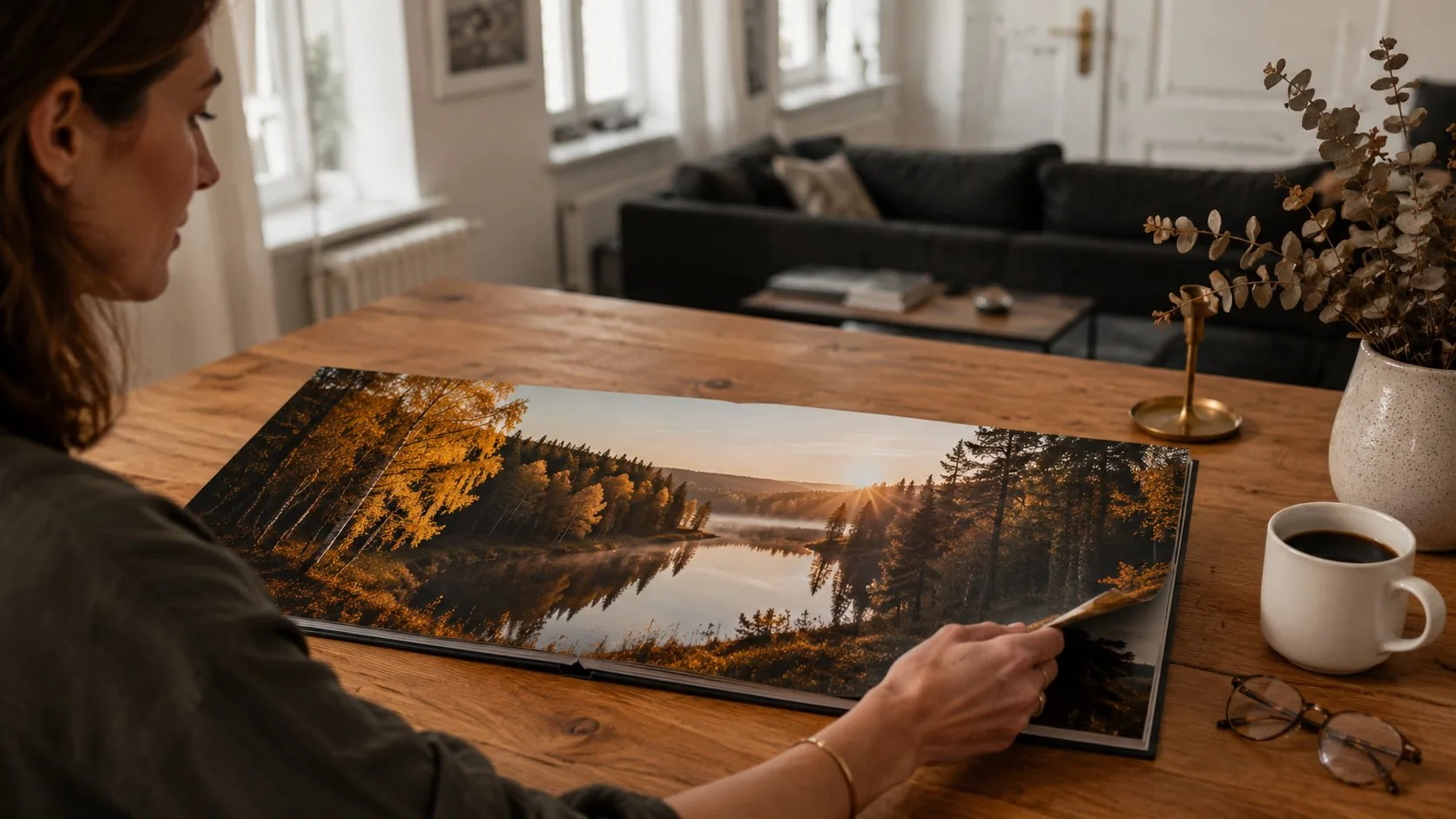
A layflat photo book is a hardcover book engineered to open completely flat at 180 degrees, so every double-page spread becomes a single uninterrupted surface. There is no central gutter, no inward curve, and no need to press the pages down with your hand to keep them open.
The difference lies in the binding method. Traditional photo books glue or stitch individual pages along an inner edge, which leaves a small dead zone near the spine where the pages curve inward. Layflat binding instead uses thicker pages, with each pair printed back to back and bonded together at a hinge, so every spread sits as a single piece. The result is a flat, magazine-style opening that lets photography flow across the fold without losing any detail.
You'll notice the difference immediately when you handle one. Layflat pages feel substantial, almost like card stock, and they sit perfectly still on a table. That weight is part of what makes the format feel premium, and it's also why layflat books tend to be priced at the higher tier of any photo book range. Our premium photo book range lets you compare formats and binding options before you commit, so you can see exactly what you're paying for.
What layflat does well
- Seamless panoramas. Wide landscapes and group shots span the full spread with no visual break.
- Full-bleed double-page portraits. Faces, eyes, and key details never disappear into the gutter.
- Magazine-style layouts. Editorial-feel spreads with text overlays and large hero images work beautifully.
- Long-term durability. Thick layflat pages resist creasing and stand up to repeated handling at family gatherings.

When Is a Layflat Photo Book Really Worth the Upgrade?
The honest answer: layflat is worth it when the wow factor of the format matters more than the page count you get for your budget. For some projects that's a clear yes; for others, a standard photo book delivers more value for the same outlay.
Choose layflat when the book itself is part of the gift, when panoramas dominate your shot list, or when you want the finished result to feel like a coffee-table publication rather than a personal album. Standard binding still suits busy family books, school-year recaps, and anything where you have lots of single photos to fit in.
Layflat is the right call when:
- You shot a wedding, a milestone trip, or a once-in-a-lifetime event. A layflat wedding photo book is the format people pull off the shelf for decades, so the binding matters as much as the photos. Our blog on wedding photo album printing walks through exactly how to plan a wedding layout that suits this format.
- Panoramic or wide-format photography is central to the story. Coastlines, mountain ranges, group portraits, architecture.
- You're giving the book as a serious gift. Anniversaries, retirements, christenings, parent-of-the-bride presents.
- You're a photographer building a portfolio. Layflat reads as professional and lets your images breathe; a well-curated layflat photo album signals serious work to clients before they've turned the first page.
Standard binding is fine when:
- The book is a family yearbook with mostly single-page photos. Holiday snaps, school events, Sunday roasts.
- Page count matters more than spread design. You can fit considerably more story into a standard book for the same outlay.
- The book will live in a drawer or on a child's shelf. Heavy daily handling is fine for standard binding, but the premium spread effect is wasted if no one's studying it closely.
Our recommendation: If even three or four spreads in your project feature panoramic or full-bleed double-page images, layflat earns its place. If your layout is mostly grids and singles, save the money and put it into a larger format or extra pages instead.
Layflat vs Standard: How the Two Bindings Compare
Here is a direct, attribute-by-attribute comparison of the layflat photo book versus a standard hardcover, so you can weigh up the decision in one glance.
| Criteria | Layflat Photo Book | Standard Hardcover Photo Book |
|---|---|---|
| Centre gutter | None, fully flat spread | Slight curve near spine |
| Page stock | Thick, card-weight | Standard photo paper |
| Best for | Panoramas, full-bleed spreads | Single-photo layouts, grids |
| Page count value | Premium per page | Higher page count for the budget |
| Feel in the hand | Substantial, coffee-table | Light, album-style |
| Price tier | Premium | Mid-range |
| Durability | Very long-lasting | Long-lasting |
| Gift impression | Statement gift | Thoughtful gift |
| Layout flexibility | Magazine-style spreads | Classic album style |
| Storage weight | Heavier on the shelf | Lighter on the shelf |
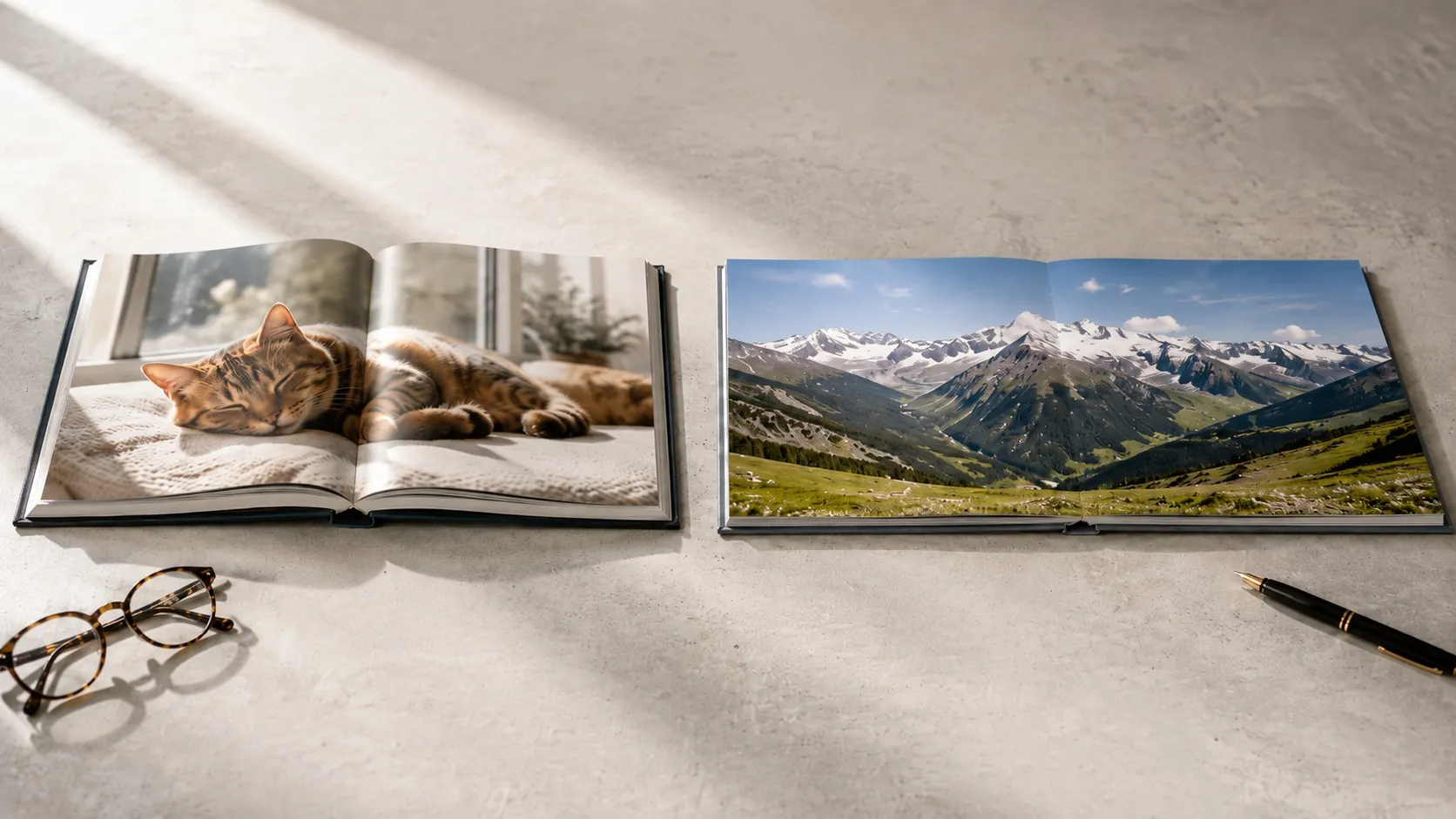
Reading the table
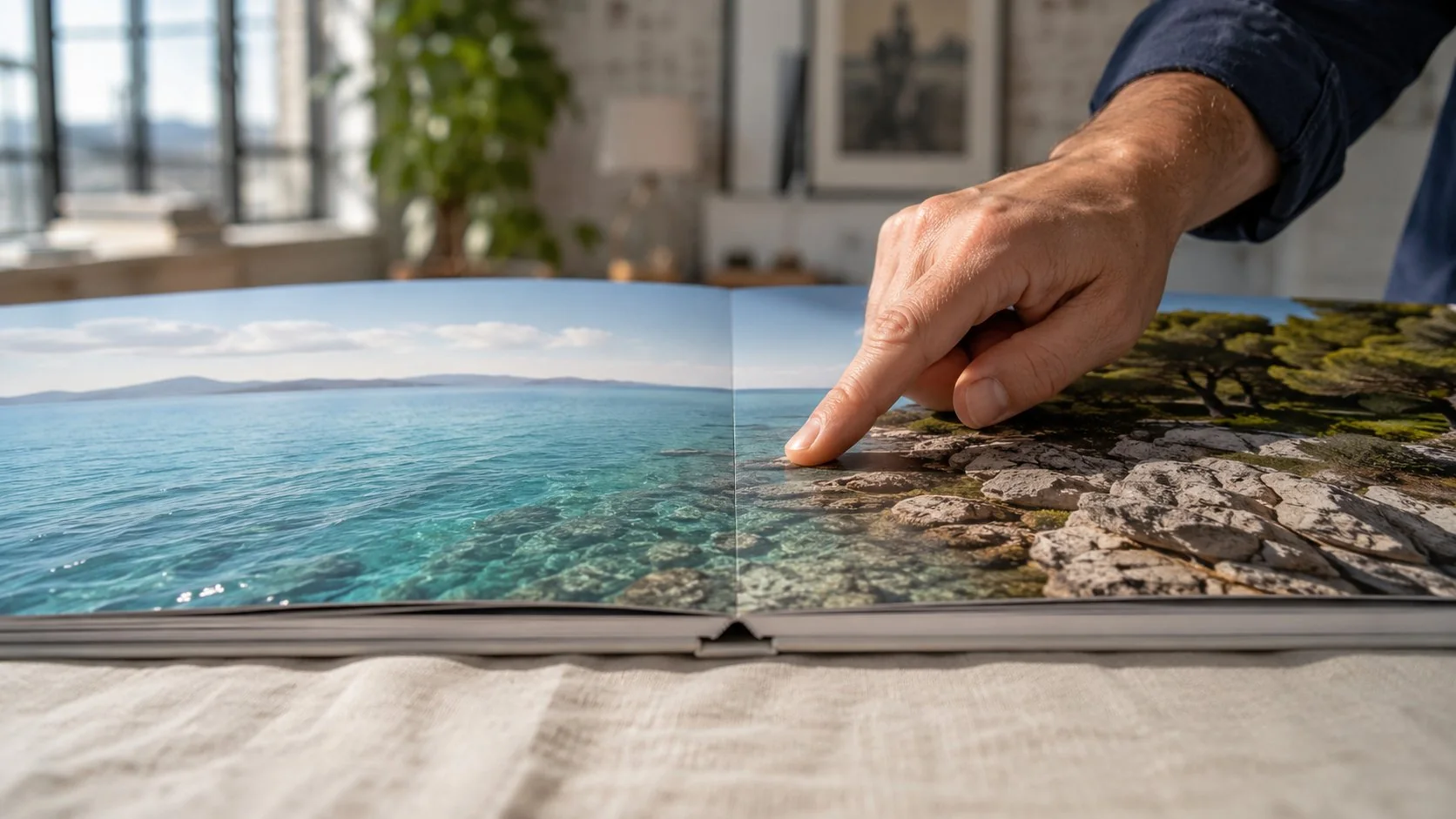
A layflat photo book wins on visual impact and physical quality. A standard hardcover wins on flexibility, page count, and value per pound. Neither is objectively better; they're built for different jobs.
If you're comparing within My Picture's own range, the right question isn't "which is best?" but "which one fits this specific project?" A 60-page family yearbook in standard binding will probably make you happier than a 30-page layflat for the same spend. A wedding album with twelve panoramic spreads is the reverse.
The hidden cost most people miss
Layflat books reward planning. Because each spread is designed as a single image surface, you'll spend more time choosing photos and arranging layouts than you would for a standard book. If you enjoy that part of the process, brilliant. If you'd rather drag-and-drop and be done, a standard photo book or even a set of personalised photo cards for a smaller project may serve you better.
How to Choose Your Layflat Photo Book in 5 Steps
Once you've decided layflat is right for your project, the next few decisions shape the finished book just as much as the binding itself. Follow these steps in order and the rest falls into place.
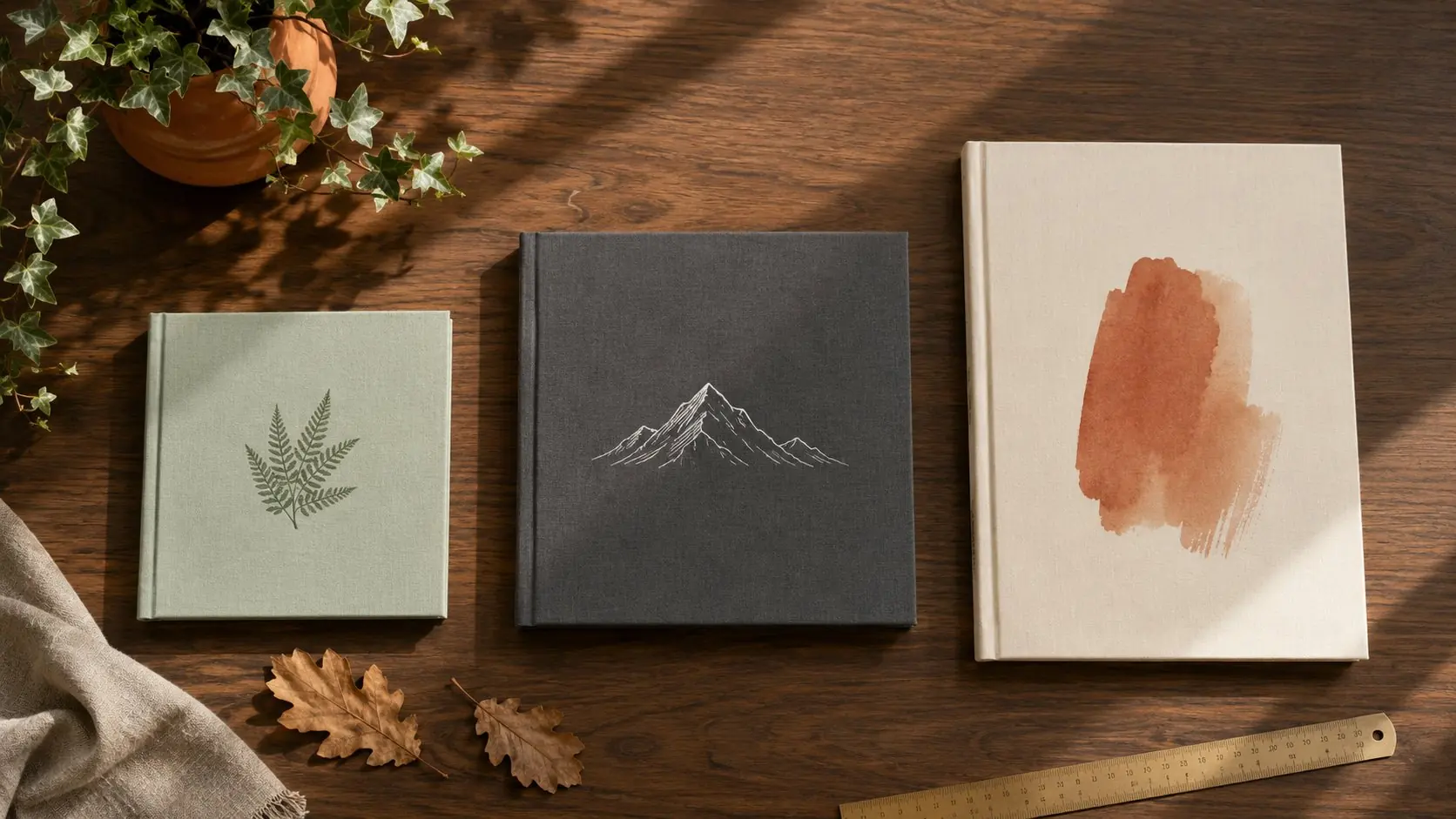
- Step 1: Pick the format and orientation first. Landscape works best for travel, weddings, and panoramic landscapes; portrait suits family portraits, baby books, and editorial-style storytelling; square is a flexible all-rounder for mixed content. Decide before you start choosing photos, because the format determines which images can be hero shots and which become smaller supporting pictures. Once you commit, stick with it for the whole book; switching mid-project usually means redoing your favourite spreads.
- Step 2: Curate ruthlessly before you open the editor. Pull together every candidate photo in one folder, then cut it down to roughly twice the number of pages you're aiming for. Premium binding deserves premium edits, so favour sharp, well-exposed images and let a few weaker shots go. If you need help thinking about flow and pacing, our guide on photo album ideas is a useful prompt for sequencing your selection.
- Step 3: Plan your panoramic spreads on paper first. This is the step most people skip and then regret. Sketch out which images will run across a full double-page spread, where the focal point sits, and how the page above and below will support it. Layflat shines when each spread tells a small visual story, so resist the temptation to fill every page edge to edge.
- Step 4: Choose page count by content, not by budget. A tighter, well-edited 40-page layflat book almost always beats a padded 80-page version. Premium binding amplifies whatever is on the page, including weak photos, so err on the side of fewer, stronger spreads. If your story needs more room, increase the format size instead of cramming in extra pages.
- Step 5: Proof carefully, then order one extra. Read every spread end to end, check spelling on captions, and zoom into any face or fine detail to confirm sharpness. Once you're happy, consider ordering a second copy for your parents, in-laws, or as a backup. Doing both prints in a single design session is far easier than coming back to the project months later.
Tip: Save your finished project file even after you've ordered. Six months later you'll want to make small tweaks, gift a copy to a sibling, or build a follow-up volume in the same style.
Putting It All Together: The Final Decision
A layflat photo book is the right upgrade when your project's defining moments live in the centre of the spread. Weddings, milestone trips, professional portfolios, and once-in-a-decade gifts all benefit from binding that refuses to interrupt the photography. For lighter, more frequent family books, a standard hardcover from our photo book range delivers excellent quality and more pages for the same outlay.
Either way, the printing carries the same Made-in-Britain quality, and our layflat option has earned its place in the range because the finished book feels worth the upgrade. Take the time to plan your spreads, curate your selection, and proof your file carefully. The binding will do the rest.
The bottom line: Choose a layflat photo book when uninterrupted double-page spreads, panoramas, or premium gifting are central to your project; choose standard binding when page count and budget flexibility matter more.
Frequently Asked Questions
-
A layflat photo book is a hardcover photo book whose pages open completely flat at 180 degrees, with no centre gutter or curve. This lets photographs span both pages of a spread as a single uninterrupted image, which is ideal for panoramas and full-bleed portraits.
-
Layflat is worth the upgrade when your book features panoramic photos, full-spread portraits, or is intended as a milestone gift. For everyday family books with mostly single-photo layouts, a standard hardcover offers better value per page.
-
Standard binding glues or stitches individual pages along an inner edge, leaving a slight inward curve near the spine. Layflat binding uses thicker, card-weight pages joined edge to edge at a hinge, so each spread sits perfectly flat without any centre interruption.
-
Yes, generally. The thicker page stock used in layflat binding resists creasing, fingerprints, and the wear of repeated handling better than standard photo paper. That makes layflat a strong choice for books that will be passed around at family gatherings for years.
-
Choose the largest format your photos can support without losing sharpness. Landscape suits travel and wedding work, portrait suits family and baby projects, and square is the flexible middle ground. Plan your hero spreads first, then size up if any of them would feel cramped.
-
Absolutely, and the best layflat books usually do. Use full-spread panoramas as visual anchors every few pages, then fill the surrounding spreads with smaller groupings, portraits, and the occasional white-space breather to let the eye rest.
-
Plan on roughly twice as long as a standard book of the same length, because each spread is designed as a single composition. Most people find that the planning is part of the enjoyment, especially for wedding and travel projects where the memories are fresh.