A panoramic canvas is at least twice as wide as it is tall, so it suits long walls, wide scenery photos and phone panoramas. A standard landscape canvas is closer to a normal photo shape, so it suits most everyday pictures. For a wide wall, panoramic usually wins on shape — but only if your photo can survive the crop.
The price gap between the two is smaller than most people expect. At MYPICTURE, a 120cm-wide panoramic canvas print costs £50, while a 120cm-wide standard landscape canvas costs £60. So the real decision is not about money. It is about what each shape does to your photo and your wall, and that is what this guide walks through.
The short version
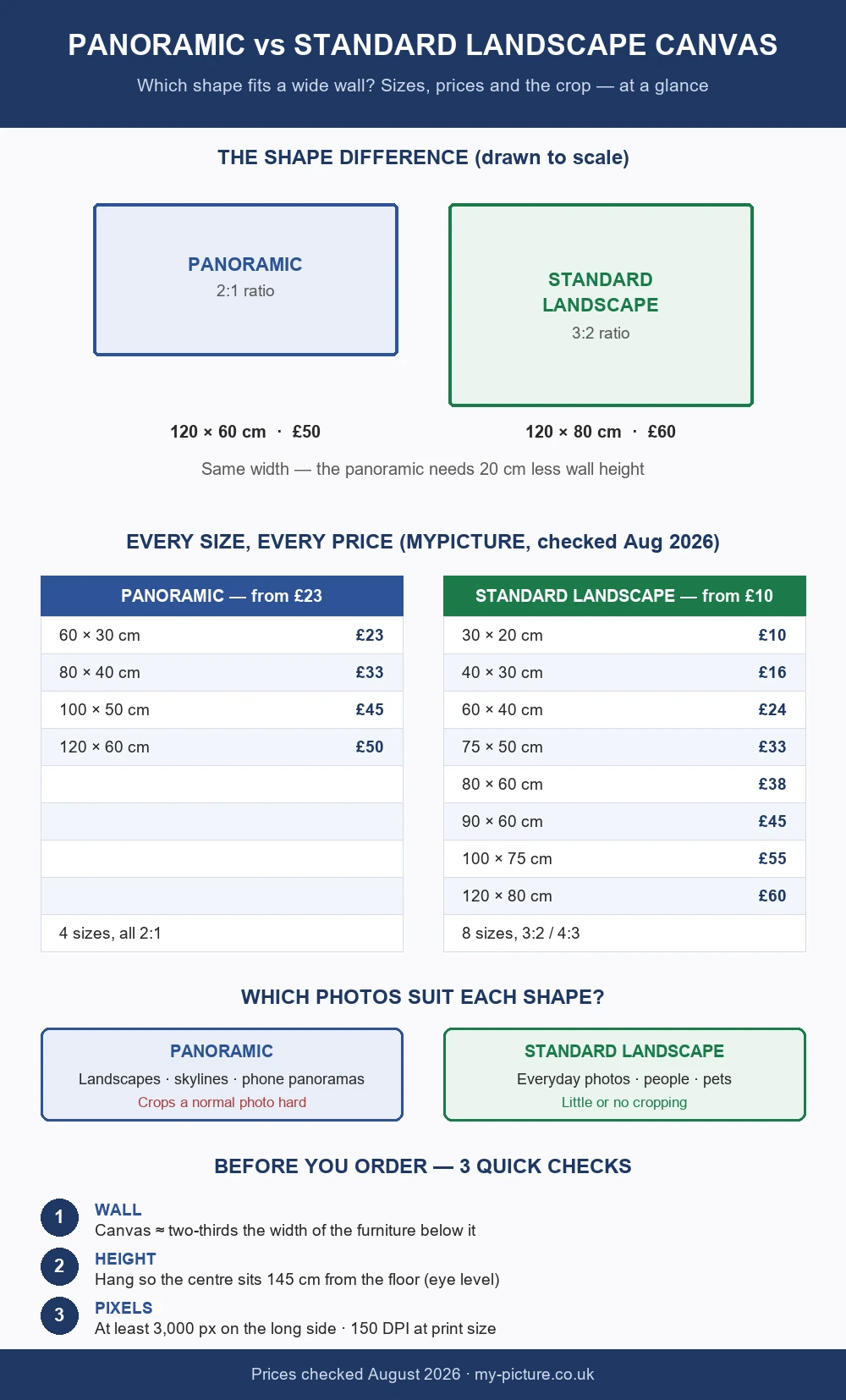
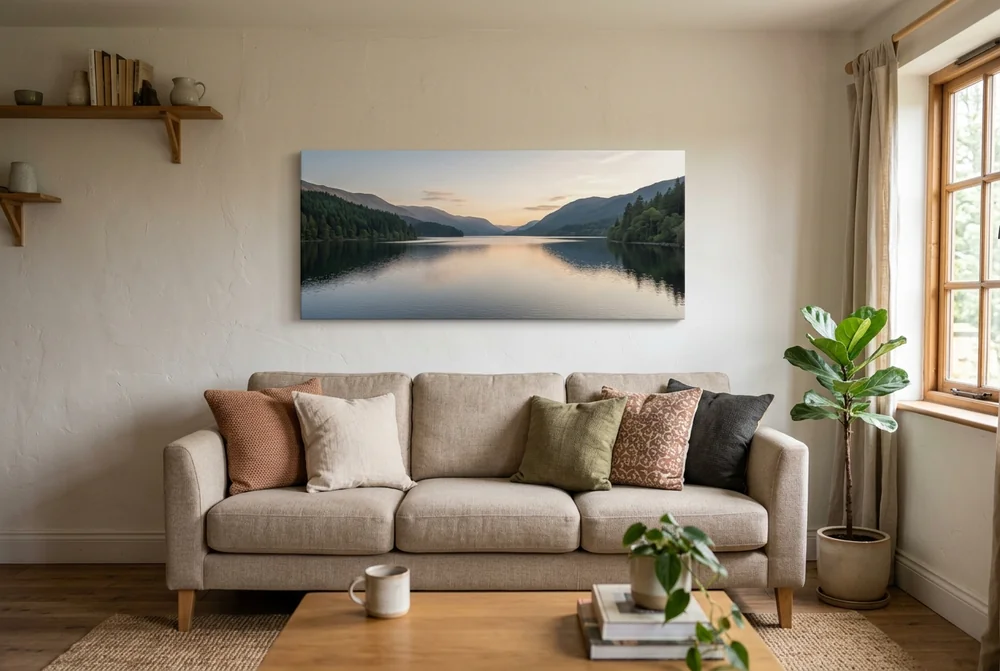
Panoramic means a 2:1 shape or wider. MYPICTURE panoramic canvases run from 60×30cm (£23) to 120×60cm (£50). Every size is exactly twice as wide as it is tall.
Standard landscape means a 3:2 or 4:3 shape. This matches how most cameras and phones take photos. Sizes run from 30×20cm (£10) up to 120×80cm (£60).
The core trade-off: panoramic fills width without eating wall height; standard landscape keeps more of your photo but needs a taller, emptier wall to look right.
Cost at the same width: a 120cm panoramic is £50 and a 120cm standard landscape is £60 — a £10 difference, checked August 2026.
Whichever you choose, check your photo first. A panoramic crop cuts the top and bottom off a normal photo, and heads are usually in the top part.
Why the shape of your canvas matters more than the size
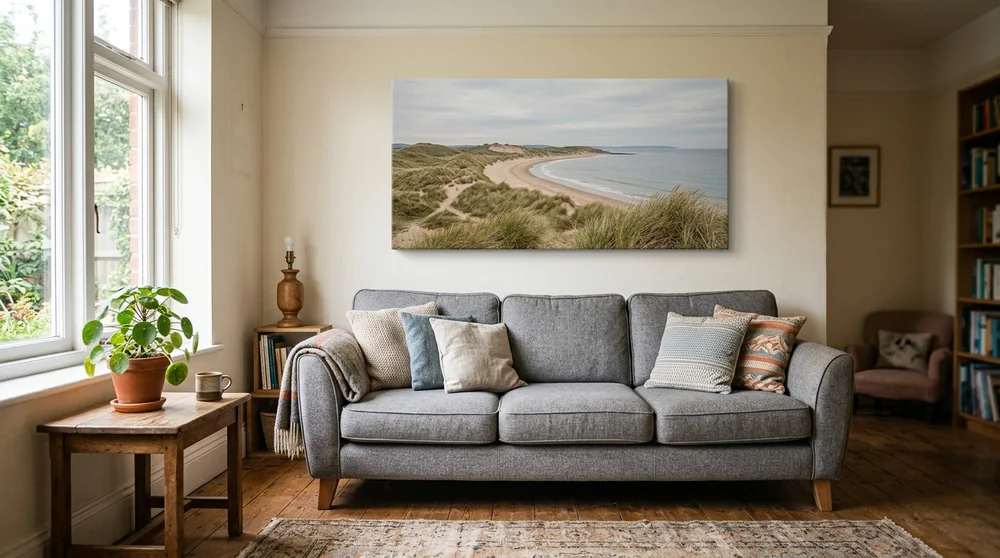
Galleries hang art so its centre sits about 145cm from the floor — the 57-inch rule that matches average eye level. Above furniture, designers also aim for art about two-thirds the width of the sofa or bed below it. Put those two rules together and a wide wall gives you a lot of width to fill but not much height, because the ceiling, shelves or a headboard get in the way.
That is the exact problem the panoramic format was made for. A standard landscape canvas wide enough for a big wall is also tall — a 120×80cm canvas needs 80cm of clear height plus breathing room. A 120×60cm panoramic gives you the same width with 20cm less height, which is often the difference between fitting the space and crowding it.
Panoramic canvas: what it does well, and where it struggles
MYPICTURE panoramic canvas prints come in four sizes, all in a 2:1 shape: 60×30cm (£23), 80×40cm (£33), 100×50cm (£45) and 120×60cm (£50). Each one is printed on 285g/m² canvas with a matte finish, hand-stretched over an FSC-certified pine frame, and arrives ready to hang in 4–7 working days.
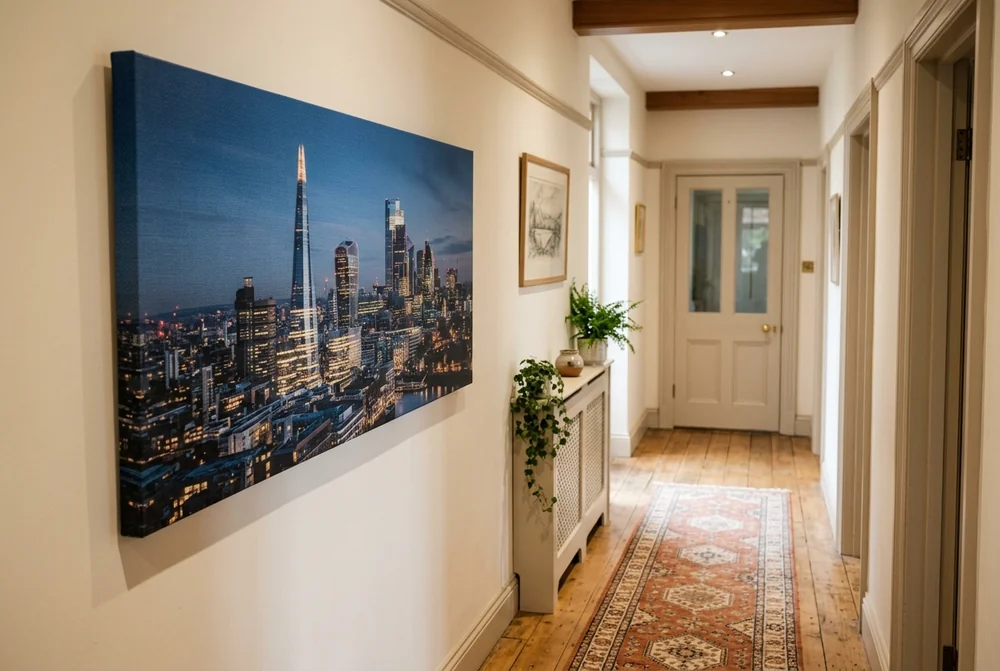
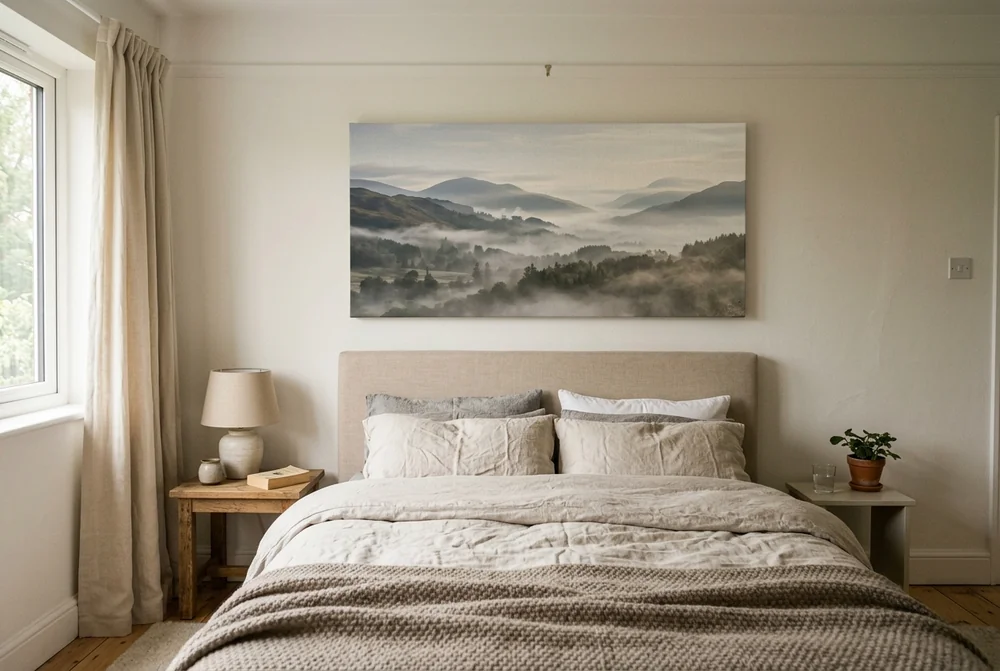
The format earns its place on three kinds of wall. Above a sofa or bed, where the width is there but the height is not. Along a hallway or landing, where the wall is long and low. And behind a desk or dining table, where a wide scene reads like a window. It also flatters three kinds of photo: landscapes and coastlines, city skylines, and any panorama your phone stitched together — those files are already the right shape, so nothing gets cut.
Where it struggles is with normal photos. Cropping a standard 3:2 shot down to 2:1 removes roughly a third of the image, and that third usually contains sky, faces or both. Portrait photos do not work at all. Two smaller points worth knowing: the largest panoramic size is 120×60cm, so if you want something truly enormous the large canvas prints range goes bigger in standard shapes. And on the 120cm span, the 4cm XXL frame option is worth the upgrade — the deeper frame keeps a long canvas rigid.
Standard landscape canvas: what it does well, and where it struggles
Standard landscape canvas prints at MYPICTURE run from 30×20cm (£10) to 120×80cm (£60), with popular mid-sizes such as 60×40cm (£24), 80×60cm (£38) and 100×75cm (£55). Same 285g/m² canvas, same solvent-free HP Latex inks, same pine stretcher frame — the only difference is the shape.
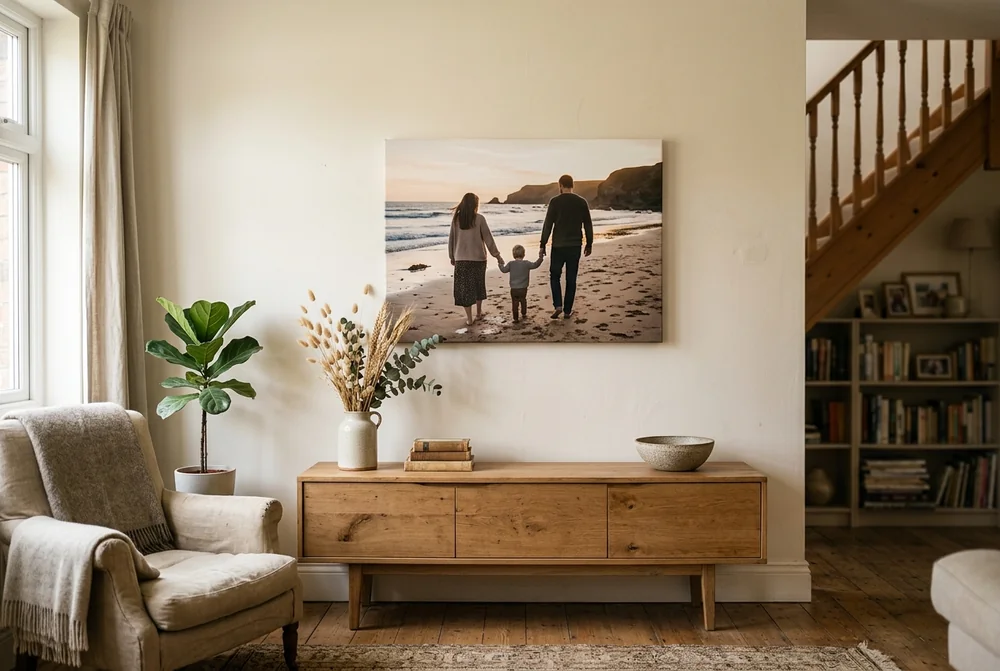
Its big advantage is that it matches your photos as they come out of the camera. A 3:2 or 4:3 canvas prints a normal photo with little or no cropping, so family shots, portraits-turned-sideways, pets and holiday snaps all keep their full frame. It also offers far more choice: twelve rectangular sizes against four panoramic ones, and the single largest canvas MYPICTURE makes, at 120×80cm.
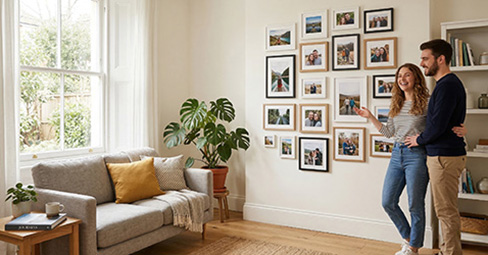
On a genuinely wide wall, though, a standard landscape canvas can look lost. A 3:2 rectangle wide enough to fill the space is often too tall for it, and one that fits the height leaves bare wall on either side. Some people solve that with a set of two or three canvases in a row — our guide to arranging photos on a wall covers the layouts. One honest note on speed: if you need a canvas today, ASDA Photo prints several standard sizes in-store within an hour. Nobody makes a custom panoramic that fast, including us — ours takes 4–7 working days because each one is stretched by hand.
Panoramic vs standard landscape: side by side
Panoramic canvas
Standard landscape canvas
Shape
2:1 — twice as wide as tall
3:2 or 4:3 — normal photo shape
Price from
£23 (60×30cm)
£10 (30×20cm)
Sizes available
4 (60×30 to 120×60cm)
12 (30×20 to 120×80cm)
Best photos
Landscapes, skylines, phone panoramas
Everyday photos, people, pets
Best walls
Wide, low: above sofas and beds, hallways
Tall, open: feature walls, chimney breasts
Biggest size
120×60cm (£50)
120×80cm (£60)
Cropping
Cuts normal photos hard
Little or none on most photos
Read the table as a division of labour, not a scorecard. Panoramic wins the shape contest on wide walls and wide photos. Standard landscape wins on choice, on photo-friendliness and on maximum print area. Neither is better everywhere, which is exactly why both exist.
Which costs less? A worked example
Take the most common wide wall in a UK home: the one above a 200cm three-seater sofa. The two-thirds rule says the art should be about 130cm wide, so both formats point to their 120cm option.
The panoramic route is a 120×60cm canvas at £50. The standard landscape route is a 120×80cm canvas at £60. The £10 saving is real but small — what you are actually choosing is 20cm of height. If a shelf, reading lamp or low ceiling sits above the sofa, the panoramic fits where the standard cannot. If the wall is tall and bare, the bigger 120×80cm canvas fills it better and carries more of your photo. Both orders qualify for free delivery, which starts at £49.
How to get either format right: size, resolution and edges
Three checks before you order, whichever shape you pick.
Measure the wall, not the feeling. Aim for a canvas about two-thirds the width of the furniture below it, with its centre around 145cm from the floor. On an empty wall, leave at least a hand-width of space on every side.
Check the pixels. For a panoramic canvas, your photo should be at least 3,000 pixels on the long side. The general rule for any size is 150 DPI at the printed dimensions — the MYPICTURE upload tool only offers you the sizes your file can support, so a blurry surprise cannot reach your wall.
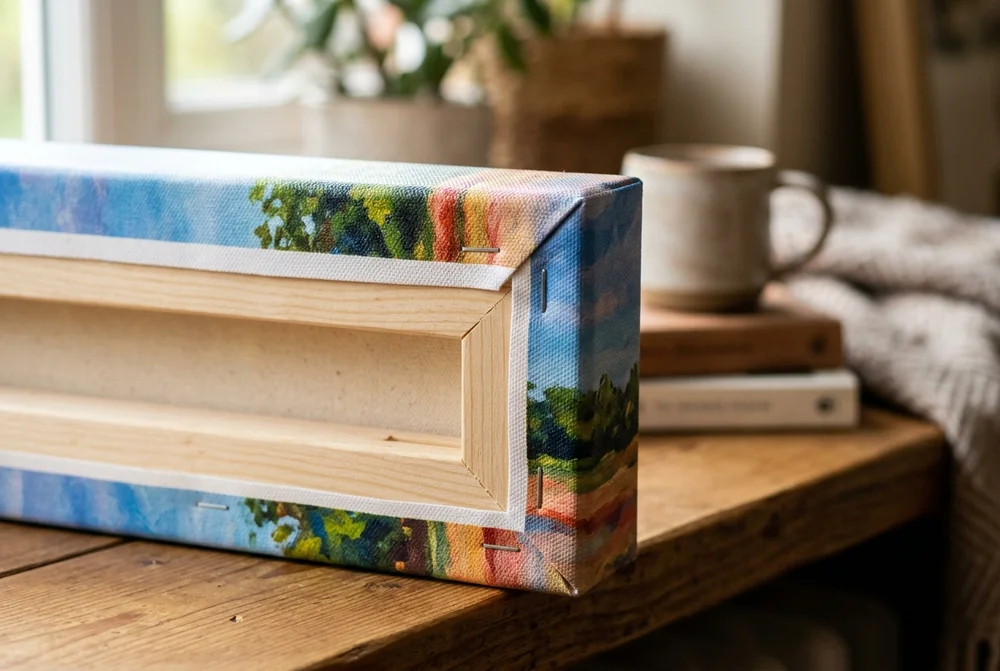
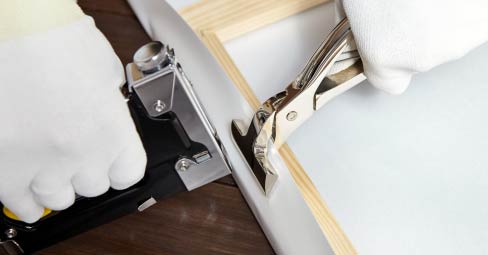
Pick the right edge. The canvas wraps around the frame, so a folded edge loses a thin strip of picture on each side — on a 2:1 crop that strip matters. A mirrored edge repeats the border instead, keeping the full photo on the front. It is the safest choice for panoramas.
If you later want a more finished look, either format takes an outer floating frame — the canvas sits inside with a small gap, like gallery pieces. The framed canvas prints page shows the five finishes.
A three-question test to settle it
Is your photo already wide? A phone panorama or a stitched landscape goes on a panoramic canvas with nothing lost. A normal photo belongs on a standard landscape canvas.
Is the wall wider than it is tall? Hallways, landings and the space above furniture suit panoramic. Tall, open walls suit standard landscape.
Do you want the biggest possible print? Standard landscape — the 120×80cm canvas has a third more picture area than the largest panoramic.
If your answers split, let the photo decide. A wall can be worked around; a badly cropped photo cannot.
Why choose MY-PICTURE.CO.UK over other competitors?
MYPICTURE competes on price without cutting the build: 285g/m² canvas, solvent-free HP Latex inks and hand-stretched FSC-certified pine frames, printed in Europe and delivered in 4–7 working days.
The Lowest Price Guarantee beats any like-for-like UK price by 5%, which means we effectively do the comparison shopping for you. On panoramic formats specifically, the gap to the big names is wider than usual — most UK services offer one panoramic canvas size or none at all.
*Ratings and prices correct as of August 2026. Prices exclude delivery; all brands run periodic promotions.
Frequently asked questions
What is a panoramic canvas?
A panoramic canvas is a photo canvas in an extra-wide shape, usually 2:1 or wider — at least twice as wide as it is tall. MYPICTURE prints them in four sizes from 60×30cm to 120×60cm, on 285g/m² canvas stretched over a pine frame, ready to hang.
What is the best size for a panoramic picture?
Match the size to the furniture below it. A 100×50cm panoramic suits a two-seater sofa or a desk; a 120×60cm suits a standard three-seater around 180–200cm wide. On an empty hallway wall, pick the largest size that leaves clear space on every side.
What does panoramic print mean?
A panoramic print is any print in a wide, letterbox-style shape rather than the normal 3:2 or 4:3 photo shape. The term covers panoramic canvases, posters and framed prints. The format exists for wide scenes — landscapes, skylines and stitched phone panoramas.
Are panoramic canvases more expensive than standard ones?
Not really. Compared at the same width, a MYPICTURE panoramic canvas is slightly cheaper: 120×60cm costs £50 against £60 for a 120×80cm standard landscape. You pay for print area, and the panoramic shape simply contains less of it at any given width. Prices checked August 2026.
Can I print an iPhone panorama on canvas?
Yes. Phone panoramas are usually wide enough — aim for at least 3,000 pixels on the long side. Upload the file and the preview tool shows the exact crop; the system only offers sizes your photo can support at print quality, so what you approve is what arrives.
Can I split a panorama across more than one canvas?
Yes. A wide photo can be split across two or three standard canvases hung in a row with small gaps — often called a split canvas or triptych. It adds impact on very large walls, and each panel is easier to hang and transport than one long canvas.