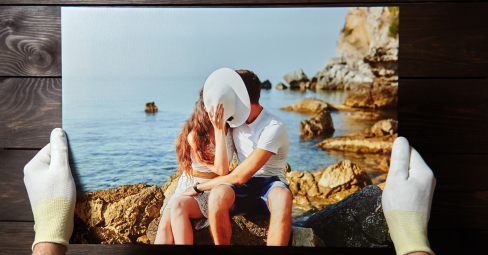
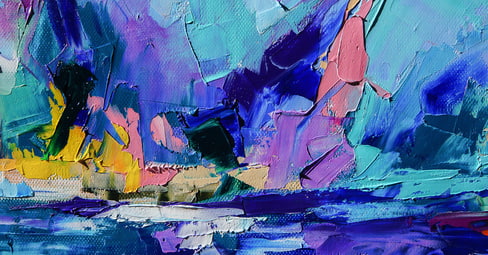
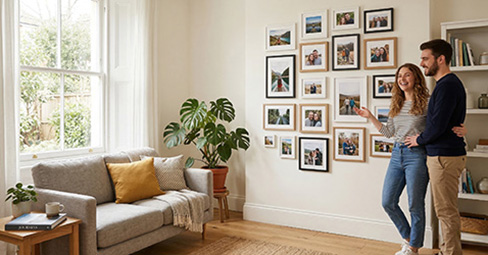
A canvas print is made in four stages: your photo file is checked and prepared, printed onto 250 gsm poly-cotton canvas with water-based HP Latex inks, hand-stretched over an FSC-certified pine frame, and then packed for dispatch. At MYPICTURE, every canvas is ready to ship within 24 hours.
Most guides answer this question with a one-line definition and move on. This one walks you through the real production line, stage by stage, with the actual materials and figures we use. By the end, you will be able to judge a canvas print from any company, not just ours.
The short version
Four stages. File preparation, printing, stretching, and packing. Each stage decides part of the final quality.
The fabric is 250 gsm poly-cotton. Consumer photo canvas ranges from roughly 240 to 400 gsm. Weave, coating and ink system matter as much as the raw weight.
The ink is genuine HP Latex. Water-based, solvent-free and UV-resistant, so the print resists fading indoors and has no chemical smell.
The frame is FSC-certified pine. 2 cm deep as standard, 4 cm on XXL sizes, in formats up to 120x80 cm.
Prices start at £4.50. Small canvases run about £4.50 to £10, medium £12 to £30, and extra-large £38 to £90 before voucher codes. Checked August 2026.
Why it pays to know how a canvas is made
Two canvas prints can look identical in a product photo and still be very different objects. One uses a heavy fabric, a named ink system and dried timber. The other uses a thin synthetic sheet, cheap solvent ink and soft wood that warps within a year. The product page rarely tells you which one you are buying.
The production process is where the difference is decided. If you know what happens at each stage, you know exactly which questions to ask before you order. That is the point of this article. The ink stage is a good example: HP publishes the full technical and safety data for its water-based Latex inks, including UL ECOLOGO and UL GREENGUARD Gold certification, on the HP Latex sustainability page. Very few buyers ever check what ink their printer uses. The good printers will tell you without being asked.
Stage 1: Your photo file is checked and prepared
Every canvas starts as a digital file. When you upload a photo to order canvas prints from £4.50, the first job is making sure that file can survive being enlarged to wall size.
The number that matters here is resolution. As a working rule, a print needs around 150 DPI (dots per inch) at its final size to look sharp from normal viewing distance. A standard phone photo holds up well to about 80x60 cm. Push a small, cropped or compressed file to a large size and the print will look soft, however good the canvas and ink are.
Composition is checked too. On a wrapped canvas, the outer edge of your image folds around the frame sides. If a face or an important detail sits right at the edge of the photo, part of it can disappear around the corner. Keeping key details away from the borders solves this before printing starts.
Stage 2: The canvas itself, and what 250 gsm actually means
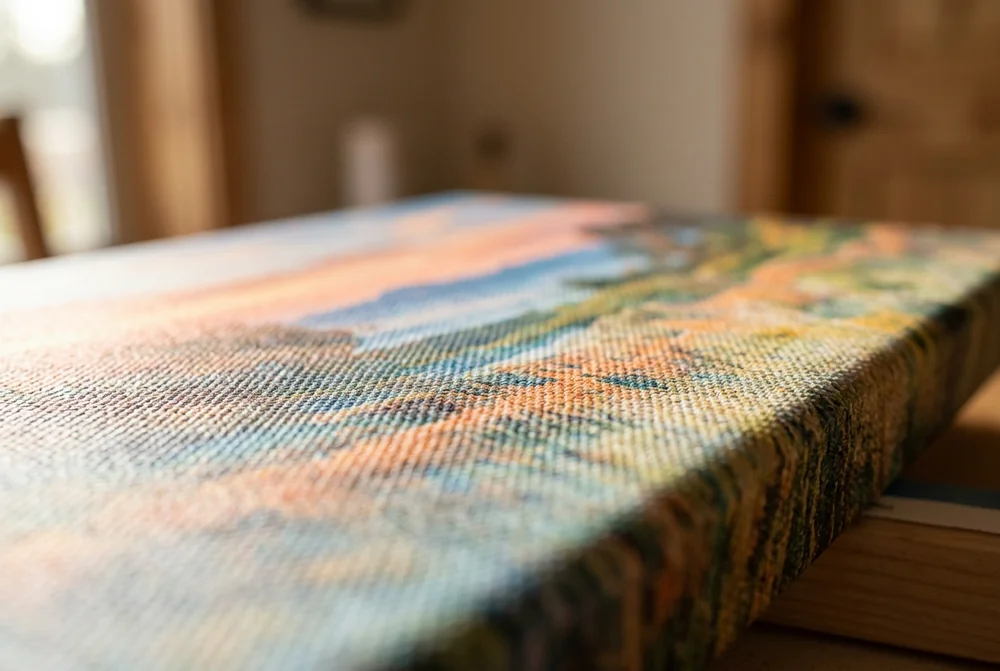
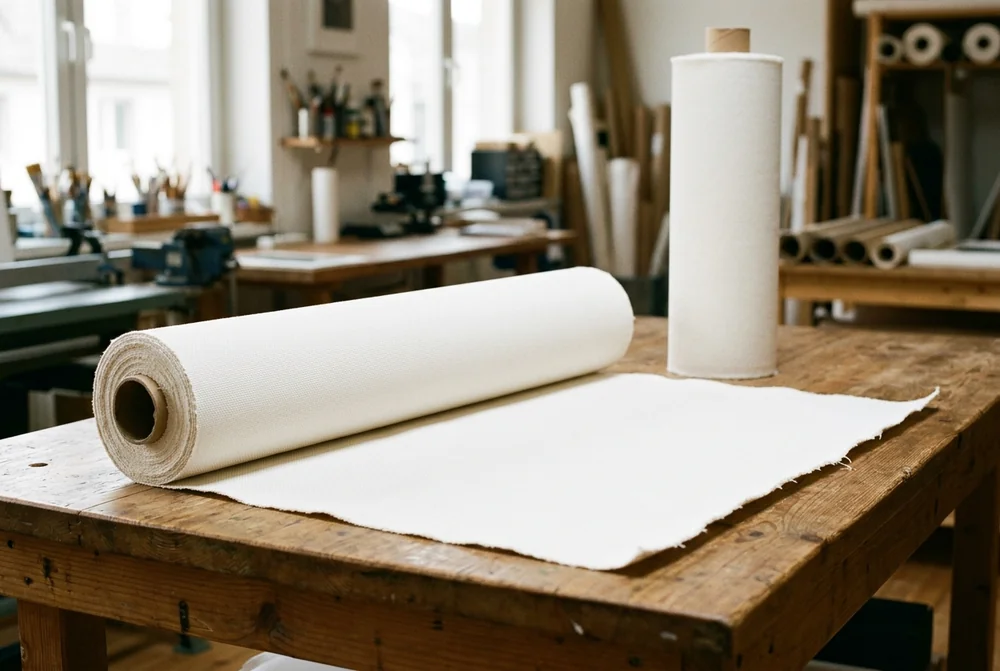
Canvas is a plain-woven fabric. It was originally made from hemp, and later from cotton and linen. Modern photo canvas is usually cotton, polyester, or a blend of the two, and the choice changes how the finished print looks and lasts.
MYPICTURE prints on 250 gsm poly-cotton canvas. The gsm figure means grams per square metre, which is simply the weight of the fabric. Consumer photo canvas sits roughly between 240 and 400 gsm. Heavier is not automatically better: the weave, the coating that receives the ink, and the ink system itself matter as much as the raw weight. A well-coated 250 gsm blend engineered for latex ink will outperform a heavier fabric with a poor coating.
The three canvas fabrics, side by side
Cotton
Polyester
Poly-cotton blend
Texture
Most natural, painting-like
Smooth, less texture
Natural texture, consistent surface
Colour behaviour
Ink soaks into the fibres
Ink sits on the surface, very vivid
Balanced: vivid colour with depth
Durability
Strong, ages well
Resists moisture, can look plasticky
Strong weave, stable over time
Typical use
Fine-art reproduction
Budget canvas ranges
Photo canvas, including MYPICTURE
Stage 3: Printing with water-based HP Latex inks
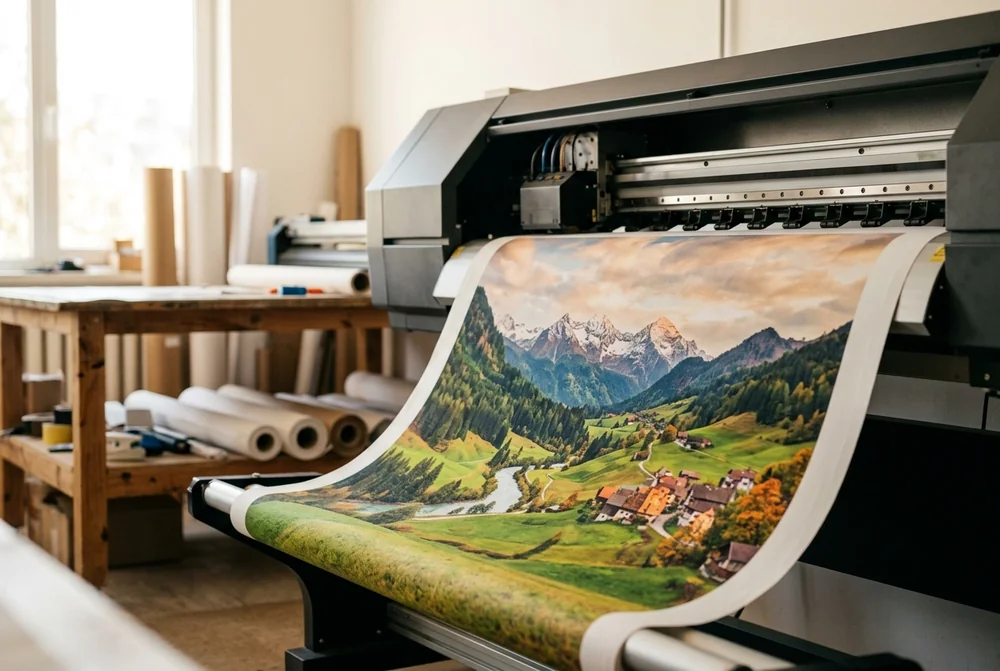
Once the file passes its checks, it goes to a large-format printer loaded with genuine HP Latex inks. These are water-based inks: up to 65 percent of the formula is water, which carries the pigment onto the canvas. Heat then evaporates the water and bonds the pigment to the fabric. The print comes off the machine dry and ready to handle.
This ink choice does three jobs. First, the inks are solvent-free, so the finished canvas has no chemical smell and is safe to hang in a bedroom or nursery. Second, they are UV-resistant, which protects the colours against fading in normal indoor light. Third, they carry independent certifications: HP Latex inks are UL ECOLOGO certified and UL GREENGUARD Gold certified for low chemical emissions in indoor air.
One honest note. For limited-edition fine-art reproduction, galleries often specify giclée printing with pigment inks on archival cotton, and that remains the gallery standard. Our guide to what giclée printing means explains the difference. For photo canvas on a home wall, latex printing delivers the colour, durability and safety that matter, at a much lower price.
Stage 4: The frame, the stretch, and the edges
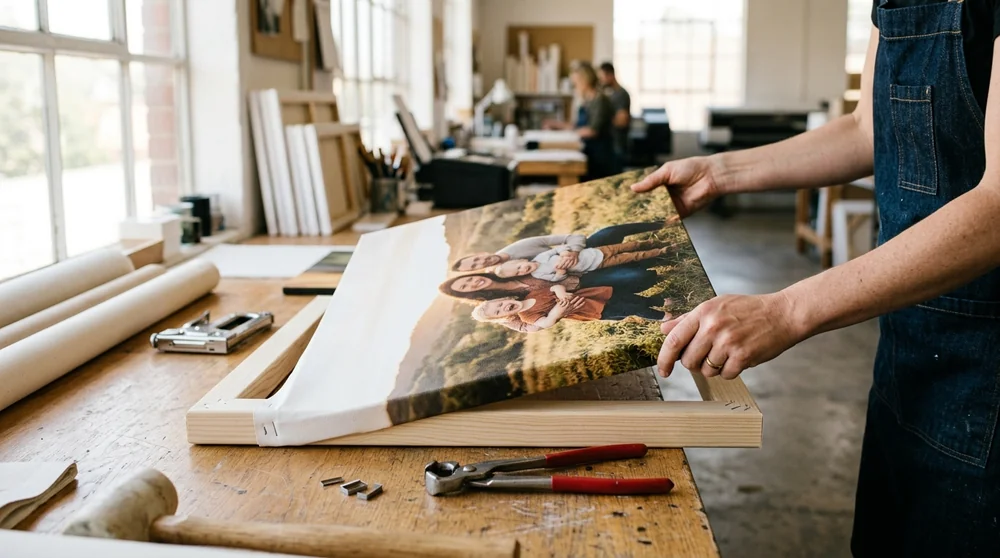
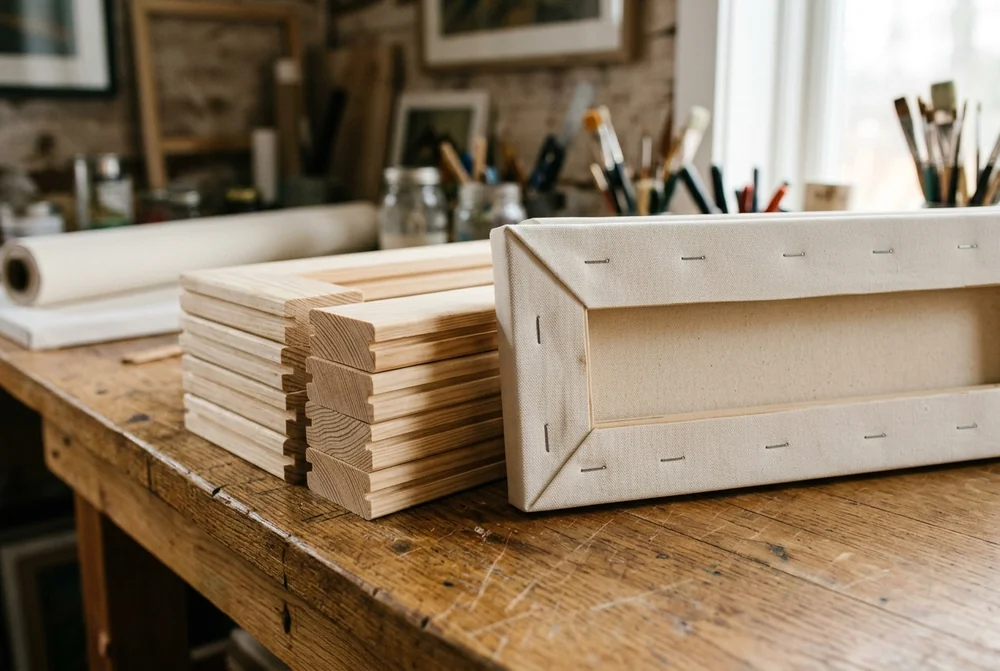
The printed canvas is now stretched by hand over a stretcher frame. MYPICTURE frames are made from FSC-certified pine, 2 cm deep as standard and 4 cm deep on XXL formats. FSC certification means the timber comes from responsibly managed forests. The depth matters for looks: a 2 cm frame sits close to the wall, while a 4 cm frame throws a stronger shadow and reads more like gallery art.
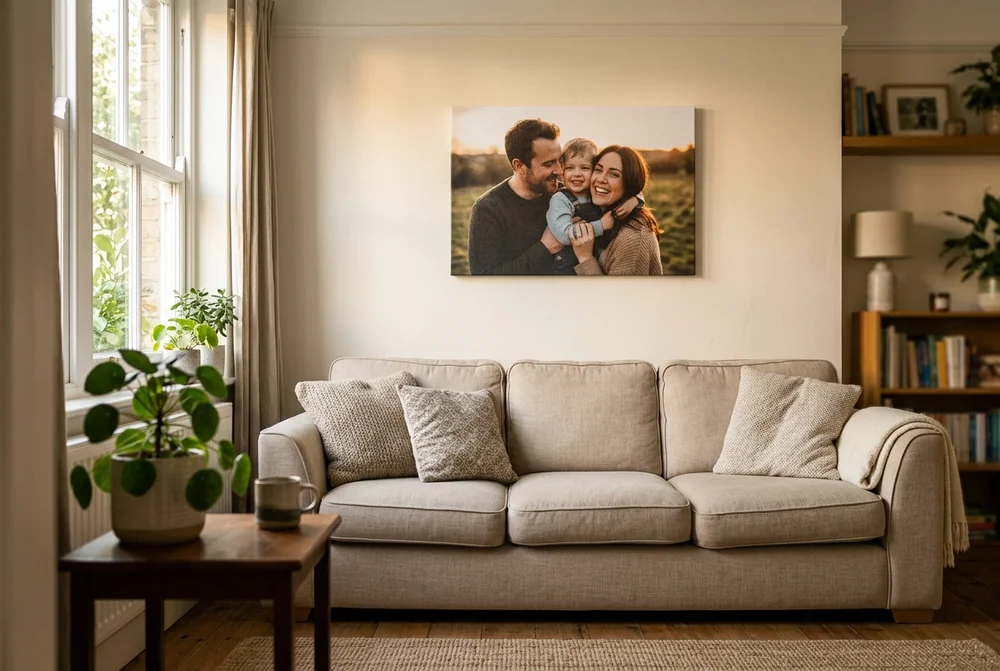
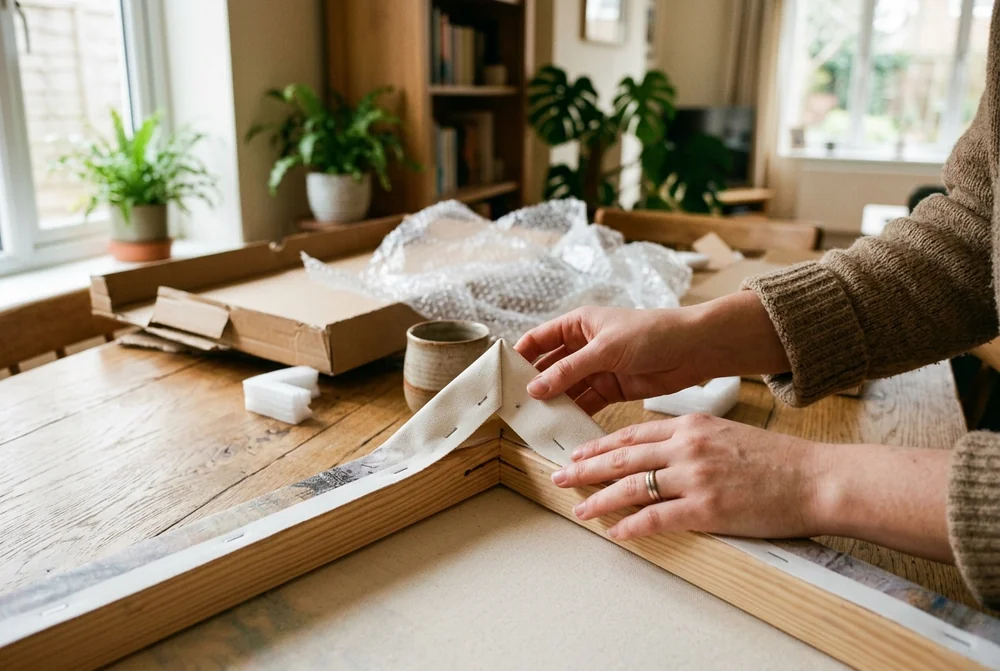
Stretching is the stage where craft shows. The canvas must be pulled evenly across the frame and fixed at the back, tight enough that the surface stays flat, without distorting the image at the corners. This is what people mean by a gallery-wrapped canvas: the image or its border continues around the sides, so no separate frame is needed.
The five edge options, explained
Folded. The margins of your photo wrap around the frame sides, like a classic painting. Keep key details away from the edges.
Mirrored. The border of your photo is copied, flipped and printed on the sides. Nothing from the front is lost.
Stretched. The outermost pixels are pulled along the sides, creating a soft motion-blur effect. The full photo stays on the front.
White. Clean white sides. A neat, minimal look that suits bright rooms.
Black. Solid black sides. Adds contrast and a more formal finish.
If you prefer a framed look on top of the wrap, there are five premium frame finishes: vintage silver, black matte, white, walnut flair and oak vintage flair. Or you can pair the canvas with our framed photo prints for a mixed gallery wall.
What a made-for-you canvas costs in 2026
Here is the honest pricing picture, checked in August 2026. At MYPICTURE, canvas prints start from £4.50. Small canvases run about £4.50 to £10, medium sizes £12 to £30, and extra-large formats £38 to £90, before any voucher codes. Sizes go up to 120x80 cm. Delivery is free on orders over £49, and every order is ready to ship within 24 hours, arriving in 3 to 5 working days with tracking.
Treat every figure in this market as a starting point, because photo printing services discount constantly. That is also why a lowest price guarantee is worth more than any single sale price: a company willing to beat any like-for-like UK price by 5 percent is effectively doing the comparison shopping for you.
Could you print a canvas at home?
Yes, and for small pieces it can be an enjoyable craft project. Some home inkjet printers accept coated canvas sheets through a rear feed, and image-transfer methods using gel medium work without a printer at all. If you enjoy making things by hand, it is a fair weekend project.
The trade-offs are size, stretching and cost. Home printers top out well below wall-art sizes, stretching canvas evenly over a frame takes practice and tools, and once you price the blank canvas, ink and frame separately, a small professional canvas at £4.50 to £10 is usually cheaper than making one. Three questions settle it. Do you want it larger than A4? Order it. Do you own a printer that takes canvas media? If not, order it. Is the making part of the fun? Then enjoy the project, and save the wedding photo for a production line.
How to judge any canvas print, from any company
This is the part most guides skip, because most guides are not written by a printer. When a canvas costs much less than you expected, something was cut, and it is usually the fabric, the ink or the frame. Four questions expose it every time.
What is the fabric, and what does it weigh? Look for a named material and a gsm figure. MYPICTURE prints on 250 gsm poly-cotton.
What ink system is used? A named, certified ink is a good sign. MYPICTURE uses genuine HP Latex: water-based, solvent-free and UV-resistant.
What is the frame made of? Ask for the wood and the depth. MYPICTURE uses FSC-certified pine at 2 cm, or 4 cm on XXL sizes.
What happens if you find it cheaper? MYPICTURE beats any like-for-like UK price by 5 percent under its Lowest Price Guarantee.
When your canvas arrives, check it like a printer would. The surface should be drum-tight with no ripples, the corners folded flat and neat, and the image sharp at arm's length. Our guide to canvas prints compared with poster prints shows how those quality checks differ between wall-art formats.
Why choose MY-PICTURE.CO.UK over other competitors?
MYPICTURE competes on price and says so: canvas prints from £4.50, up to 85 percent off RRP, and a Lowest Price Guarantee that beats any like-for-like UK price by 5 percent.
The specs behind the price are the ones described above, in public: 250 gsm poly-cotton, genuine HP Latex inks and hand-stretched FSC pine frames. The table compares specific dimensions against two printers UK buyers genuinely consider; it is not a claim to win at everything.
*Ratings and prices correct as of August 2026. Prices exclude delivery; all brands run periodic promotions.
Frequently asked questions
Are canvas prints good quality?
They can be, but quality depends on three things: the fabric, the ink and the frame. A well-made canvas uses a woven fabric with a stated weight, a named certified ink system, and dried timber for the frame. MYPICTURE canvases use 250 gsm poly-cotton, genuine HP Latex inks and FSC-certified pine, so you can check each part against the finished print.
Can I make canvas prints at home?
Yes, for small sizes. Some inkjet printers accept coated canvas sheets, and gel-medium transfer methods work without a printer. The limits are size, even stretching and cost: once you buy the canvas, ink and frame separately, a small professional canvas from £4.50 is usually cheaper and sharper than a homemade one.
Is canvas natural or man-made?
Both exist. Traditional canvas was woven from hemp, and later from cotton and linen, which are natural fibres. Modern photo canvas is usually cotton, polyester or a blend of the two. Blends such as the 250 gsm poly-cotton MYPICTURE prints on combine the natural texture of cotton with the colour vividness and stability of polyester.
How long do canvas prints last?
It depends on the ink and where the canvas hangs. UV-resistant inks, such as the HP Latex inks used at MYPICTURE, protect colours against fading in normal indoor light. To get the longest life from any canvas, keep it out of direct sunlight and away from damp rooms, and dust it gently with a soft, dry cloth.
Do canvas prints look better framed or unframed?
It is a matter of taste and room style. Unframed, gallery-wrapped canvas looks modern and clean, and it is the most popular choice. A frame adds formality: MYPICTURE offers five premium finishes, from black matte to oak vintage flair. In bright, minimal rooms the wrap alone usually wins; in traditional rooms a frame helps the canvas sit with other furniture.