Which Photos Work Best for a Photo Cushion?
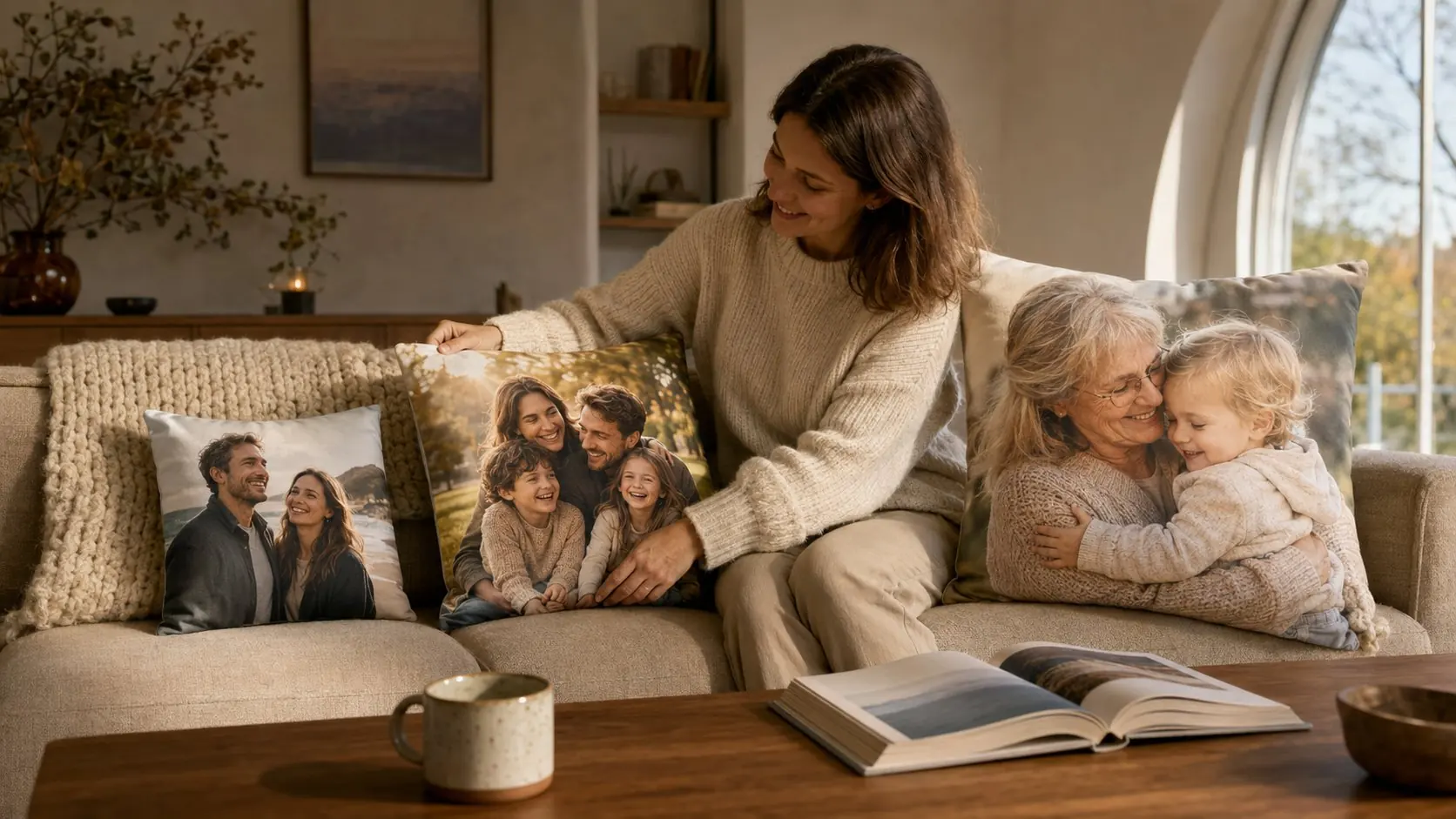
Before you head into the configurator, it's worth a moment for the honest question: which photo can bear lying on the sofa every day? Three subject types work especially well in practice.
Portraits with a clear main subject
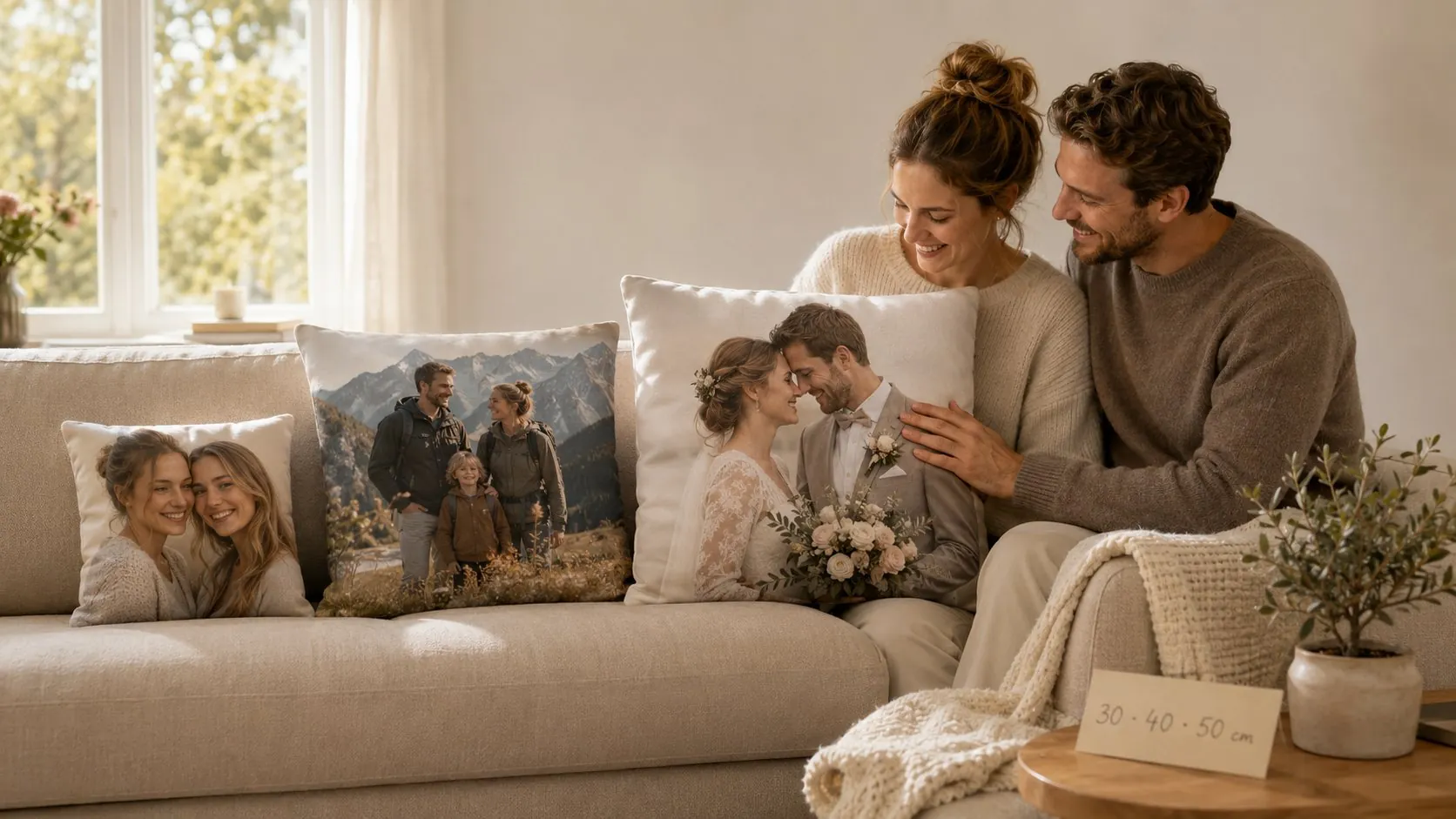
A face, an animal, a child in the playroom. Important: the main subject shouldn't sit at the edge but centrally. Eyes, muzzle or the focal element belongs in the core of the image — not in the lower third, not at the top edge. If the photo ends up on a 30x30 cm cushion, the fold and seam area at the edge would otherwise swallow parts of the subject.
Landscape photos of a favourite place, wedding portraits with a soft background, city shots with a clear line. These images gain when you choose the full-area option in the layout — then the photo runs across the entire cushion surface, without a frame.
Collages with two to four photos
Don't want to commit to a single image? Then go for a collage. The editor has templates ready for two, three and four pictures. Take care: more than four photos on a 40x40 cm cushion become too small to have any effect. Stay deliberately pared back.
Tip: If you need more subject ideas for emotional gifts, our photo gift ideas hub is worth a look.
Images that already look slightly soft on your phone screen won't get any better on fabric. As a resolution rule of thumb: current smartphone photos (12 MP and above) are enough for all standard sizes up to 60x60 cm. If you want to be on the safe side, check the minimum resolution in detail when uploading — we flag low-resolution images automatically in the editor.
 PSave
PSave
Which Material Suits Which Photo and Recipient?
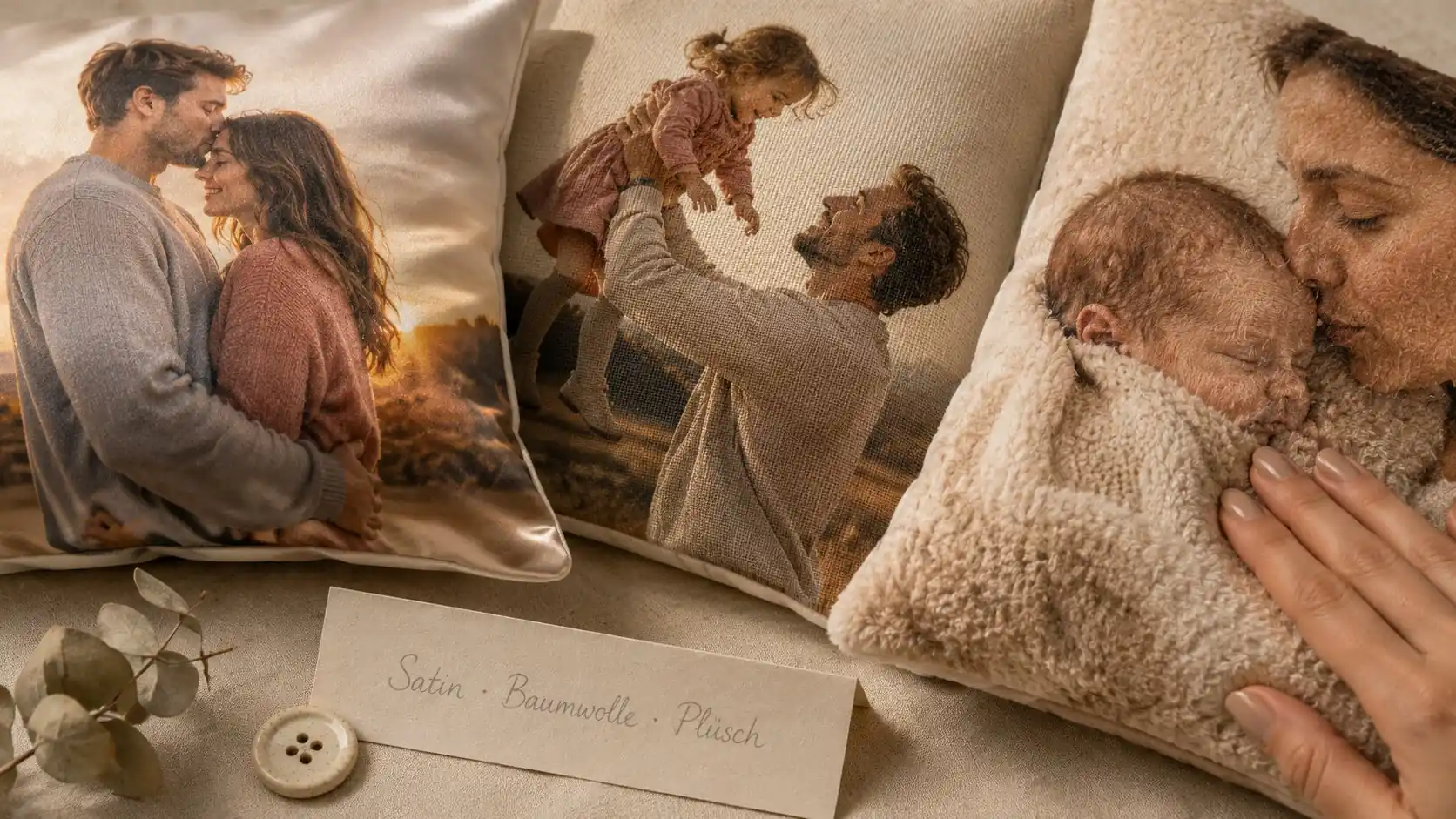
The material choice is the most important design decision — more important than size or layout. It determines how your photo looks, how it feels, and whether the cushion ends up as a decorative piece or a daily companion. We offer three main materials.
Satin: high gloss for expressive subjects
Satin reflects light slightly and brings colours out especially strongly. Well suited to portrait photos, wedding pictures or anything you want to present elegantly and with a sense of occasion. The smooth surface shows fine image detail clearly. Satin comes in a single 40x40 cm size.
Downside: satin creases more readily and has a cooler feel in the hand. Too good to waste on a shared-flat sofa, but a direct hit for your parents' living room.
Cotton: robust and everyday
Cotton is the universal choice. Print result: slightly matte with warm colours. To the touch it feels like a favourite t-shirt. It survives many washes, creases little, and slots into any interior style. Available in three sizes.
Upside: if you're not sure which material fits, cotton is the safe bet. It works for travel photos, family portraits, pet photos and gifts for best friends.
Plush: cuddly for children and anything that needs warmth
Plush has a soft, short pile — like a mini blanket in cushion form. The print is slightly matte and the surface feels extremely soft. Ideal for children's rooms, as a nursing-chair companion, or as a comforter in grandma's armchair. Available in three sizes.
Downside: very fine image detail blurs slightly, because the pile softens the print minimally. Large main subjects work better here than complex backgrounds.
| Material | Look | Feel | Recommended for |
|---|
| Satin | Glossy, colour-intense | Smooth, cool | Portraits, weddings, festive occasions |
| Cotton | Slightly matte, warm colours | Soft, everyday | Family photos, travel shots, standard gift |
| Plush | Slightly matte, cuddly-soft | Very soft, warm | Children's rooms, pet motifs, comfort gifts |
Our recommendation: if the person receiving the cushion will be in close contact with it — sofa, bed, armchair — go for cotton or plush. If the cushion is meant to be more of a decorative accessory with emotional value, satin is the right choice.
 PSaveGet Up to EXTRA 20% Off
Which Size Suits Which Purpose?
The size question is often settled by a very practical point: where is the cushion going to sit? We offer three standard sizes, each with a clear use case. (Satin comes in 40x40 cm only; cotton and plush in all three sizes.)
30x30 cm: the mini cushion
Small, light, ideal for baby photos or as a personalised little gift. Fits any child's chair, any cot, any car seat. At 30x30 cm even simple portraits or pet photos already look strong — the format forces you to reduce to one main subject.
40x40 cm: the classic
The most common choice. Big enough not to disappear on an adult sofa, small enough to hug comfortably. Full-area portraits, landscape shots and collages of two to four photos all work equally well here.
60x60 cm: the statement cushion
If you want a real eye-catcher, take this size. On a sofa, the 60x60 cushion has the visual presence of a wall picture. Good for wedding portraits, large family shots or photos that really need room to breathe.
| Size | Effect | Recommended for |
|---|
| 30x30 cm | Small, focused | Baby photos, children's rooms, little gift |
| 40x40 cm | Balanced | Standard gift, everyday sofa |
| 60x60 cm | Big presence | Wedding, living-room highlight |
Rule of thumb: if the cushion is meant to sit on a normal sofa, take 40x40 cm. If it's intended for children or as a complementary detail, go to 30x30 cm. If the photo could have filled a wall but is becoming a cushion instead, go to 60x60 cm.
 PSaveGet Up to EXTRA 20% Off
Layout Options: How to Print Your Cushion with a Photo
The editor offers three layout options. Each has its ideal use case:
- Full-area layout. The photo covers the entire cushion surface and runs just over the edge. Best choice for 90% of all orders, especially for portraits and landscapes.
- Centred subject with a frame. Photo in the middle, framed by a colour panel (standard: white or pastel). Suits images that shouldn't run over the edges — for example wedding photos with important detail right out to the margins.
- Collage of 2–4 photos. Several images in predefined grid layouts. Works on 40x40 cm and larger; at 30x30 cm the individual photos become too small.
Tip: if your photo has important parts almost at the edge (a family portrait with heads near the image border, say), choose the layout with a frame. That way the heads don't get lost in the cushion seam.
Personalisation with text: you can add a name, a date or a short message. Four to five words maximum has proven best. More text makes the cushion look busy. Font sizes adapt to the cushion size automatically.
Which Occasions Suit a Photo Cushion Especially Well?
A photo cushion doesn't suit every occasion — but more than you'd think at first glance. Anyone wanting to have their cushion printed with a photo will find especially grateful recipients on these occasions:
- Anniversary or wedding. A wedding photo on satin, 40x40 cm or larger, with the date along the edge. Works as a belated gift for a 5th, 10th or 25th anniversary too.
- Birth of a child. A 30x30 cm plush cushion with the first photo, plus the name and date of birth. Often stays in the cot for years.
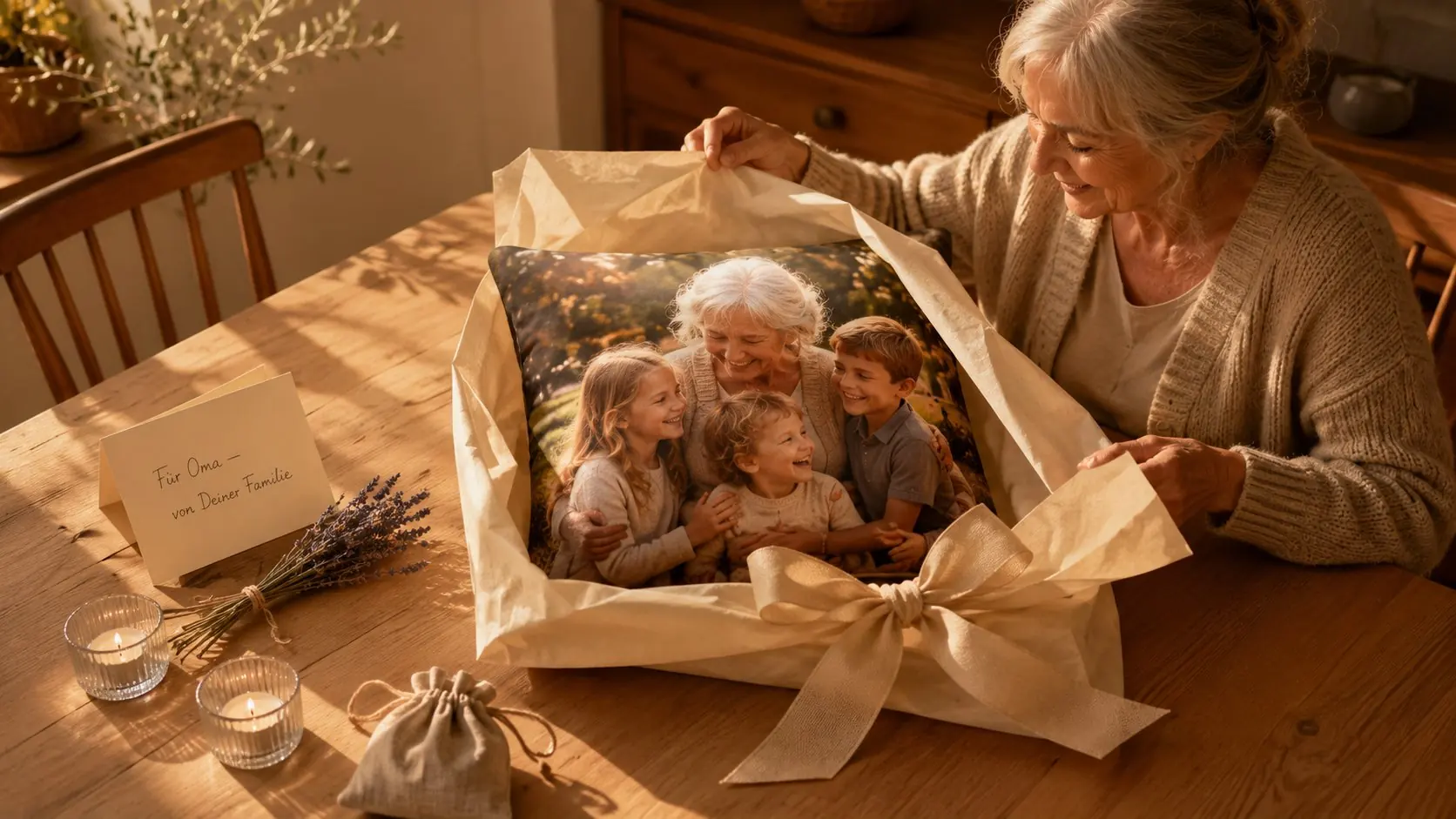
- Grandparents' gift. A family photo on 40x40 cm cotton — it can land on the sofa, be worked into the living room, and become even more personal with a line of text.
- Pet remembrance. A portrait of a favourite dog or cat, plush, 40x40 cm. Especially powerful for animals that are no longer with us.
- Gift for a best friend. A shared travel photo, cotton, 40x40 cm. Almost always hits the mark.
- Comfort or remembrance gift. A quiet portrait, in restrained colours and a simple layout. Here, restraint is the strongest stylistic device.
If you'd like to combine the cushion with other photo gifts into a set, a personalised photo blanket makes a good partner: both carry the same photo, both stay present in the recipient's everyday life. A photo canvas print is also a sensible addition if the gift package should cover both the wall and the sofa.
 PSaveGet Up to EXTRA 20% Off
How to Design a Photo Cushion in 5 Steps
You don't need any design experience to create a photo cushion. Follow these steps and you'll reach the order stage in a single sitting.
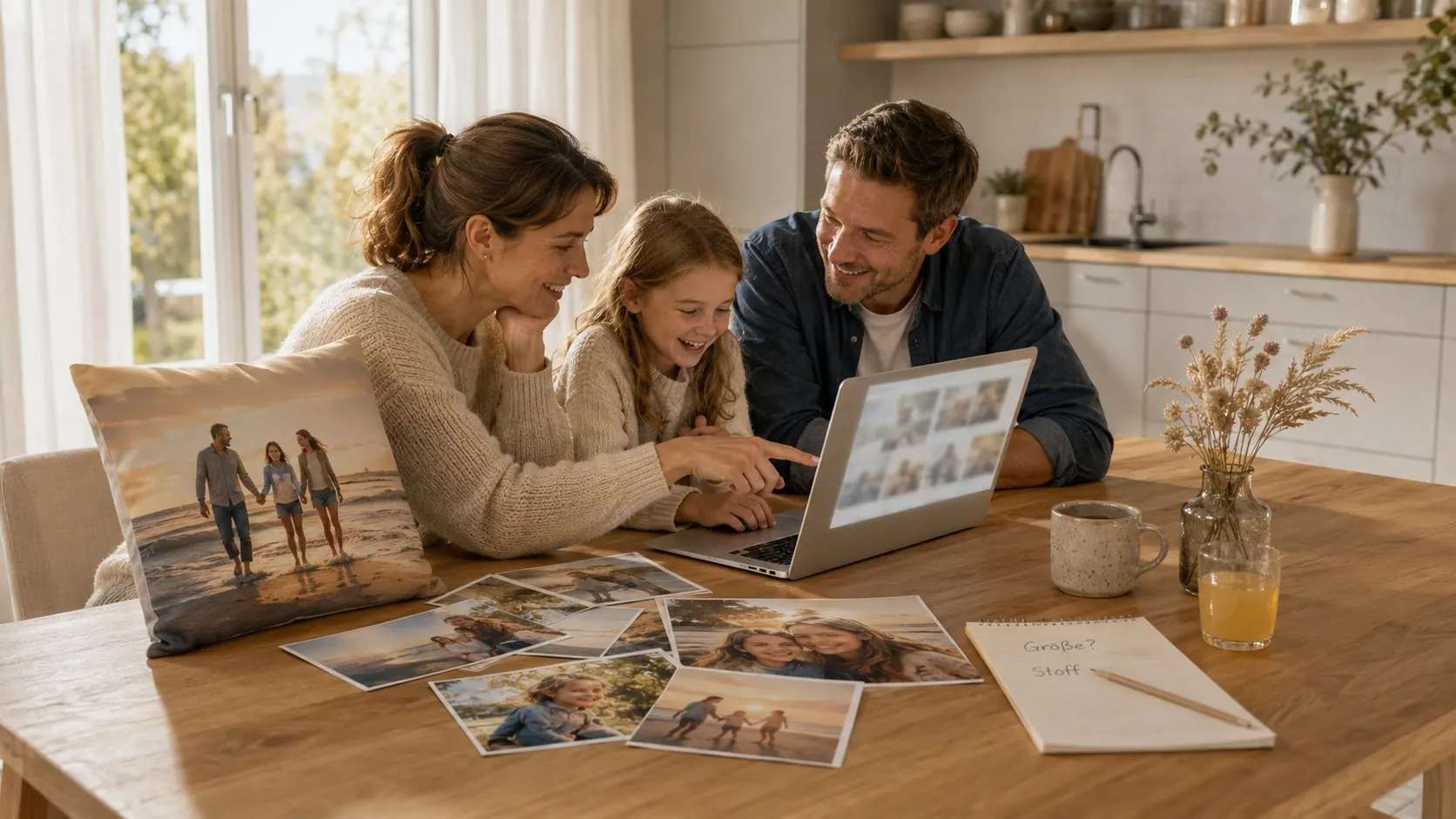
Step 1: Choose and check your photo. Pick a photo that still looks sharp at 40x40 cm. Current smartphones usually deliver enough resolution. Check three things: sharpness in the original view (no blur, no pixel mush), a centrally placed main subject (head, animal or object in the core of the image, not at the edge), a calm background (no hectic clutter that distracts from the main subject).
Step 2: Set the size and material. Make the material decision early, because it shapes the look more than the layout does. 30x30 cm for baby photos and mini gifts, 40x40 cm for most sofa uses, 60x60 cm if you want a statement cushion. Material: satin for high-gloss portraits (single 40x40 cm size), cotton for everyday, plush for cuddly moments.
Step 3: Choose the layout. The configurator offers three base layouts: full-area photo (covers the whole cushion, runs slightly into the edge), centred subject with a frame (photo in the middle, framed by a colour panel), collage (two to four photos in grids). For most recipients the full-area photo works best, because it shows the main subject large.
Step 4: Add personalisation. If the cushion is a gift, a short line of text is worth its weight in gold. Options: name, date, short message (max. 4-5 words). Placement: along the lower edge of the image or tucked into a calm corner. The font is scaled to fit automatically in the editor.
Step 5: Preview, order and delivery. In the final step you check the 360-degree preview, then place your order. Delivery typically takes around 5 to 7 working days. Tip: order two test pieces in different materials if you can't decide — the direct comparison in your hands is more honest than any description.
 PSaveGet Up to EXTRA 20% Off
Avoiding Common Mistakes: What Can Go Wrong When Designing a Photo Cushion
Self-designed cushions rarely fail on the technology — but often on small decisions. These traps are the most common:
- Wrong crop. A photo that looks good on the phone often has too little background at the bottom or right in the 1:1 cushion format. Check the crop before uploading.
- Main subject too small. With children photographed full-body, the head ends up tiny. Proven approach: show only the upper body or the face, large.
- Too many photos in the collage. More than four photos on 40x40 cm and the eye finds nothing to settle on. Reduce.
- Wrong material choice. Satin on a shared-flat sofa looks over the top; plush in your parents' dining room feels out of place. Choose the material to suit the recipient first, then the photo.
- Forgotten personalisation. A date or a name takes 30 seconds — and turns the cushion from a nice gift into an unforgettable one.
Tip: before you send the order off, close the browser for an hour and look at the preview again afterwards. What you missed before often jumps out at you after a break.
Care and Durability: Keeping Your Photo Cushion Looking Great
A photo cushion lasts many years with normal use — as long as a few simple care rules are followed:
- Cover washable separately. Open the zip, remove the insert, wash the cover on a gentle 30-degree cycle. No bleach.
- Iron on the lowest setting. Don't iron directly onto the print — turn the fabric inside out instead.
- Avoid sunlight. Permanent direct sun can fade colours over the long term, and that applies to all materials. Position it away from a south-facing window.
- Dry plush more gently. Don't put plush covers in the tumble dryer; dry them flat and in the air instead.
Our photo cushions are made with fabrics built for long-term use — with the right washing and care steps, the print stays clear over many washes.
Final Thoughts: When Is a Photo Cushion Really Worth It?
A photo cushion is always worth it when the gift is meant to become part of everyday life, not just a wall picture or a book on the shelf. Anyone giving to best friends, a partner, parents or grandparents hits the mark almost every time with the right material. Anyone wanting to give children or pet lovers a piece of personal memory will find the 30x30 cm plush cushion the best choice.
For the photo, the rule is: less is more. A clear main subject, a calm background, a material that suits the recipient — that's enough. Add a short line of text with a date or a name, and you turn a lovely gift into one that's still in the family album in ten years' time.
The key takeaway: Choose the material to suit the recipient first, then the photo. When in doubt, take cotton in 40x40 cm — that works for 90% of all occasions.
FAQ: Photo Cushion
What resolution should my photo have for a photo cushion?
Current smartphone photos (12 MP and above) are enough for all standard sizes up to 60x60 cm. For a 30x30 cm cushion, even older shots or scanned paper photos in good quality are fine. Rule of thumb: if the photo looks sharp at full size on your phone screen, it will work for a cushion too.
Can I have a photo cushion printed on both sides?
Yes, depending on the material. With satin and cotton you order single-sided as standard, and double-sided is available as a configuration option. Plush cushions are usually printed on one side.
How do I care for my photo cushion?
Open the zip, remove the insert, wash the cover on a gentle 30-degree cycle (satin can take up to 40 degrees). Iron the cover at a low temperature, and don't iron directly onto the print, turn the fabric inside out instead.
Which photo works best for a photo cushion?
Three subject types work especially well: portraits (head, animal or face centrally placed, sharp eyes), full-format landscape shots (especially with full-area designs), and compositions with two to four photos in collage layouts.
How long does delivery take?
Delivery typically takes around 5 to 7 working days from order. You'll see more precise details during the order process depending on the material and shipping option you choose.
Do I get the insert or just the cover?
Both are available. In the configurator you choose between cover only (if you already have an insert) or a complete package including the insert (if you want to give or use the cushion straight away). The insert package is the most popular option for gifts.